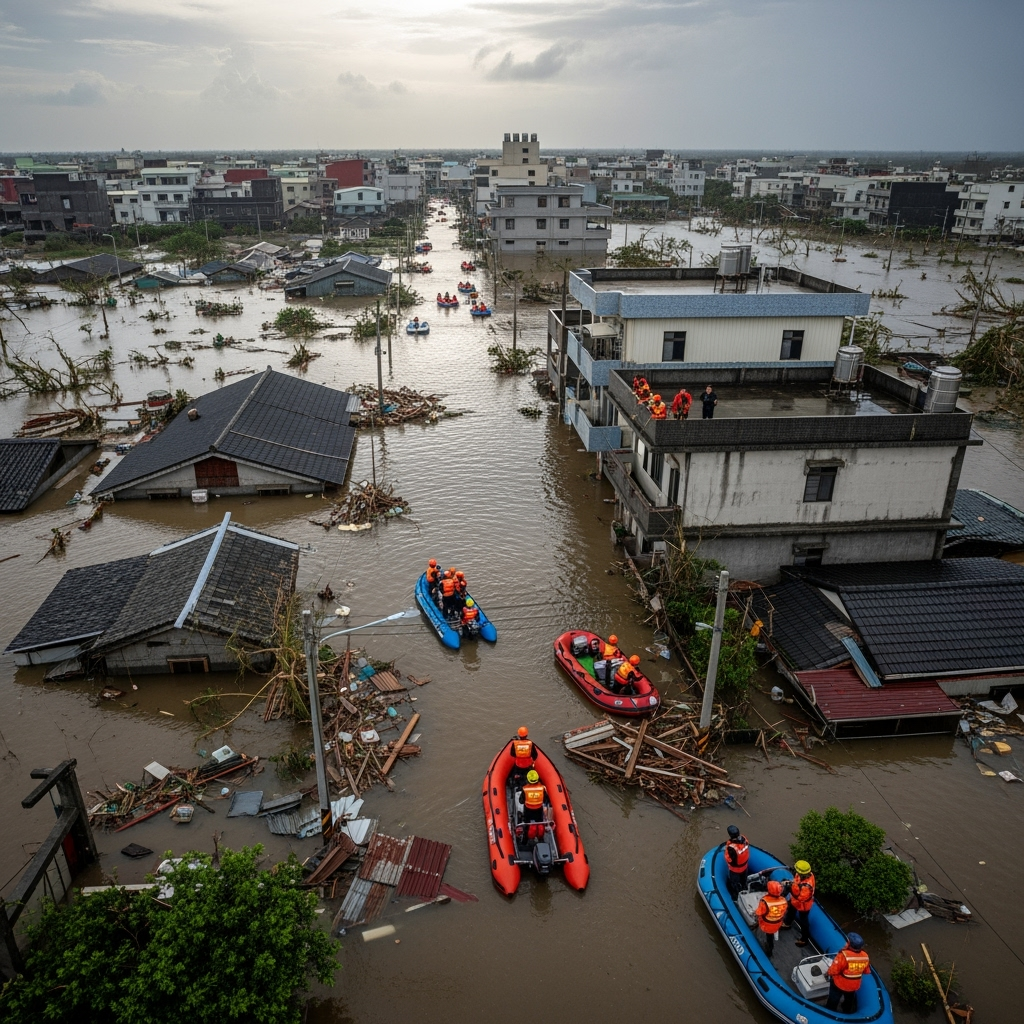
On Thursday, Taiwan continued the search for 33 individuals missing after a powerful typhoon caused a lake to flood a small town on its remote east coast. The disaster primarily affected elderly residents unable to evacuate to higher floors of their homes.
The revised death toll is now 14, down from 17, due to heavy rains from Super Typhoon Ragasa in Hualien county. This caused an overflow of a mountain barrier lake, unleashing a torrent on Guangfu town.
Taiwan typically executes efficient evacuation plans before typhoons, particularly in the sparsely populated eastern mountains, minimizing casualties.
Stay informed with the latest news. Follow KT on WhatsApp Channels.
However, the current death toll raises questions about the suitability of advising residents to move upstairs and what measures could have been improved.
“While mourning the victims, we need to determine the causes of deaths, mostly on the first floors,” Premier Cho Jung-tai stated during a cabinet meeting on Thursday.
“Understanding these factors is crucial for enhancing future evacuation strategies.”
Elderly Population
In eastern Taiwan, many rural areas have significant elderly populations, as younger people relocate to cities for better jobs.
Hualien official Lin Jung-lu noted that many of the deceased were elderly with disabilities, found on the ground floors of homes.
“They struggled with mobility,” he said.
Chang Chih-hsiung, a youth representative from the Fata’an tribe of the Amis indigenous group in Hualien, cited the digital divide and poor communication as reasons some seniors didn’t evacuate.
“Many aren’t adept with cellphones,” he told Reuters. “The village chief conducted briefings, but residents underestimated the severity until it was too late.”
Another issue was predicting the flood’s reach.
Some village sections were evacuated to shelters and avoided flooding, Chang added, while areas where residents moved upstairs were hit harder than anticipated.
Cut Bridge
Wang Tse-an, leader of Dama village in Guangfu, reported no fatalities due to mandatory evacuations.
“Dama was first hit, yet suffered minimal damage,” he said.
“Mandatory evacuation saved lives. In other villages, people tried ‘vertical evacuation’ and didn’t expect the flood to rise so high.”
While Guangfu’s train services resumed, the main highway is inaccessible after floodwaters destroyed a bridge.
Drone images from Reuters revealed bridge supports left in the riverbed, with homes surrounded by mud.
Wang mentioned multiple meetings since the lake’s discovery in July, with evacuation plans communicated to villagers, some in the Amis language due to language barriers.
While the rain has ceased, government warnings for the barrier dam in the remote mountains near Guangfu remain.
The challenge of addressing the lake, now reduced in size, and preventing another disaster continues.
Agriculture Minister Chen Junne-jih stated using explosives on the lake bank is too risky, as it could trigger more landslides.
“The red warning persists, so avoid the river,” he warned in Taipei.