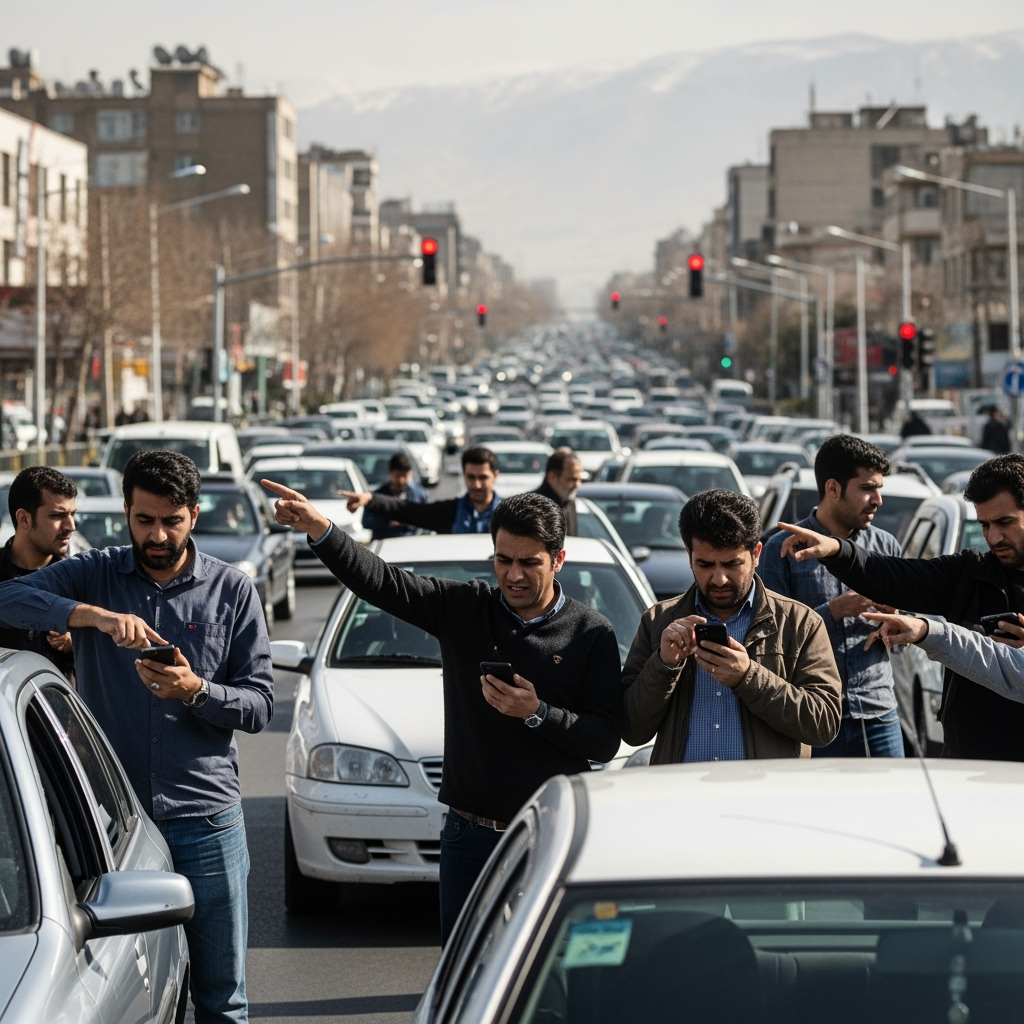
Tehran’s streets have turned into a perplexing labyrinth for driver Farshad Fooladi due to ongoing GPS disruptions that persist nearly two months after the conclusion of the unprecedented 12-day conflict between Iran and Israel.
“I’ve been unable to work for weeks,” said Fooladi, who relies on Iran’s ride-hailing app Snapp to find customers. “Most of my time is spent wandering aimlessly,” the 35-year-old driver added.
Since Israel’s surprise attack in mid-June, which sparked a deadly 12-day conflict, Iran has faced unprecedented GPS disruptions.
The Iranian communications ministry stated that these disruptions were necessary for “security and military purposes,” without providing further details.
Missiles, drones, and rockets often use GPS or similar technologies, involving signal triangulation from multiple satellites, to locate targets.
While Iran has historically employed GPS jamming and spoofing around sensitive military sites, recent disruptions are the most widespread and sustained.
The duration of these measures and their impact on Iranian businesses remain unclear.
Ride-hailing apps, delivery platforms, and basic mapping services like Google Maps and Iran’s Neshan have struggled under the interference.
In many areas, especially around Tehran, users often find themselves located hundreds of kilometers away from their actual positions on maps.
“To navigate, you need either a sharp memory or thorough knowledge of the city,” Fooladi said.
However, being from Lorestan province and unfamiliar with Tehran’s winding streets, he frequently encounters dead ends.
“I only pick up passengers who know the directions,” he mentioned, noting the strategy has significantly reduced his income.
‘Collateral damage’
In early August, Javad Amel, CEO of Neshan, stated in a video interview that GPS spoofing disruptions have persisted for years, particularly in Tehran.
He noted that Neshan’s daily active users “dropped by 15 percent, while navigation activity fell by 20 percent” in recent weeks.
The ongoing disruption has heightened fears of a worsening economic crisis in Iran.
The economy, already under pressure from decades of international sanctions and mismanagement, faces additional strain from the revival of US President Donald Trump’s “maximum pressure” campaign earlier this year.
Nuclear negotiations with Washington, which began in April, have stalled since the US joined Israel in attacking Iranian nuclear sites in June.
“This war has disrupted our lives and halted our future plans,” Fooladi said.
A report by Khabar Online last week warned of the “collateral damage” caused by GPS disruptions to the digital economy and public safety, including delays in emergency services.
Former communications minister Mohammad Javad Azari Jahromi argued the disruptions were costly and would likely yield limited defensive results.
“Drone manufacturers and operators aren’t foolish. If GPS is disrupted, they’ll switch to another system,” Jahromi said on his Telegram channel.
‘Unclear future’
With significant impacts on civilian life, deputy communications minister Ehsan Chitsaz suggested considering alternatives to GPS for Iran.
“Disruptions by domestic systems on GPS have pushed us towards alternatives like BeiDou,” he told Iranian daily Ham Mihan in July.
The Chinese satellite system BeiDou, fully operational since 2020, is emerging as a global rival to the US GPS.
Chitsaz said Iran is “drafting a program” to gradually shift some location-based services in transport and agriculture from GPS to BeiDou.
He acknowledged that disruptions, alongside long-standing internet restrictions, have harmed businesses and fostered “social distrust and despair.”
Experts say replacing GPS would be complex.
“This requires extensive and costly infrastructure changes,” said Amir Rashidi of the US-based Miaan group, adding that Iran is “highly vulnerable in cyberspace.”
Many in Iran anticipate another confrontation with Israel as Israel and the US continue to threaten attacks if Iran resumes its nuclear program, paused since the conflict.
“Everything is uncertain, and planning is impossible. The future is unclear,” said Mohammad Hossein Ghanbari, a 32-year-old Snapp driver.
“We don’t know if war will break out again or what the future holds.”