Basran Jogi, a 60-year-old artisan, mixes charcoal with goat’s milk as she prepares to tattoo two young Pakistani sisters. This ancient tradition, where elder women tattoo intricate designs on the faces, hands, and arms of the younger generation, has been practiced for centuries in the Hindu villages along Pakistan’s southern border with India.
“Start by drawing two straight lines between the eyebrows,” Jogi instructs her friend, who is ready with a sewing needle. “Now gently insert the needle along the lines until it bleeds,” she adds.
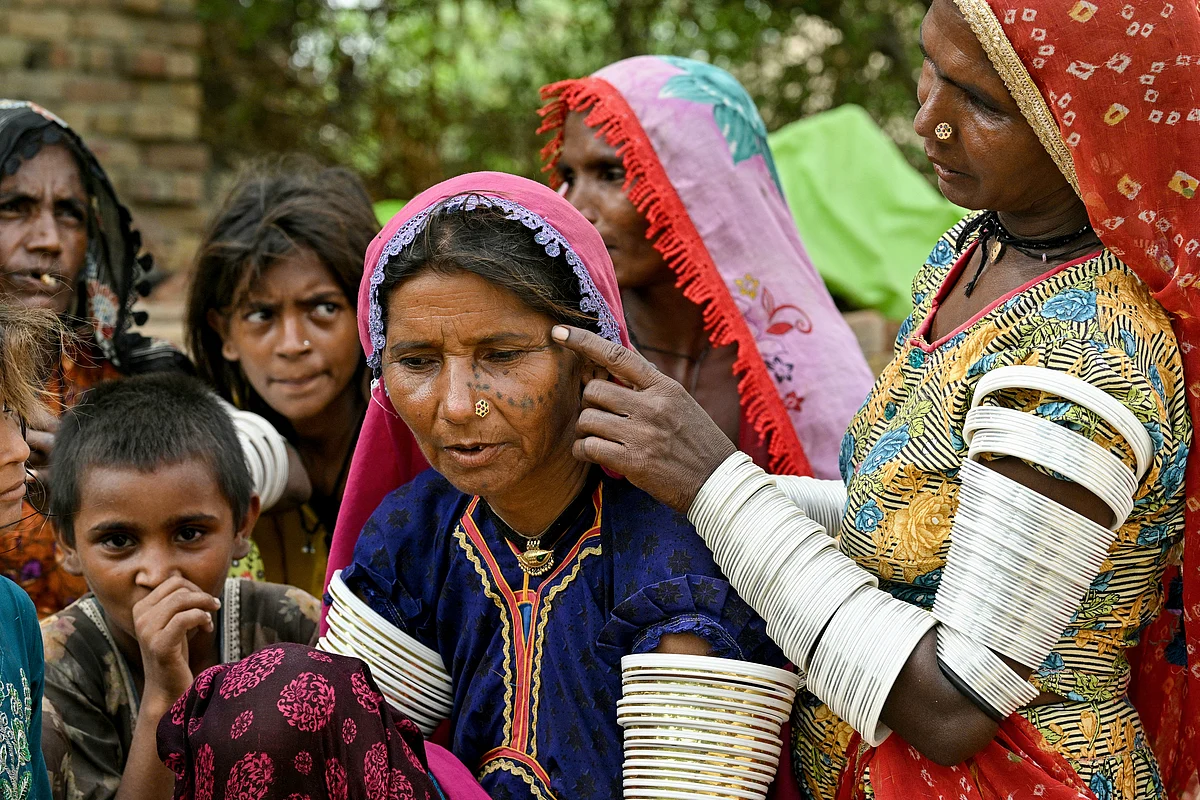
A villager in traditional attire points to a native tattoo on Reshma’s face at Ponjo Kolhi village, near Umerkot. — AFP
Six-year-old Pooja barely flinches as designs of circles and triangles are inked onto her chin and forehead. Her sister, seven-year-old Champa, eagerly waits her turn, proclaiming, “I am ready too.”
Yet, as rural Hindu communities in Muslim-majority Pakistan get closer to urban areas, many young women are moving away from these “old customs.”
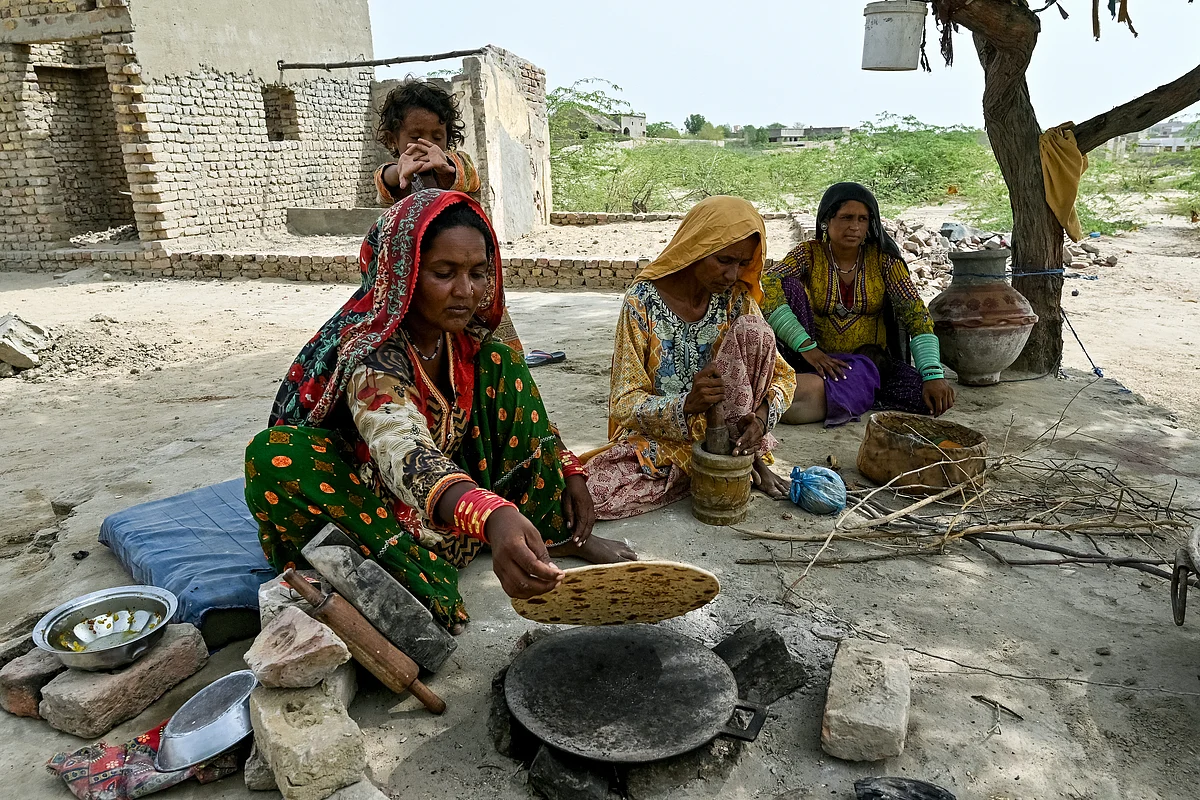
Aklan Jogi and Rekha Lalnath, adorned with traditional face tattoos, prepare a meal at Sodo Jogi Colony, Umerkot. — AFP
“These symbols distinguish us,” says 20-year-old Durga Prem, a computer science student from nearby Badin. “Our generation doesn’t favor them anymore. In the social media era, young girls avoid facial tattoos, fearing they make them look different or unattractive.” Her sister, Mumta, also refuses the tattoos that mark their older relatives.
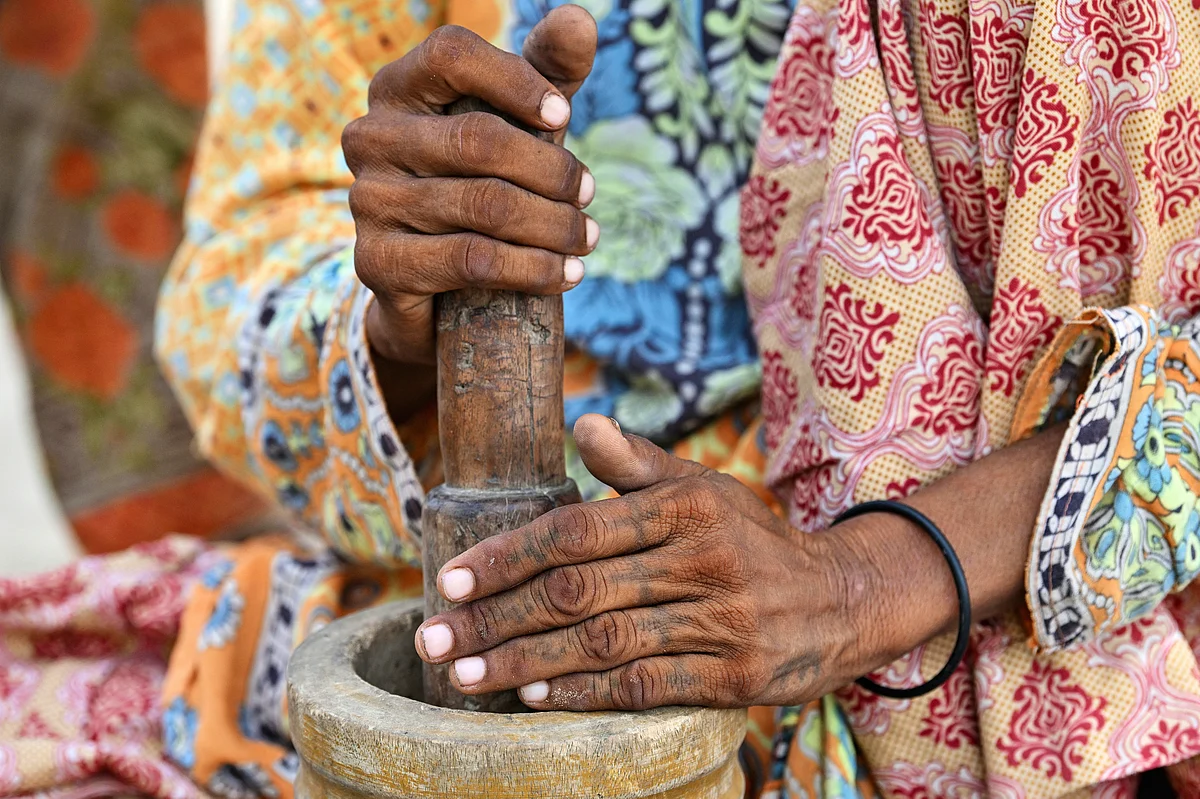
Rekha Lalnath shows her indigenous hand tattoos while grinding spices at Sodo Jogi Colony, Umerkot. — AFP
“If we still lived in the village, we might have had these marks,” she reflects.
Protecting Against Evil Spirits
In Pakistan, only two percent of the 240 million population are Hindu, mostly residing in southern Sindh’s rural areas. Discrimination is widespread, and Hindu activist Mukesh Meghwar notes that younger generations prefer not to be visibly identified as Hindu in public. Tattoos are largely taboo in Islam, and even those who have them rarely showcase them. “We can’t compel our daughters to continue this practice,” Meghwar states. “It’s their decision, but we might be the last to see these tattoos on our women,” he adds.
Though few Hindus recall the tattoos’ origins, anthropologists suggest they have been a cultural hallmark for centuries. “These symbols trace back to the Indus civilisation,” says anthropologist Zulfiqar Ali Kalhoro, noting their use to identify community members and ward off evil spirits. Admiring the tattoos on the smiling sisters, elder Jogi agrees that the tradition beautifies women. “It’s a passion that continues through generations,” she remarks. The tattoos start as dark black but fade to deep green, lasting a lifetime. “They define us,” says Jamna Kolhi, who received her tattoos alongside Jogi in her youth. “These were made by my childhood friend, who passed away,” recalls 40-year-old Jamna. “These tattoos remind me of her and our past.”