
Arabic speakers in the UAE now have access to trustworthy health information on YouTube.
YouTube Health has launched in Arabic to help individuals across the Arabic-speaking world find accurate medical information. So far, it has partnered with Cleveland Clinic Abu Dhabi and Burjeel Hospital to deliver reliable health content to users.
How Does YouTube Health Operate?
When users search for medical topics on the YouTube app, a new “shelf” will highlight videos from reputable health channels like Burjeel and Cleveland Clinic Abu Dhabi. Additionally, a panel will appear displaying easy-to-understand information from credible third-party sources for added context. In the UAE, these panels will feature information from trusted hospitals and health authorities.
Stay informed with the latest updates. Follow KT on WhatsApp Channels.
From UAE to MENA
“We have 7.5 million people in the UAE who regularly visit YouTube, and over 20 million in Saudi Arabia. We know there’s a demand for health information,” Dr. Garth Graham, head of YouTube Health, told Khaleej Times in an exclusive interview.
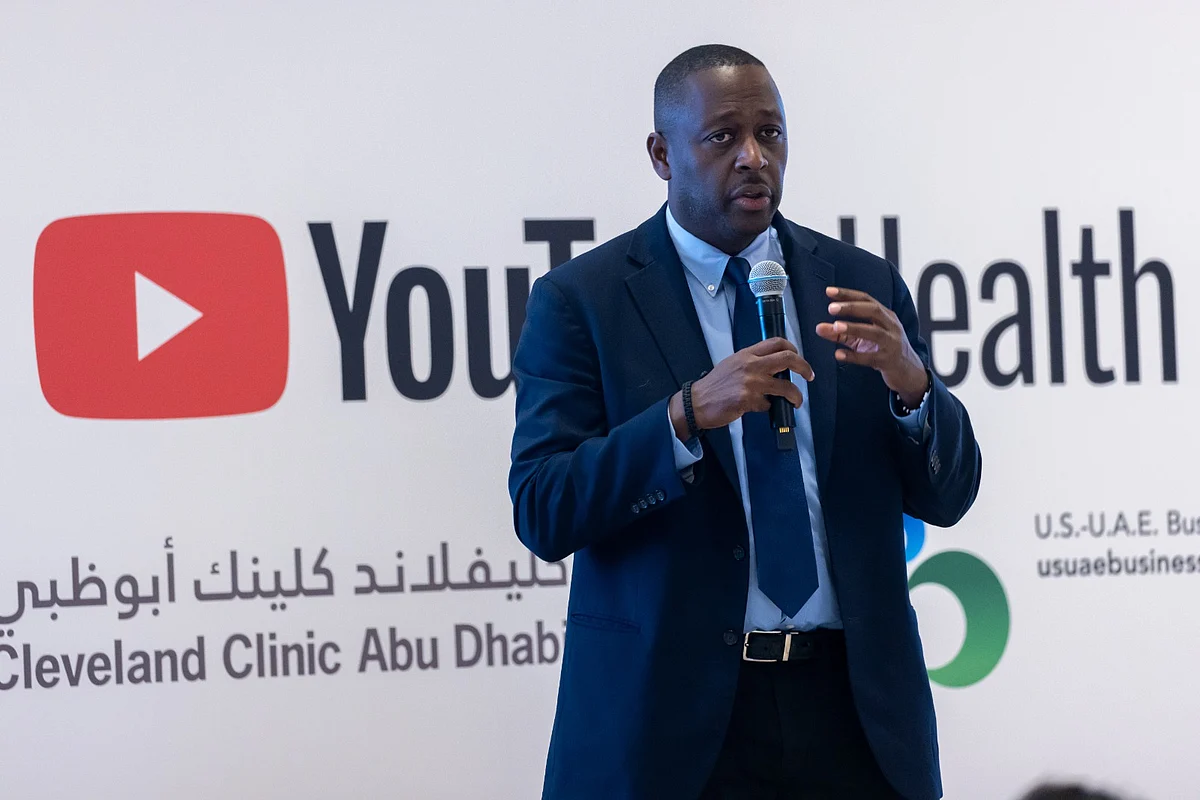
Arabic has been added as the latest language in YouTube Health, alongside nine others including English, French, and Japanese. It’s available in 11 countries, now including the UAE. Graham noted that the UAE is just the starting point, with plans to expand throughout the Middle East and North Africa.
AI and Health Misinformation
As AI technologies become more sophisticated, distinguishing fact from fiction becomes challenging, heightening the need for credible health information. YouTube has taken a proactive approach towards AI.
The head of YouTube Health stated that as long as AI-generated content is disclosed and factual, it can be used. “The crucial aspect is our trust and safety policies that address misinformation, applicable to both AI and non-AI content. The methodology used to create content is irrelevant,” Graham explained.
“Our focus, whether AI or not, is on whether the information could be harmful or violates community guidelines, particularly if it contradicts local health authorities or the World Health Organization.”