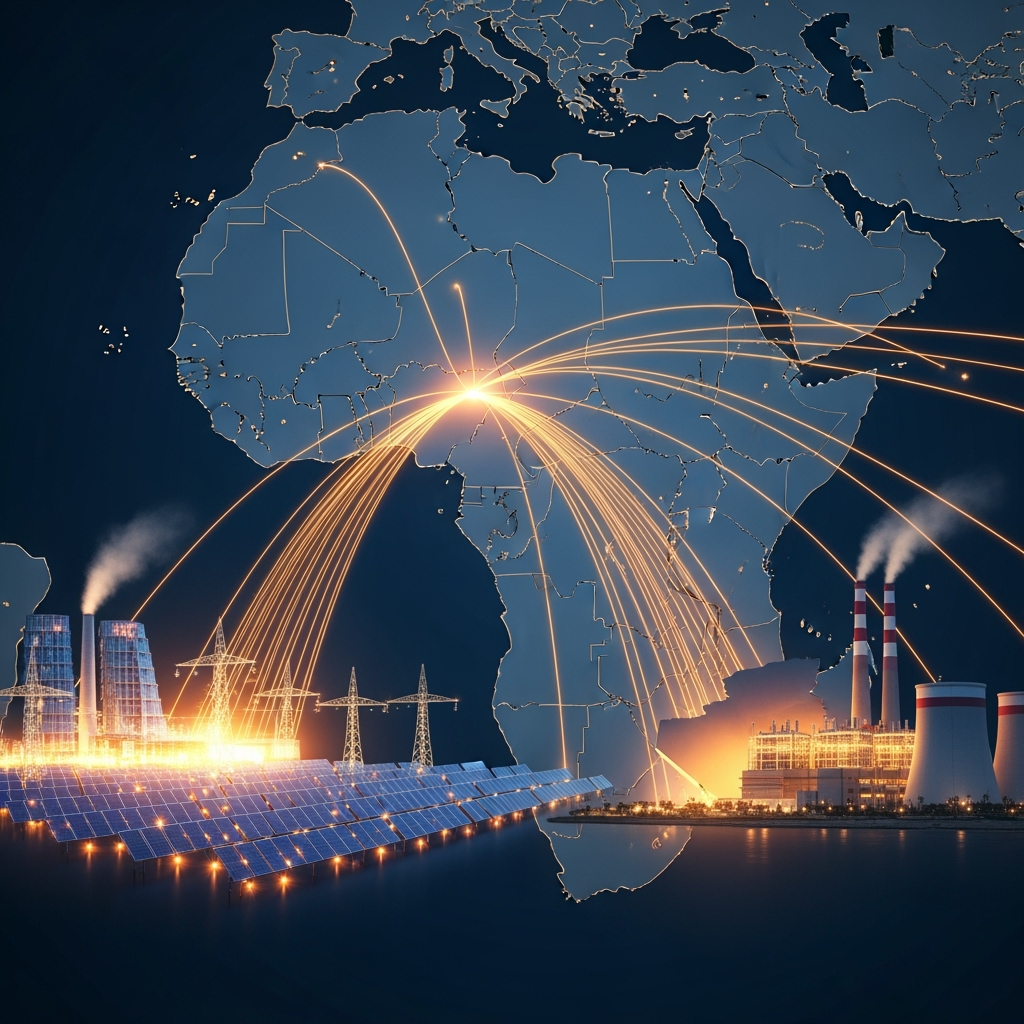
A recent report ranked Egypt and Algeria among the top producers, according to Arab media. Egypt is in second place, producing 209,398 gigawatt-hours, thanks to its diverse mix of natural gas, hydroelectric, and solar energy. It also has major projects like the Benban Solar Park and continues plans to develop nuclear power through the El Dabaa Nuclear Plant.
Algeria aims for a comprehensive energy transition to ensure sustainability and source diversity, heavily investing in solar energy. Algeria’s geographic location, with strong solar radiation, contributes to this transition, according to Algerian media.
Alongside Algeria, South Africa leads with a production of 237,763 gigawatt-hours, primarily relying on coal, which constitutes about 80% of its energy mix. Despite this dependence, South Africa is adopting renewable energy projects such as solar and wind power to reduce carbon emissions and develop a sustainable local energy market.
Regarding other countries on Africa’s top 10 electricity producers list, Morocco ranks fourth, producing 42,722 gigawatt-hours. Nigeria, in fifth place, produced 37,915 gigawatt-hours of electricity. Libya ranks sixth, producing 35,106 gigawatt-hours, maintaining good energy production levels and targeting solar power stations in desert areas to boost capacity.
Ghana, in seventh place, produced 23,167 gigawatt-hours, relying mainly on hydroelectric power from the Akosombo and Bui dams. It is also doubling efforts in solar energy to meet increasing local demand. Ghana’s electricity company has innovated solutions to reduce technical losses through smart meter projects.
Tunisia, in eighth place, produces 21,422 gigawatt-hours, largely relying on natural gas but with a strong shift towards solar energy in the south, aiming to source 30% of electricity from renewables by 2030.
Mozambique ranks ninth, producing 19,558 gigawatt-hours, mainly relying on the Cahora Bassa Dam and utilizing natural gas reserves in new projects like the Temane Gas-to-Power Project. Zambia, in tenth place, produces 19,475 gigawatt-hours, relying heavily on large projects like the Kafue Gorge and North Bank power stations, focusing on solar energy expansion to address drought challenges affecting hydroelectric capacity.
The report states that North African countries boast electricity access rates exceeding 90%, implementing strategies to improve their energy sectors, reduce fossil fuel dependence, and facilitate energy transition. In contrast, many sub-Saharan African countries face significant challenges, with half the region’s population lacking electricity access, and over 600 million Africans unable to access energy, resulting in the lowest global access rates. The report revealed that out of 685 million people worldwide without electricity, 590 million (86%) are in Africa, where access remains a major challenge, especially in rural areas.