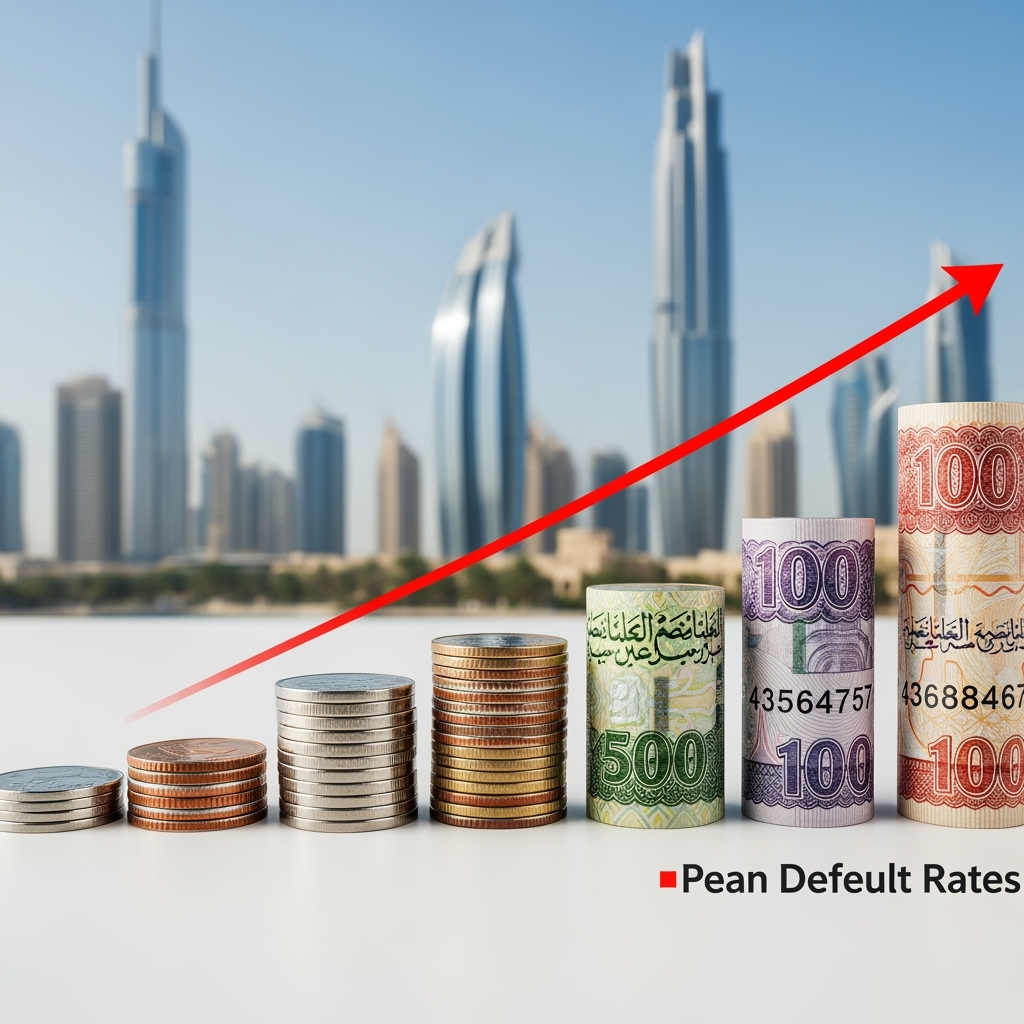
The UAE’s major banks have seen their loan default rates cut in half in the years following the pandemic, thanks to a robust economy that has stabilized employment and non-oil sectors.
According to S&P Ratings’ report, “What’s Behind the Surge in UAE Banks’ Consumer Lending,” the top 10 UAE banks reduced their nonperforming loans (NPLs) to 3.0 percent of their loan portfolios by the end of June 2025, down from 6.1 percent at the end of 2020.
By June 2025, consumer loans in the UAE totaled Dh540.9 billion, marking a 55 percent jump from the end of 2021, with an average annual growth rate of 13.6 percent.
Stay informed with the latest updates. Follow KT on WhatsApp Channels.
In 2020, during the pandemic, bad loan rates surged in the UAE as companies reduced staff and many businesses shut down due to Covid-19 restrictions.
During this time, the cost of risk dropped to 40 bps from 169 bps. “We expect NPLs to remain stable due to the supportive economic climate,” said S&P analysts.
The UAE has seen significant growth post-pandemic, with an impressive 7.9 percent growth in 2022, ranking it among the world’s fastest-growing economies.
As borrowing has increased, household leverage in the UAE has consistently risen, outpacing nominal GDP growth over the past three years.
Household debt as a percentage of GDP rose to 25.4 percent in 2024 from 20.7 percent in 2022, according to S&P.
Increased Demand for Loans and Mortgages Expected
S&P forecasts that demand for personal loans, mortgages, and auto loans will rise in the UAE during 2025 and 2026 as interest rates fall, making loans cheaper.
“Between 2025 and 2026, we anticipate consumer credit to grow by 10 to 12 percent annually. Further interest rate cuts will support this growth. We expect two more 25 bps rate cuts this year and another 50 bps easing in 2026. The UAE Central Bank will adjust rates to maintain the dirham’s peg to the US dollar,” stated S&P Global Ratings.
Analysts expect two more interest rate cuts this year, driving credit demand from individuals and businesses in the UAE.
“The US Federal Reserve is cautiously navigating an economy with inflation above target, with two more cuts likely this year,” said Ipek Ozkardeskaya, senior analyst at Swissquote Bank.
On September 17, the UAE Central Bank reduced the base rate for the overnight deposit facility to 4.15 percent from 4.4 percent, following a 25 bps rate cut by the Fed.
The UAE’s strong economic performance over the past four years has been driven by both oil and non-oil sectors and significant visa reforms, offering long-term visas not tied to employment.
This has led to a population increase to 11.2 million in 2024 from 9.6 million in 2021, boosting demand for consumer credit, including mortgages, personal loans, auto loans, and credit cards.
The rapid adoption of digital lending platforms and shorter processing times have also contributed to growth.
S&P analysts predict this trend will continue for the next few years.
“We expect GDP to grow by an average of 4.1 percent from 2025 to 2027, mainly due to non-oil activities,” said S&P.