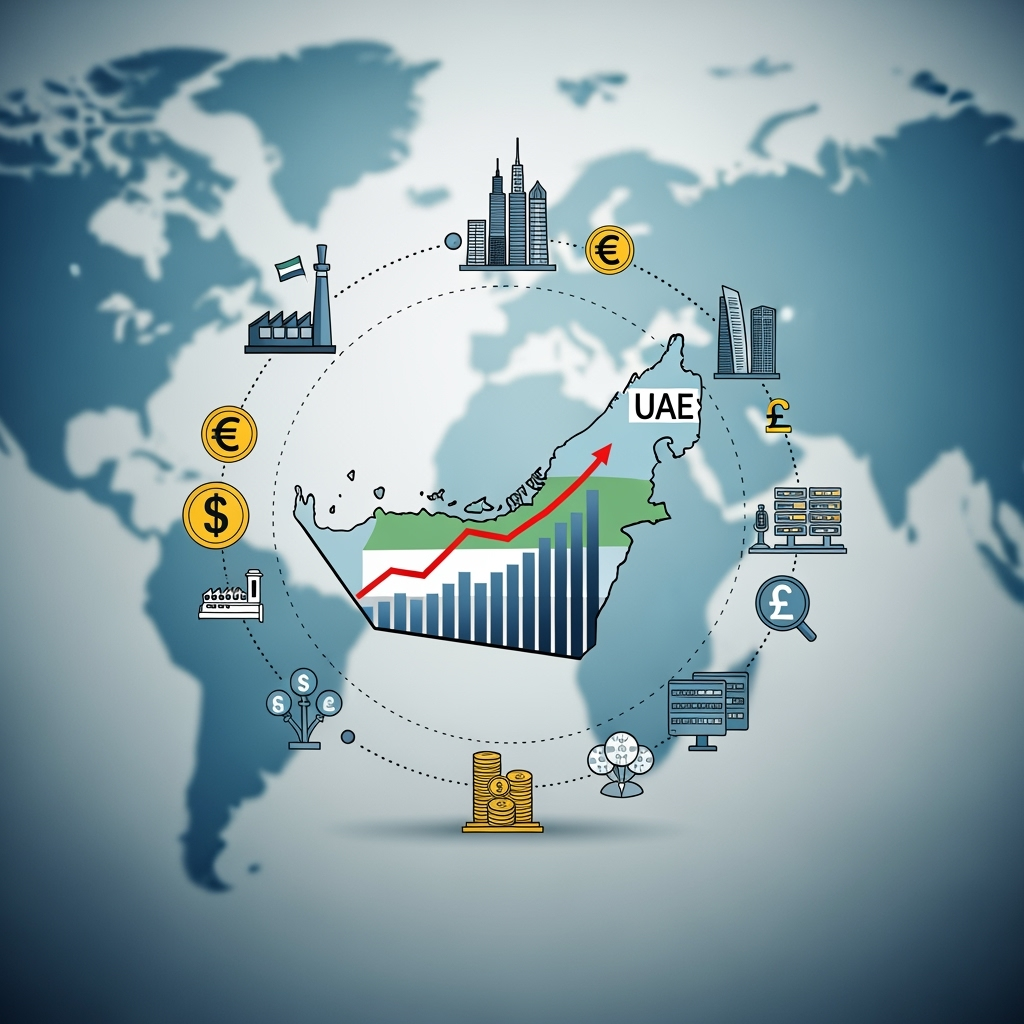
The UAE has once again affirmed its global allure as a top destination for foreign direct investment (FDI), leading the world in attracting FDI relative to its economy’s size.
As per the 2025 Greenfield FDI Performance Index by fDi Intelligence, the UAE ranked first out of 104 economies, with an impressive index score of 14.26. This indicates it attracted over 14 times the expected greenfield FDI projects for its GDP size.
This achievement places the UAE ahead of Namibia, Costa Rica, and all other surveyed economies. Despite a modest 1.8% project growth in 2024, the UAE was still the second most favored FDI destination globally, just behind the US, with the UK, India, and Germany following in the next spots.
The country’s expanding appeal as a business and innovation hub is evident. According to the Unctad World Investment Report 2025, the UAE received Dh167.6 billion ($45.6 billion) in FDI last year, a 48% increase from 2023, placing it among the top 10 global investment destinations despite a global slowdown. In the Middle East, the UAE dominated, accounting for nearly 37% of the region’s total inflows.
Greenfield investment was crucial in driving this success. In 2024, the UAE attracted 1,369 projects, ranking second globally after the US. Capital commitments for these projects reached Dh53.3 billion ($14.5 billion), showing resilience despite a global slowdown in greenfield projects. Business services, financial services, and technology led the sectors, with renewable energy, real estate, transport, and consumer products also gaining momentum.
Investment consultants highlight that the UAE’s success is not just about numbers but a testament to transformation, foresight, and execution. “The UAE combines stability, openness, and innovation-driven growth to create an ecosystem that attracts capital, talent, and ideas globally. Amid global FDI pressure, the UAE stands out as a regional hub and a model for economies aiming for long-term prosperity,” stated James Mathew, CEO and managing partner of UHY James.
Mathew emphasized that the UAE’s success results from long-term planning. “The UAE has used foreign investment to diversify its economy, reducing hydrocarbon reliance and expanding industrial, financial, and knowledge sectors.”
The National Investment Strategy 2031 aims to increase FDI inflows to Dh1.3 trillion and triple cumulative stock to Dh2.2 trillion. This aligns with strategic plans like Artificial Intelligence 2031 and Centennial 2071, which aim to integrate technology and innovation into the economy.
These initiatives have caught global investors’ attention. In 2024, Microsoft announced a global engineering development center in Abu Dhabi and partnered with AI firm G42 to build sovereign cloud and AI infrastructure. These moves highlight the UAE’s ability to attract high-value projects in knowledge economies. Google’s activities contributed Dh21.8 billion ($5.9 billion) to GDP in 2024, while Microsoft’s investments are expected to generate Dh273 billion in revenue and over 152,000 jobs by 2028.
The UAE’s enduring appeal lies in its enabling environment. Foreign investors enjoy a liberal business climate with 100% ownership in most sectors, a competitive 9% corporate tax rate, streamlined licensing, and robust arbitration via institutions like the Dubai International Arbitration Centre. Long-term Golden Visas and flexible Green Visas make it easier for skilled professionals and entrepreneurs to build futures in the Emirates.
The establishment of a federal Ministry of Investment in 2023, led by Mohamed Hassan Al Suwaidi, centralized efforts to attract capital and promote opportunities. Digital platforms like “Invest UAE” offer a one-stop gateway for global investors into the country’s diversified economy.
Additionally, the UAE’s international agreements are pivotal. The country has signed 21 Comprehensive Economic Partnership Agreements and over 120 bilateral investment treaties, ensuring capital inflows are protected within global trade frameworks. Its nonaligned foreign policy uniquely positions it as a bridge between East and West, maintaining investor confidence in a volatile region.
The trajectory over the past decade shows significant progress. FDI inflows rose from Dh31.6 billion ($8.6 billion) in 2015 to Dh167.6 billion ($45.6 billion) in 2024, representing over a 10% compound annual growth rate. The country’s cumulative FDI stock now stands at approximately $270 billion. Beyond capital, it has become a magnet for human capital, ranking fifth globally for overall talent competitiveness and third in AI talent generation in 2024, according to INSEAD and Stanford.