
The UAE leads in health digitisation, ranking 1st in the World Index of Healthcare Innovation. This underscores the nation’s dedication to integrating technology in healthcare and the extensive Internet usage by its population.
“Hospitals of the future” are now a reality in the UAE’s healthcare framework, merging advanced digital infrastructure, AI, big data, and IoMT to transform healthcare delivery and experience.
The UAE’s smart healthcare market is projected to reach $1,530.2 million by 2030, with a CAGR of 15.4% from 2025 to 2030, positioning it as a dynamic region in this evolution.
In a nation renowned for innovation and service excellence, smart hospitals are a strategic fusion of technology with compassion, precision, and personalization.
The National Innovation Strategy and Vision 2031 place healthcare at the core of the UAE’s digital transformation. Government initiatives, like MoHAP’s digital health roadmap and the Dubai Health Strategy 2021-2025, drive the adoption of smart technologies across public and private healthcare sectors.
Leading the way is Seha, integrating AI systems to enhance diagnostics, streamline administrative tasks, and boost patient safety. Dubai hospitals employ EMR systems, AI-driven triaging, and wearables for comprehensive intelligent care.
These advancements redefine care by reducing wait times, minimizing errors, enhancing interactions, and improving clinical outcomes.
A major challenge in traditional hospitals is time loss in diagnostics and treatments. Smart hospitals counter this with predictive analytics, RPA, and AI-assisted decision-making.
In Abu Dhabi, AI predicts ICU patient deterioration for timely interventions, reducing mortality, while AI diagnostics detect conditions like cancer more accurately and quickly than human radiologists. AI remains a support tool.
Automation in logistics, like robotic medication dispensing and AI inventory management, allows healthcare workers to focus on patient care.
Smart hospitals extend beyond walls, with IoMT enabling continuous care at home.
Wearables track vital signs and medication adherence. For instance, DHA’s remote cardiac monitoring via smartwatches reduced readmissions by 30% and empowered patient health management.
In the post-Covid-19 era, telehealth is standard, with smart hospitals offering virtual consultations and remote diagnostics, while ensuring data security.
Data is central to smart hospitals, from genomic sequencing for personalized treatments to real-time ICU dashboards.
Smart infection control like touchless check-ins and UV disinfection enhances safety against pandemics.
Smart hospitals are the future of healthcare in the UAE, representing a paradigm shift in healthcare perception and experience. By merging technology with empathy, they enhance efficiency, outcomes, and restore the human touch through smarter workflows and personalized care.
The author is Founder Chairman, Aster DM Healthcare
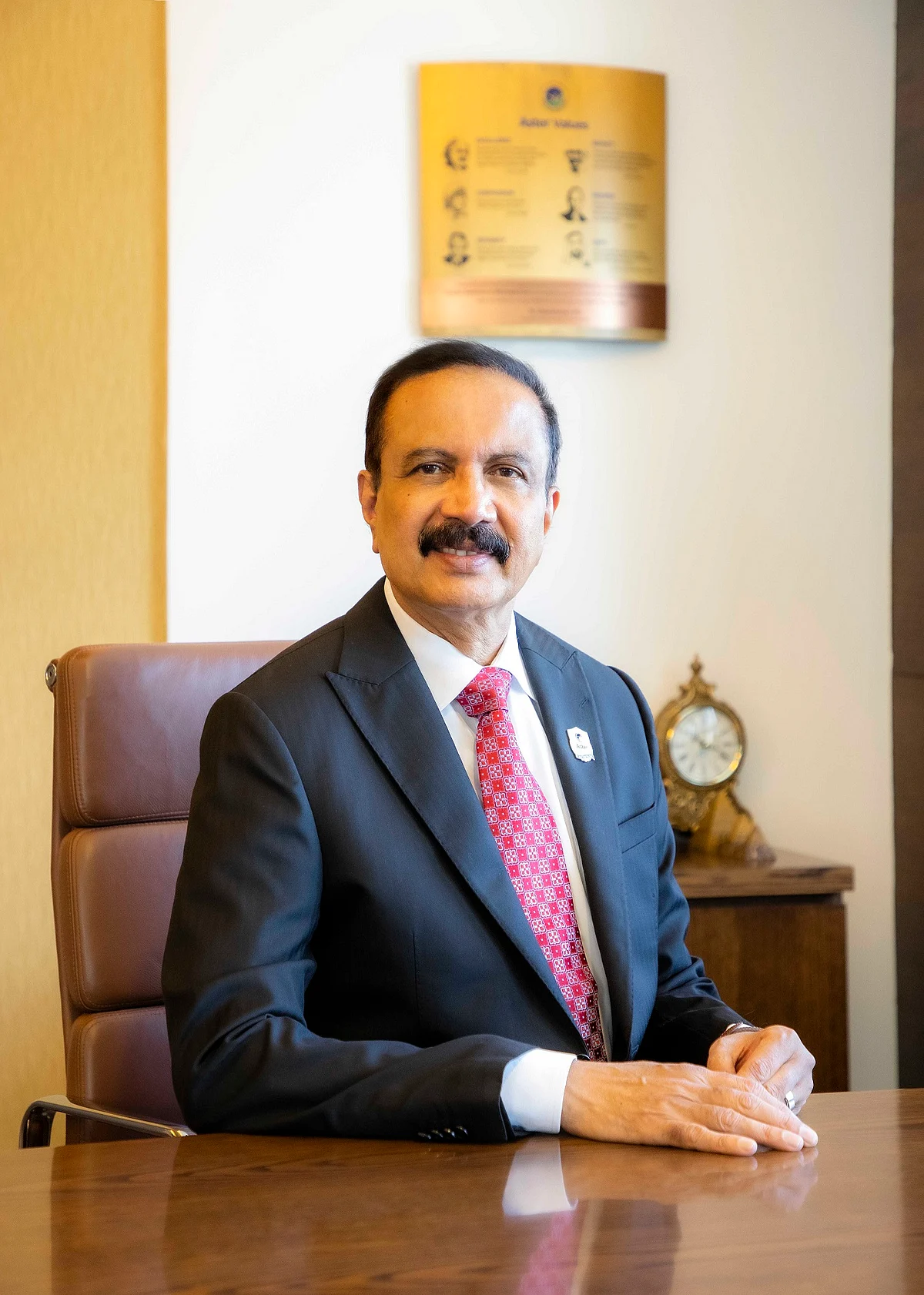
Dr Azad Moopen, Founder Chairman Aster DM Healthcare