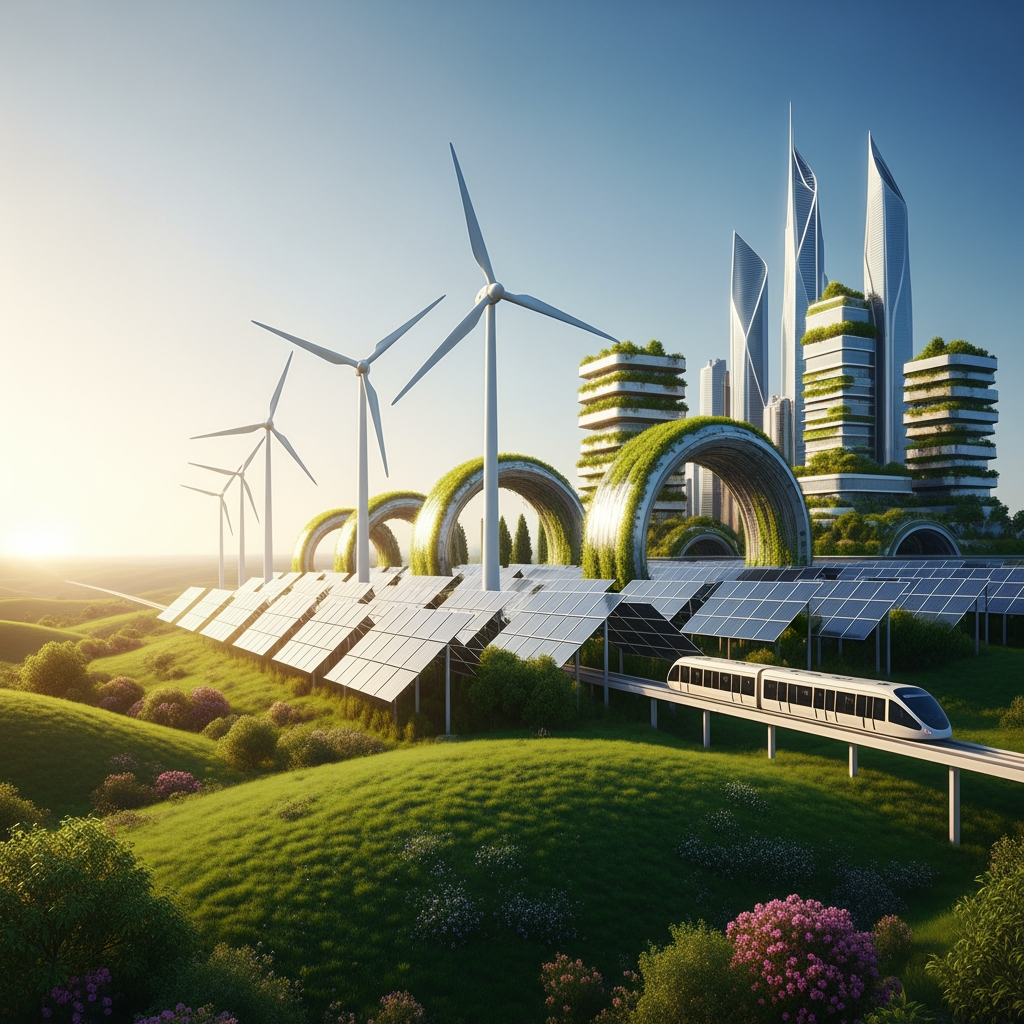
The UAE is forging a bold yet practical path to a low-carbon future. In 2021, it became the first country in the Middle East and North Africa to pledge net-zero emissions by 2050 under its Net Zero by 2050 Strategic Initiative. This marked a significant milestone in regional climate leadership, proving that economic growth and environmental stewardship can coalesce.
The UAE’s strategy is founded on a clear principle: sustainable progress. By 2030, the nation plans to significantly reduce carbon emissions, accelerate the adoption of renewable energy, and integrate sustainability across all sectors. This balanced approach enables the country to sustain economic growth while fulfilling its environmental promises.
Central to the UAE’s plan is energy transformation. The nation has significantly invested in renewable power through Masdar, a rapidly expanding clean-energy company with projects in over 40 countries. The Mohammed Bin Rashid Al Maktoum Solar Park in Dubai, one of the world’s largest single-site solar parks, is projected to achieve 5,000 megawatts by 2030. Abu Dhabi’s Al Dhafra Solar Project and the developing green hydrogen program further bolster this transition to clean energy and sustainable industries.
The oil and gas industry is also aligning with this vision. Adnoc aims to achieve net-zero operations by 2045, five years ahead of the national target, through investments in carbon capture, electrification, and renewable energy integration. This synergy between government policy and industrial innovation illustrates the UAE’s cohesive approach to decarbonization. Beyond infrastructure, the UAE is fostering behavioral and systemic change. Initiatives like the National Energy Strategy 2050, UAE Green Agenda, and the upcoming Federal Climate Law lay the groundwork for accountability, green finance, and sustainable growth. The nation’s focus on mangrove restoration, water conservation, and waste-to-energy projects underscores its commitment to both mitigation and adaptation.
As COP30 approaches, the UAE’s dedication provides a blueprint for others. It shows that climate responsibility is not a constraint but an opportunity to create robust economies, resilient societies, and a shared global future based on action and accountability.