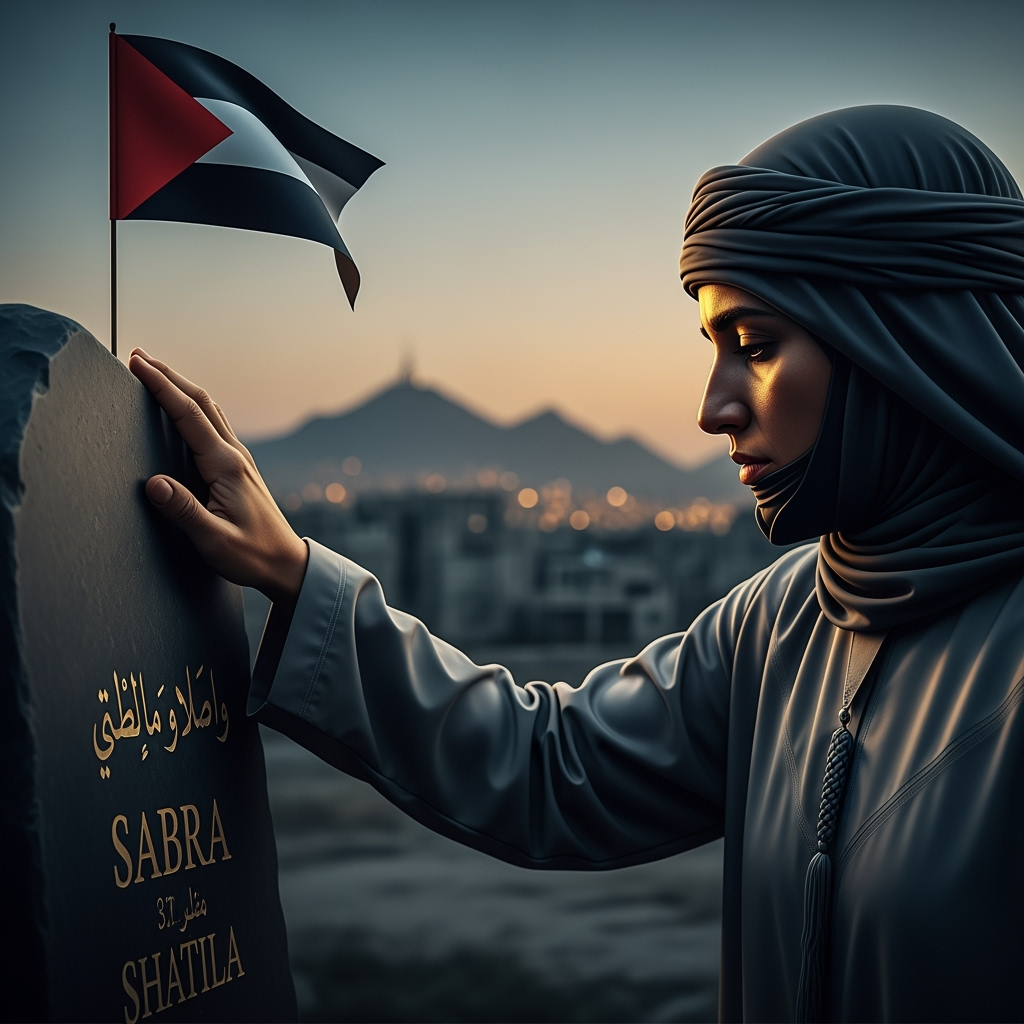
Demonstrating profound solidarity and compassion, the UAE marked a half-hour work stoppage 43 years ago, on September 21, 1982, to protest the Sabra and Shatila massacre in Beirut, which claimed over 3,200 lives.
This tragic event was among the most shocking massacres during the Lebanese civil war, which began in 1975. Most victims were refugees from the 1948 Nakba who had fled Palestine following the creation of Israel.
From September 16 to 18, 1982, Palestinian refugees residing in Shatila and neighboring Sabra in Beirut’s southwest, alongside Lebanese civilians, were attacked by a right-wing Lebanese militia, reportedly with Israeli military coordination.
Stay informed with the latest updates by following KT on WhatsApp Channels.
The massacre sparked global outrage. In the UAE, as reported by Khaleej Times, work halted from 9am to 9:30am across all UAE ministries, government offices, and various organizations, following a UAE Cabinet decision to express the nation’s and government’s condemnation of the horrific massacre.
Airports ceased operations, including immigration, passport sections, ground services, and cargo divisions. Schools countrywide paused classes for half an hour, with students observing a moment of silence in memory of the victims.
Postal, telegraph, and telephone offices also stopped work for half an hour, as did all public utility departments such as water and electricity. Banks and shops closed in protest of the Beirut massacre.
The UAE expressed deep compassion, sending condolences to then-Palestinian leader Yasser Arafat and the Palestine Liberation Organization (PLO), an umbrella group for Palestinian political parties established in 1964.
The UAE’s founding father, the late Sheikh Zayed bin Sultan Al Nahyan, urged the international community, especially the UN Security Council’s permanent members, “to take swift, decisive action to end the ongoing suffering of the Lebanese and Palestinian people.”
Khaleej Times reported Sheikh Zayed’s demand for “the immediate withdrawal of Zionist forces from Lebanon,” emphasizing that Israel’s brutal actions were supported significantly by the West, particularly the USA.
‘Deep grief and sorrow’
Sheikh Humaid bin Rashid Al Nuaimi, Member of the Supreme Council and Ruler of Ajman, sent condolences to Arafat, while Sheikha Fatima, wife of the President and chairperson of the UAE Women’s Association, conveyed her condolences to the PLO Executive Committee.
Sheikha Fatima’s message expressed horror at the terrifying massacres in Sabra and Shatila, involving women, children, and the elderly, committed by Zionist criminals without regard for human dignity.
“On behalf of the UAE Women’s Association and all UAE mothers and women, we express our profound grief over this unprecedented massacre in modern history and assure our continued support for the Palestinian liberation struggle until their lands are restored and the perpetrators punished.”
“All mothers and women in the UAE share in the grief of Palestinian mothers and women during these trying times, praying for the martyrs’ peace and strength to prevent such crimes from recurring,” Sheikha Fatima added.
Meanwhile, in a televised address on September 20, 1982, US President Ronald Reagan stressed the necessity for Israeli forces to withdraw from Beirut, allowing multinational forces to support the Lebanese government in regaining control over the capital and country.
‘Act of genocide’
After the massacre, the UN General Assembly declared it an “act of genocide.” In February 1983, a UN commission found Israeli authorities or forces were involved, directly or indirectly, in the Sabra and Shatila massacres. However, no Lebanese or Israeli individuals were punished for these crimes.
The Beirut massacre remains a deeply traumatic event in Palestinian history, commemorated annually by Palestinians in Lebanon and Palestine.