The UAE is at a critical juncture in its national growth, driven by ambitious goals, visionary leadership, and a strategic plan for the future. On Eid Al Etihad, as the UAE aims to accelerate its development, this article explores how current strategies are shaping the nation’s future.
Aligning Ambition with Climate Goals
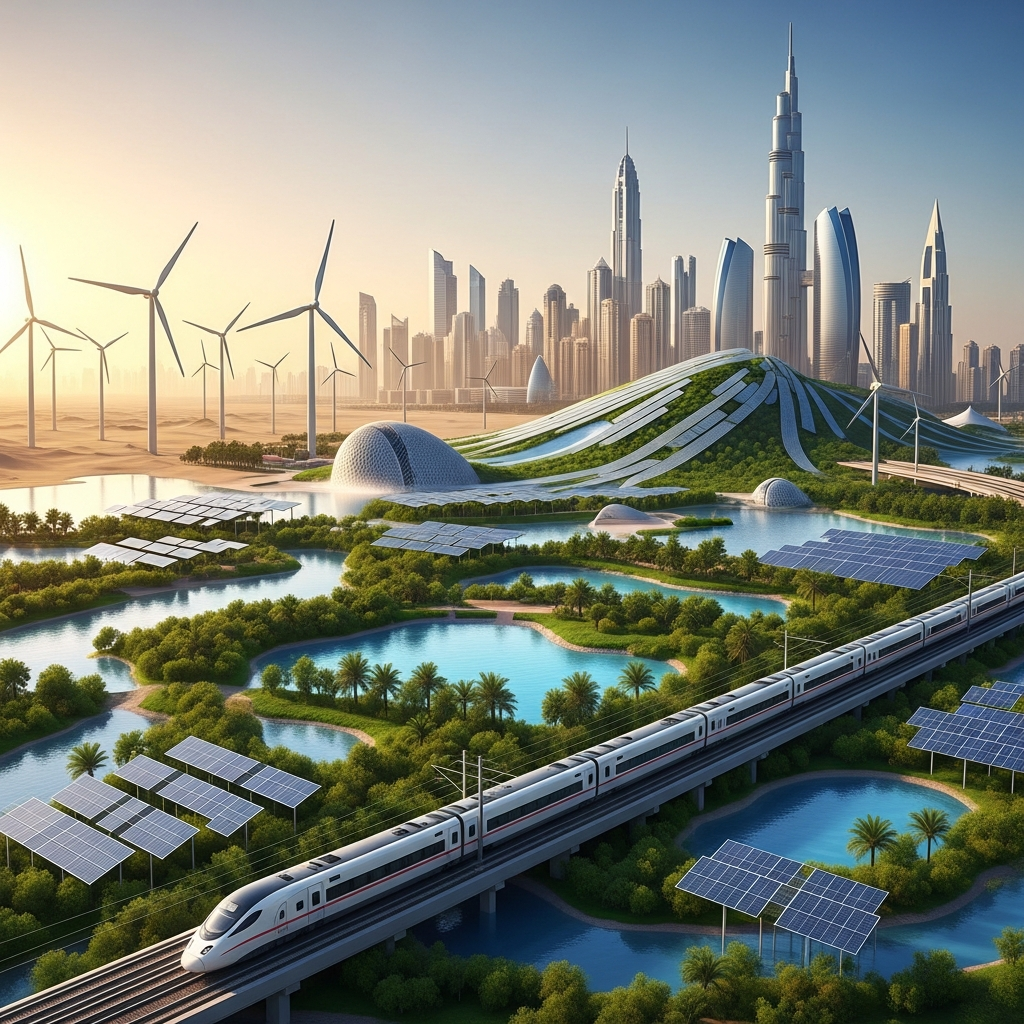
The UAE has made significant commitments to climate and clean energy initiatives, such as the UAE Net Zero by 2050 Strategic Initiative, aligning national policies and investments accordingly. The government forecasts that clean energy capacity, including solar and nuclear, will reach approximately 14 GW by 2030, a significant increase from a few hundred megawatts a decade ago.
Vision 2050 Powers Energy Strategy 2050
UAE Vision 2050 forms the long-term framework for sustainability, inclusive growth, and innovation-driven transformation. The updated Energy Strategy 2050 sets specific targets for expanding clean energy and improving efficiency, aiming to significantly increase clean energy’s share to about 30% by 2030, and approximately 44-50% by 2050, while achieving major energy efficiency gains. These initiatives aim to reduce emissions, enhance energy security, and protect the economy from fossil fuel price fluctuations.
Sustainable Economic Growth in Vision 2050
Vision 2050 emphasizes economic transformation through diversification and high-value activities. Strategic investments in renewable energy, advanced manufacturing, fintech, tourism, and the digital economy aim to create a strong non-oil economy, generating skilled jobs and attracting foreign investment. The government plans multibillion-dirham investments in clean energy and related infrastructure to support this shift.
Pathway to Environmental Protection and Climate Action
The UAE’s Net Zero by 2050 pledge positions it as one of the first MENA countries to set a carbon-neutrality target. This pledge involves large-scale solar and nuclear projects, investment in carbon-management technologies like CCUS, electrification of water desalination, energy efficiency programs, and nature-based solutions to reduce emissions. These measures are led by the Ministry of Climate Change and Environment, with cross-sector coordination.
Advancing with Technology and Smart Cities
The National Smart Cities agenda, driven by emirate-level initiatives like Smart Dubai and Masdar City, aims to make UAE cities data-driven, AI-powered, and resource-efficient. Smart grids, intelligent transport systems, digital public services, and urban technologies (IoT, AI, digital twins) are key components enhancing quality of life while reducing resource consumption.
Enhancing Education and Human Capital
Centennial 2071 and Vision 2050 focus on education, research, and skill enhancement to prepare future generations for innovation and economic transformation. The plans advocate for educational reforms emphasizing advanced technologies, entrepreneurship, and research-driven universities to develop talent for a knowledge economy.
Shaping the Future – One Step at a Time
Future-oriented UAE is actively investing in and structuring policies and institutional frameworks to achieve its goals. From expanding clean energy to developing smart, resilient cities and revamping education, current strategies collectively lay the groundwork for the UAE’s future transformation.
— James Mathew is the CEO and Managing Partner of UHY James.