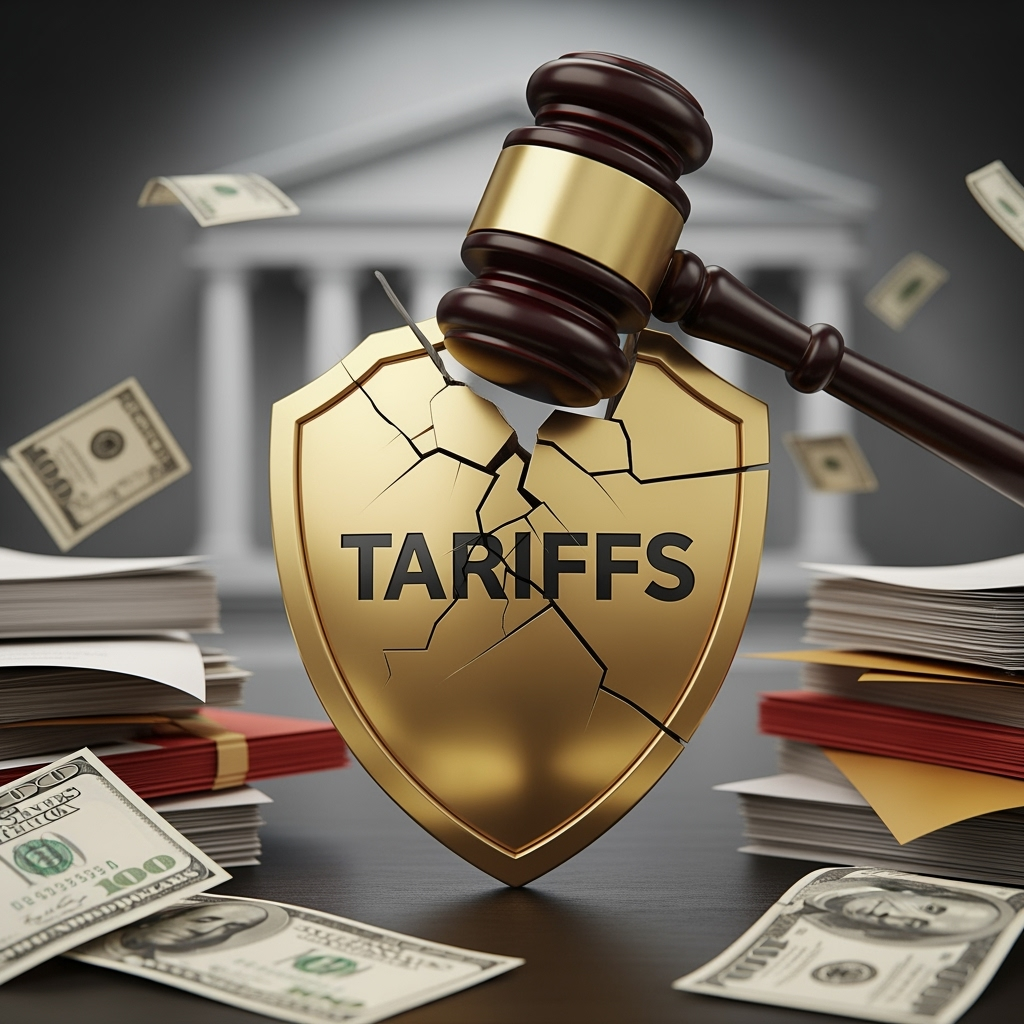
On Friday, August 29, a US appeals court determined that several of President Donald Trump’s tariffs, which have disrupted international trade, were unlawful. However, these tariffs will remain temporarily, providing Trump the opportunity to escalate the matter to the Supreme Court.
The US Court of Appeals for the Federal Circuit, in a 7-4 decision, upheld a lower court’s judgment that Trump had exceeded his powers by using emergency economic authorities to establish extensive tariffs.
Despite this, the court permitted the tariffs to remain until mid-October, a period Trump plans to utilize strategically.
Stay informed with the latest updates. Follow KT on WhatsApp Channels.
In response to the ruling, Trump criticized the decision on his Truth Social platform, stating, “The appeals court wrongly claimed our tariffs should be removed, but they know the United States will ultimately prevail.”
He emphasized his intent to challenge the decision “with the support of the United States Supreme Court.”
This ruling presents a setback for Trump, who has used tariffs as a key economic strategy.
It also raises uncertainty about agreements Trump has made with major trade partners like the European Union and questions the fate of billions collected under these tariffs if the Supreme Court does not side with him.
Notably, this case does not address specific tariffs imposed by the Trump administration on imports such as steel, aluminum, and automobiles.
‘Diplomatic embarrassment’
Since returning to office in January, Trump has leveraged the International Emergency Economic Powers Act (IEEPA) to enforce “reciprocal” tariffs on nearly all US trade partners, with a base rate of 10% and higher rates for multiple economies.
Similar powers have been invoked to apply tariffs on Mexico, Canada, and China due to drug trafficking concerns.
In May, the Court of International Trade concluded that Trump overreached his authority with global tariffs, halting most duties, but the appeals court temporarily stayed this ruling.
Friday’s decision stated, “The statute grants significant authority to the President during a national emergency, but does not expressly include the ability to impose tariffs or taxes.”
The court did not address whether Trump’s actions were policy-driven or if IEEPA permits any tariffs, but focused on whether the “reciprocal” tariffs and those related to trafficking were authorized, concluding they were not.
Shortly before the decision was announced, Trump administration officials argued that declaring the global tariffs illegal would harm US foreign policy and security.
Commerce Secretary Howard Lutnick warned, “Such a ruling could jeopardize US strategic interests and lead to retaliation and the collapse of international agreements.”
Lutnick also noted potential disruptions to essential negotiations with trade partners.
Treasury Secretary Scott Bessent cautioned that suspending tariffs could cause “severe diplomatic embarrassment.”
Numerous legal challenges have been made against the tariffs imposed by Trump citing emergencies.
If the tariffs are ultimately deemed illegal, companies might seek refunds.