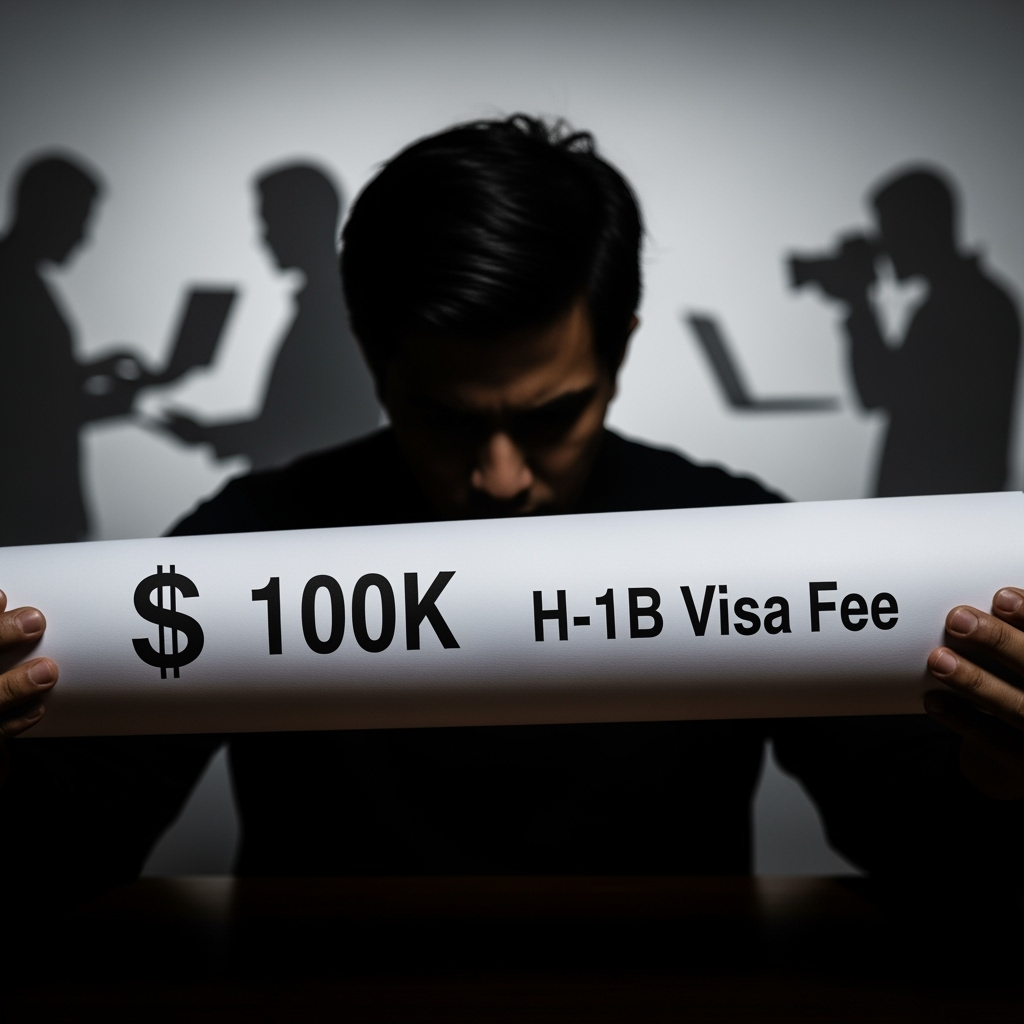
On Friday, the US administration announced it would require companies to pay $100,000 annually for H-1B worker visas, leading some major tech firms to advise visa holders to either remain in the US or return promptly.
This change could significantly impact the tech industry, which heavily depends on skilled workers from India and China.
Since assuming office in January, US President Trump has initiated an extensive immigration crackdown, including efforts to restrict certain types of legal immigration. The decision to modify the H-1B visa program is his administration’s most notable attempt to revamp temporary employment visas.
Stay informed with the latest updates. Follow KT on WhatsApp Channels.
Understanding H-1Bs
The H-1B visa program is designed for individuals from other countries working in specialized occupations in the US, often in the tech sector.
These roles can include software engineers, tech program managers, and other IT professionals.
H-1B visa holders in the US can extend their stay beyond the initial six years—three years plus a three-year extension—if a green card application has been submitted.
Other work programs include H-2A visas for temporary agricultural workers and H-2B visas for seasonal non-agricultural workers.
Some analysts predict the new fee might compel companies to relocate high-value work abroad, potentially affecting America’s competitive edge in the AI race with China.
The H-1B program provides 65,000 visas annually to employers bringing temporary foreign workers in specialized fields, with an additional 20,000 visas for those with advanced degrees. Employers are primarily responsible for the visa fees.
Trump also signed an executive order on Friday to establish a “gold card” for individuals who can pay $1 million for US permanent residency.
Trump’s Perspective
Initially, Trump expressed support for the program. “I have many H-1B visas on my properties. I’ve been a believer in H-1B. I have used it many times. It’s a great program,” he told the New York Post.
However, during his first term from 2017 to 2021, he sought to impose restrictions.
Critics of the H-1B program, including many US tech workers, argue that it enables companies to suppress wages and disadvantage Americans capable of performing these jobs. Supporters, such as Tesla CEO Elon Musk, argue it brings in essential skilled workers to fill talent gaps and maintain competitiveness. Musk, a naturalized US citizen from South Africa, has held an H-1B visa.
According to the executive order Trump signed on Friday, some employers have misused the program to keep wages low, disadvantaging US workers.
The number of foreign STEM workers in the US more than doubled between 2000 and 2019 to nearly 2.5 million, while overall STEM employment only grew by 44.5% during that period.
Who Might Be Affected?
India was the largest beneficiary of H-1B visas last year, comprising 71% of approved beneficiaries, while China followed at 11.7%, per government data.
In the first half of 2025, Amazon.com and its cloud-computing unit, AWS, secured approval for over 12,000 H-1B visas, while Microsoft and Meta Platforms each received over 5,000 approvals.
Commerce Secretary Howard Lutnick stated on Friday that “all the big companies are on board” with the $100,000 annual fee for H-1B visas.
“We’ve spoken to them,” he added.
The Indian embassy in Washington and the Chinese Consulate General in New York have yet to respond to requests for comment.