Children affected by the war in Gaza are experiencing a unique therapy program using virtual reality headsets, transporting them to peaceful worlds far removed from their reality.
This VR therapy aims to enhance children’s psychological health, with experts noting its ability to deliver results faster than traditional therapy methods.
Within a white tent set up on sandy terrain in Al-Zawayda, central Gaza, five boys excitedly explored a virtual world.
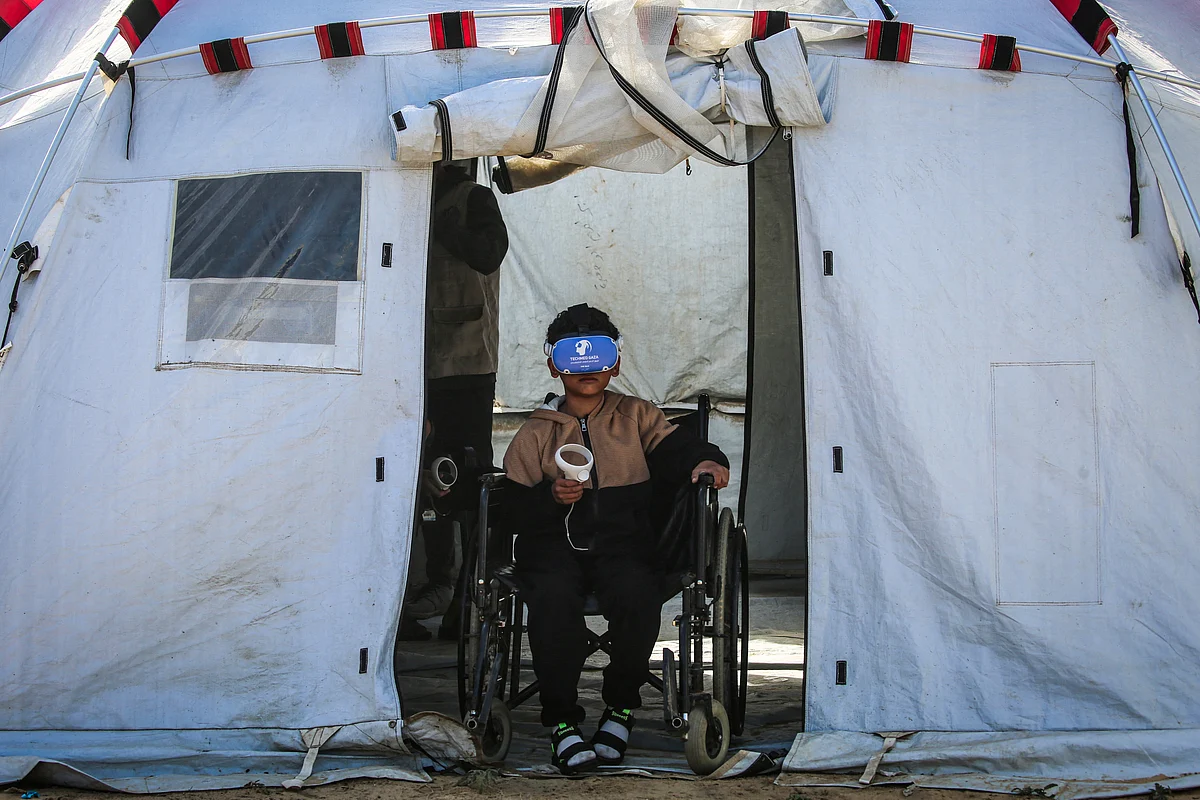
A Palestinian child in a wheelchair, wearing goggles and holding a joystick, engages with virtual reality during a medical technology initiative in Al-Zawayda, central Gaza Strip, on November 30, 2025, featuring VR therapy sessions. — AFP
The children, one in a wheelchair and others on plastic chairs, turned their heads, discovering new environments through their goggles: lush gardens, serene beaches, and safe cities.
One boy reached out, clapping his hands as if swatting a fly. Another smiled as he reached out to touch the virtual scenery.
One child saw a dog approaching and called out: “Come! Come!”
“I see birds,” the boy in the wheelchair told an operator as he observed his surroundings.
An operator placed the blue TechMed Gaza headset on 15-year-old Salah Abu Rukab, who had sustained a head injury during the conflict, and asked if he could see the VR clearly as they adjusted the buckles.
“We feel comfortable and happy here, entering gardens and spaces with animals,” Salah said to AFP.
When asked what he saw, he responded: “It’s all trees, grass, and flowers.”
– ‘Positive outcomes’ –
Mental health supervisor Abdalla Abu Shamale explained that VR headsets offer more than just an escape.
“We design therapeutic, preventive, and developmental games through programming, helping children cope and manage their lives better,” he told AFP.
“This method has proven effective over a year of working with many children, including those with war-related amputations, injuries, and exposure to trauma.”
A fragile ceasefire has been in place since October 10 between Israel and Hamas.
The World Health Organization reports that conflict-related injuries contribute to mental health challenges, with survivors facing trauma and limited psychosocial services in Gaza.
Jonathan Crickx, UNICEF spokesman, stated that around one million children in Gaza need mental health support after enduring two years of war.
VR sessions are designed for traumatized children, considering their physical and psychological needs, and help them develop positive worldviews.
Abu Shamale noted that children “responded strongly and positively” to VR sessions, showing faster recovery and stability compared to traditional methods.
“While regular therapy might require 10 to 12 sessions, VR can achieve results in just five to seven sessions,” he said.