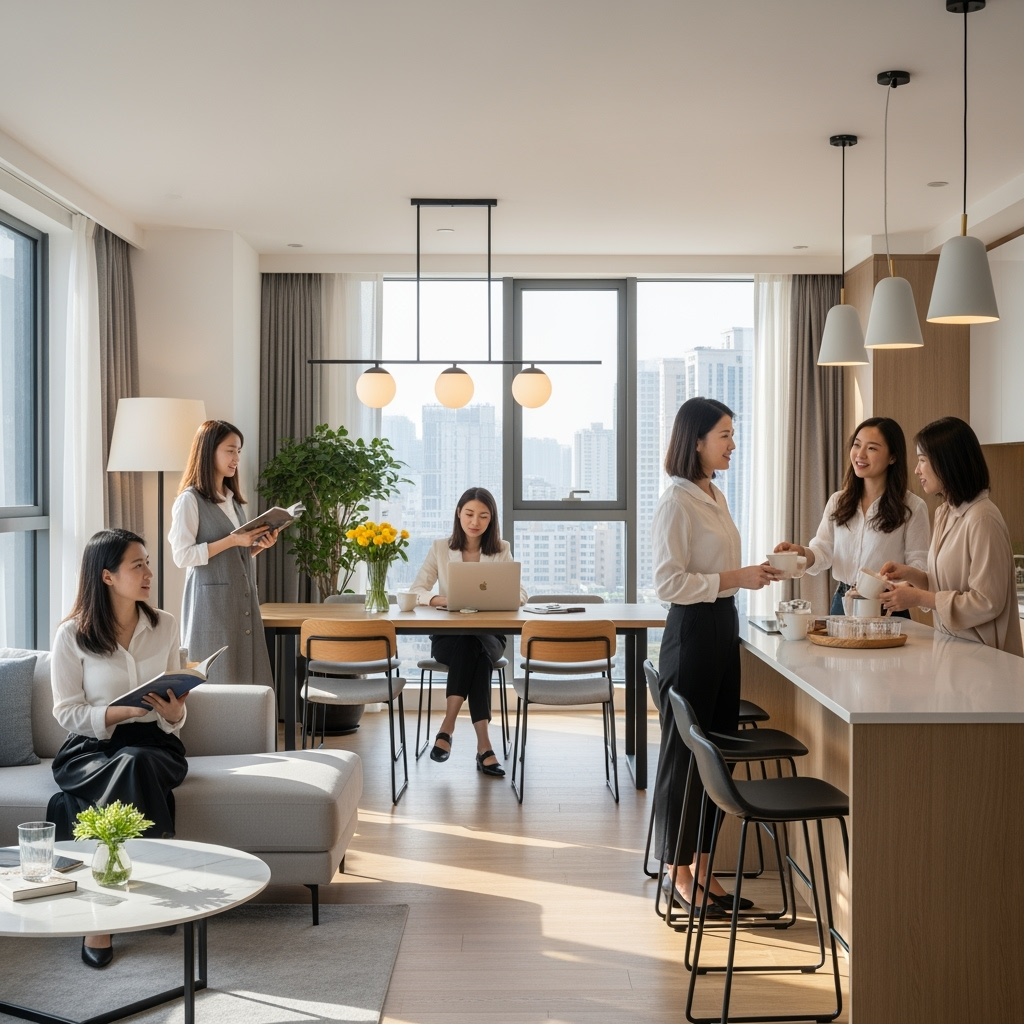
In a serene rural cottage in Zhejiang, China, laughter echoes over board games and coffee, marking one of the many women-only co-living spaces emerging far from societal pressures and male scrutiny.
Women gather here to offer mutual support and discuss “intimate matters freely,” while others seek companionship or an escape from harassment, as shared with AFP after crafting steamed buns in a sunlit kitchen with a view of the mountains.
“An all-women environment gives me a sense of safety,” said Zhang Wenjing, 43.
“We discuss certain topics more comfortably among women,” she continued.
Chen Fangyan, 28, expressed feeling less self-conscious in the absence of men.
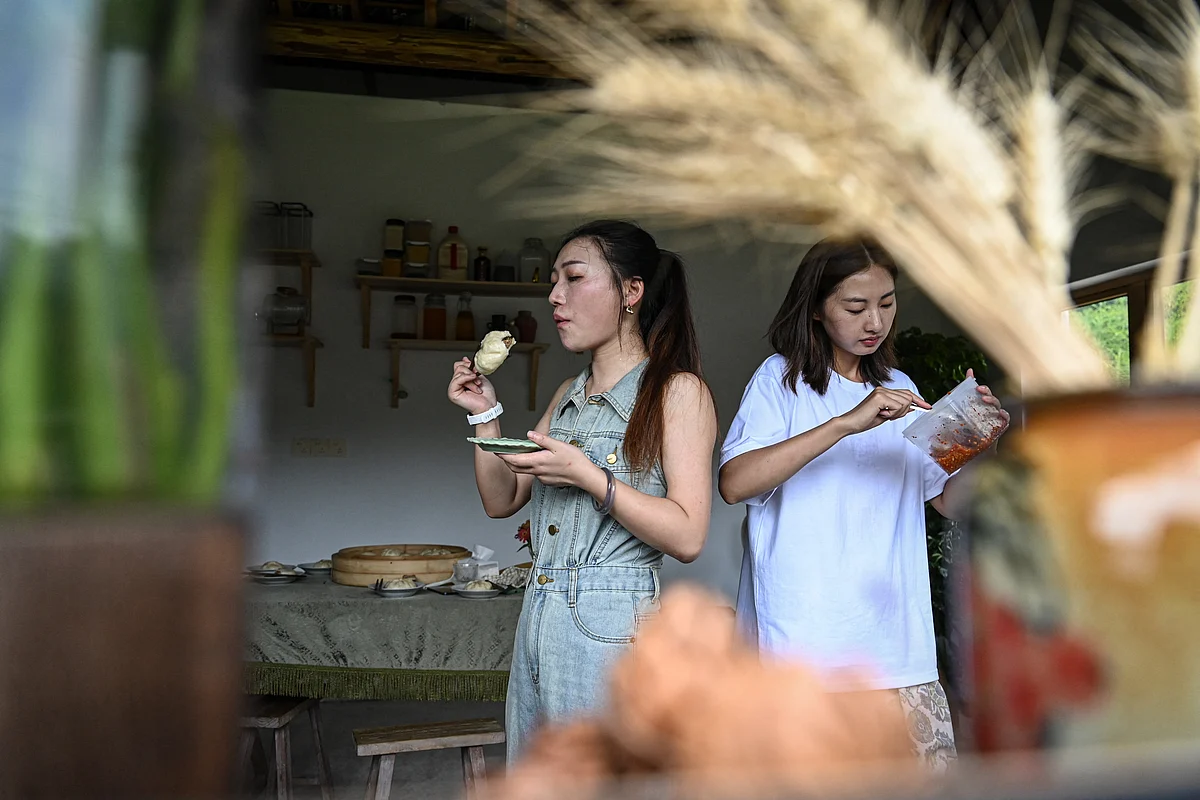
Chen Yani, known as “Keke,” having lunch with friends at “Keke’s Imaginative Space” in Hangzhou, Zhejiang. — AFP
“Not having to wear a bra feels liberating.”
The demand for single-gender spaces like bars, gyms, hostels, and co-working hubs is rising in China as women leverage their economic power for peace of mind and safety.
At “Keke’s Imaginative Space,” guests pay 30 yuan ($4.17) per night, increasing to 80 yuan from the fourth day.
Founder Chen Yani, “Keke,” was inspired to create the space due to negative experiences with men at work.
“I’ve faced harassment from men, making it difficult to work comfortably,” said the 30-year-old.
“I envisioned a safe, relaxed work environment where I’d feel at ease.”
– ‘Authentic Selves’ –
Chen began by renovating a house in Lin’an, near Hangzhou, about 200 km from Shanghai.
Believing others sought a similar sanctuary, she organized a Chinese New Year stay via Xiaohongshu, or Rednote.
Twelve women attended.
Some sought a holiday change, while others wanted to escape societal pressures to marry and have children.
“In families, women often handle childcare, eldercare, and household duties, plus work,” she said. “They need a place to just be themselves.”
Women’s growing economic independence and educational access broaden their choices, said Yuan Xiaoqian, 29.
“They focus more on themselves and new needs,” she said.
Social media exposes women to diverse lifestyles, with Rednote offering community options.
In Xiuxi, Zhejiang, Yang Yun opened “Her Space” in June as a “spiritual haven” for women.
With rustic decor and calligraphy, it feels like a boutique hotel.
Yang’s goal is to ensure women always have a refuge.
“If a woman loses her job, argues with her husband, or tires of city life, she can find warmth here,” said Yang.
120 women have joined the club by paying a 3,980-yuan membership fee.
“Their presence isn’t necessary; the existence of this space is what matters. It provides mental strength,” said Yang.
– Need for Women Spaces –
Critics argue single-gender spaces promote gender division.
At Keke’s Imaginative Space, Chen Yani insists the goal isn’t male antagonism but women’s right to their spaces.
“Women share life experiences and issues, making empathy and understanding easier,” she said.
Though not yet profitable, Chen prioritizes demand over profit.
“As long as there’s demand, this space will remain,” she said.
Lilith Jiang, founder of “Half the Sky” in Beijing, says these communities fill a gap.
“Men have social opportunities through drinking and exercising,” she said. “Women lack that.”
She believes non-traditional living arrangements could be a solution for single women worried about ageing alone.
“Women are often told: ‘If you don’t marry, what will happen as you age?'” Jiang said.
“But long-term, all-female co-living spaces can allow women to age together.”