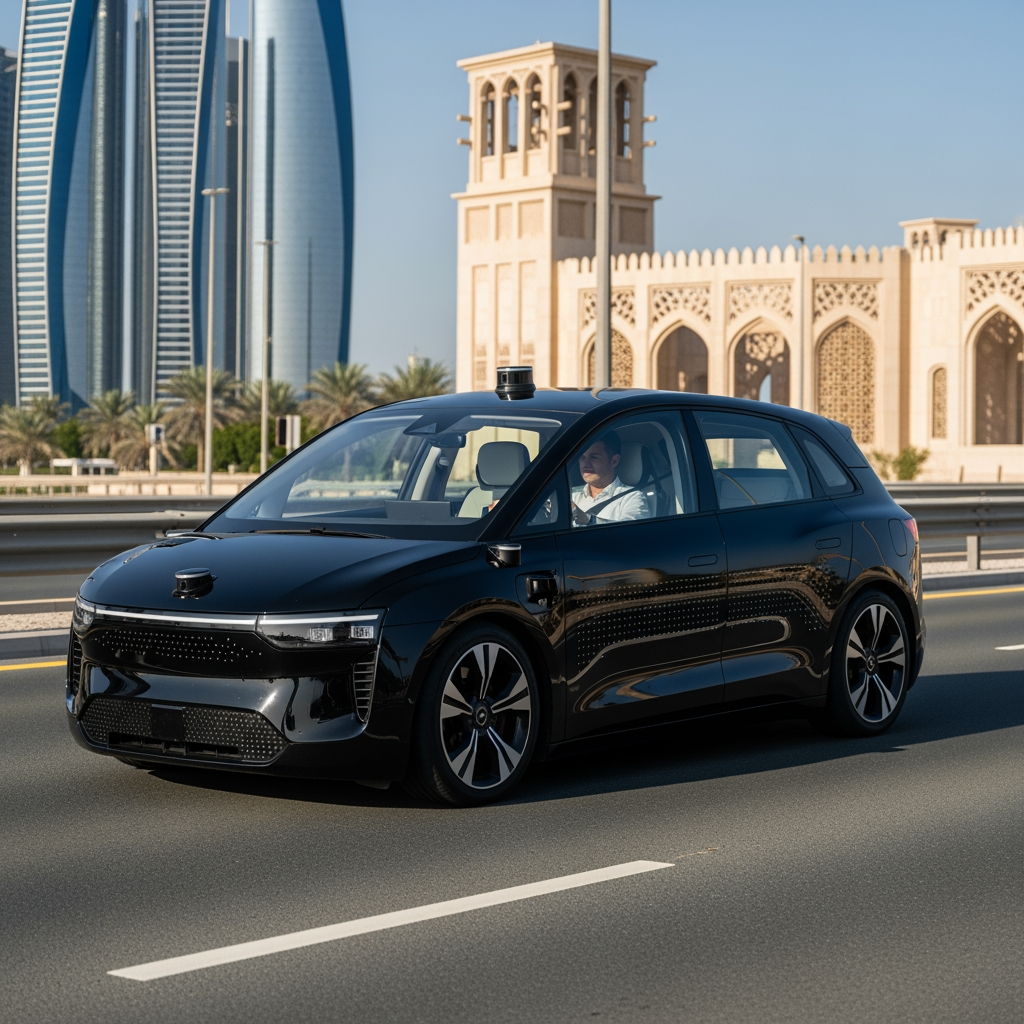
Initially, the steering wheel gave a slight twitch. Gradually, it started to rotate—methodically and slowly—even though the driver’s seat was empty. It felt like an invisible presence had taken control, steering the car out of the parking space as a soothing voice from the dashboard announced the start of the journey.
This scene unfolded during a fully autonomous Uber test ride in Abu Dhabi—no safety driver, no human involvement, just a sensor-equipped electric vehicle navigating Yas Island independently. Uber invited Khaleej Times for one of the first passenger test drives before the service’s public launch, making Abu Dhabi the first city outside the US and China to introduce fully driverless rides.
Inside the vehicle, everything functioned with calculated assurance: gently crossing speed bumps, pausing for merging traffic, and keeping a safe distance from pedestrians. The steering wheel spun with silent precision, while a screen detailed every action—lane changes, turns, braking—in real time.
Stay updated with the latest news. Follow KT on WhatsApp Channels.
This seamless performance was years in the making. “WeRide has been operating here since 2021, with extensive non-passenger testing,” stated Mohamad Jardaneh, Head of Autonomous Mobility, Middle East at Uber.
The ride coincides with Abu Dhabi’s official authorization of commercial use of fully driverless vehicles for the first time. The Integrated Transport Centre (ITC) announced the initiation of commercial operations for fully driverless, Level 4 autonomous vehicles in the Emirate—the first in the Middle East and North Africa.
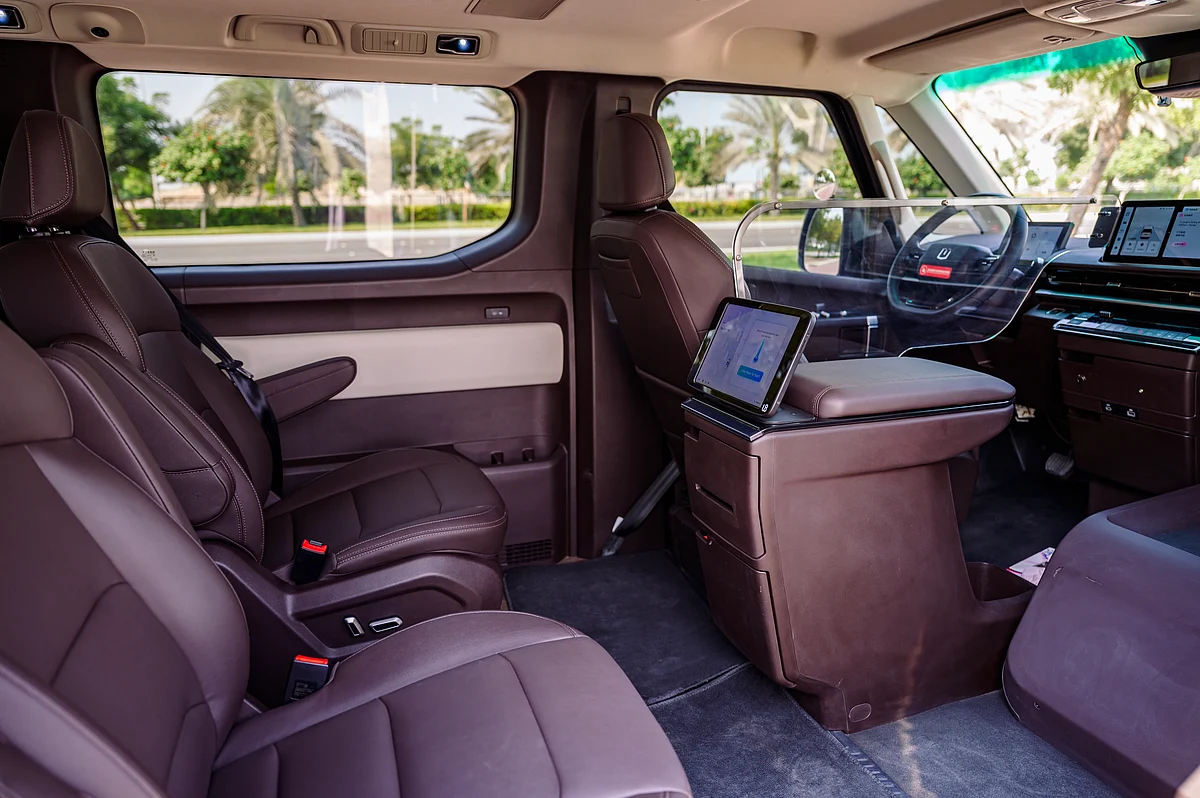
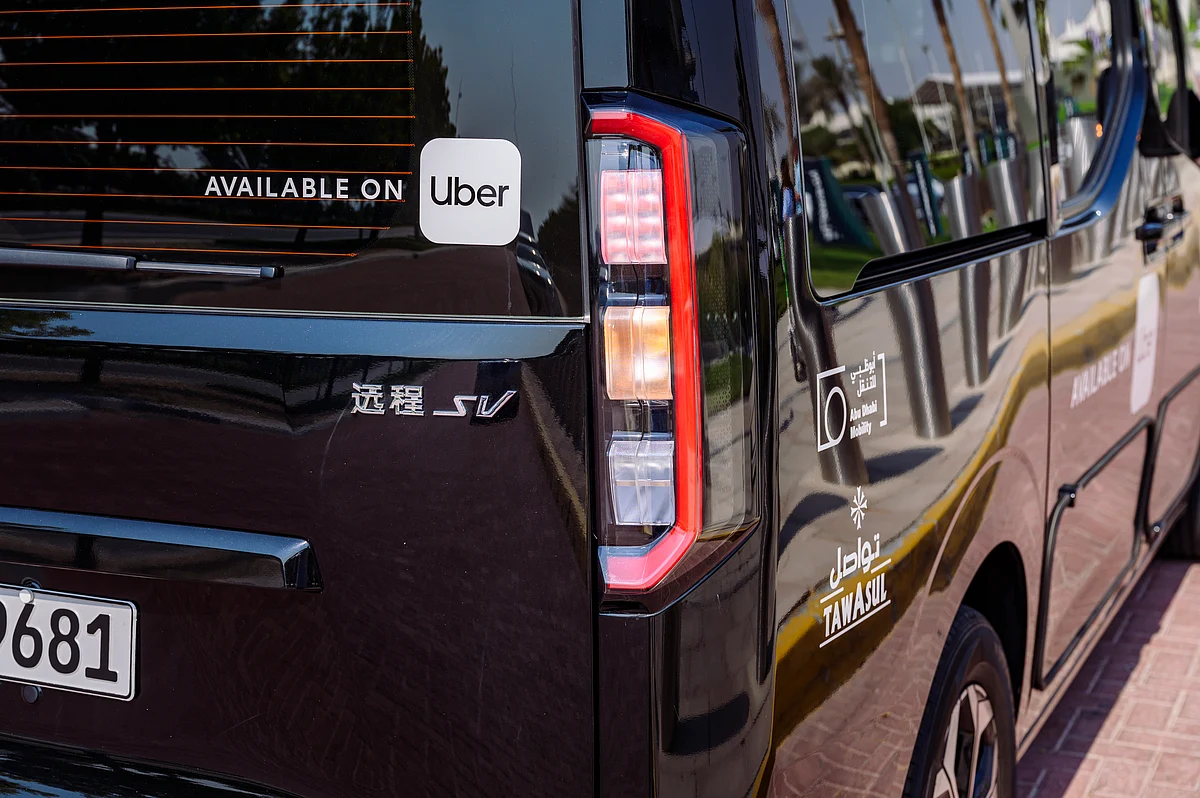
Under this framework, ITC has issued the first two operating permits for commercial driverless fleets. Phase one involves operations by WeRide, in partnership with Uber and Tawasul, and by AutoGo–K2 with ApolloGo–Baidu, following the completion of all safety, readiness, and real-world traffic testing.
WeRide Robotaxis have covered over 800,000 kilometers of testing in Abu Dhabi as of October 2025—including fully driverless Level 4 testing since the year’s second quarter—with each vehicle completing up to 20 trips during a 12-hour shift. The Uber–WeRide fleet now represents the largest commercial robotaxi network in the Middle East, covering around 50% of Abu Dhabi’s core area.
Despite having the permit, Jardaneh emphasized that the rollout will be gradual. “It won’t be [all autonomous] immediately. The expansion will be progressive,” he noted. “We start with a portion of the fleet, possibly in a limited area, and then gradually expand.”
Currently, autonomous-capable trips (with safety drivers) are available on Uber in Yas Island, Abu Dhabi Airport, and Al Maryah Island, with Uber’s system automatically assigning an AV when both pick-up and drop-off are within WeRide’s designated zones.
Safety first—no remote driving
The ride illustrated how deeply safety is embedded in the system. The car wouldn’t start until seatbelts were fastened. Opening a door mid-ride triggered an automatic stop. Smoking in the car is technically impossible—any attempt forces the vehicle to halt.
“If the car needs assistance, it will pull over,” Jardaneh explained. Support teams are ready nearby, and a remote operations center monitors every vehicle—though he stressed that no human can remotely drive it. “Remote driving isn’t feasible… latency could be hazardous.”
The greater promise, he contended, is eliminating human error risks entirely. “AVs don’t get tired. They remain focused,” he elaborated.
Weather, pricing, and future expansion
Extreme heat has been accounted for in years of local testing, with sensors designed to withstand it. However, severe dust or fog will pause operations. “If vehicles haven’t been tested under dusty conditions, AVs will be turned off,” Jardaneh said, noting the regular fleet remains available during such periods.
Pricing aligns with existing Uber categories. “If your route is supported by an autonomous path, the fare is the same as our X/Comfort,” he explained, with an “autonomous-only” option also priced at Comfort levels.
Global interest is increasing, with more than 1.5 million autonomous Uber trips completed worldwide. Locally, Jardaneh mentioned that feedback from riders during the safety-driver phase has been overwhelmingly positive, particularly among younger users.
A quiet glimpse into the future
As the ride approached its end, the vehicle slowed, pulled into a designated area, and gently came to a stop before unlocking the doors. The steering wheel, which had been turning autonomously, finally ceased its motion. It was a typical Uber drop-off—except no one was driving.
Now that the necessary regulations are in place, Abu Dhabi will soon allow residents to book this self-driving ride directly through the Uber app. While human and autonomous drivers will “continue to evolve together,” as Jardaneh mentioned, our quiet, self-guided journey signals a clear preview of commuting’s future in the capital.