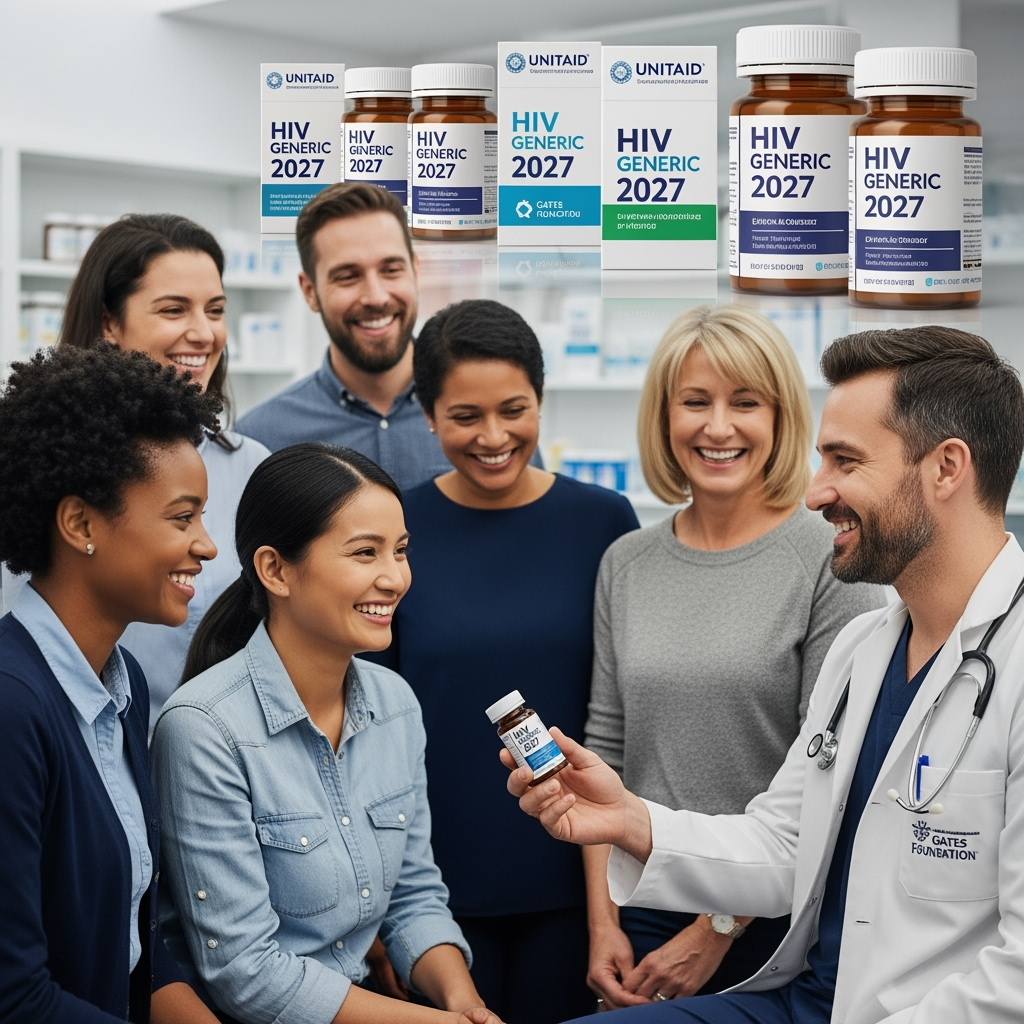
From 2027, over 100 countries could access generic versions of a pioneering HIV-prevention injectable drug for just $40 annually, as announced by Unitaid and the Gates Foundation on Wednesday.
These organizations have forged individual agreements with Indian pharmaceutical firms to produce affordable generic versions of lenacapavir, a biannual injection proven to lower HIV transmission risk by over 99.9%, specifically for low- and middle-income nations.
Currently sold as Yeztugo by Gilead Sciences in California, lenacapavir costs about $28,000 yearly in the US.
“Cheaper generics are crucial for scaling up HIV prevention,” Carmen Perez Casas of Unitaid emphasized to AFP.
“With this drug, we can truly end HIV.”
Last October, Gilead disclosed licensing deals with six generic manufacturers to produce and distribute the first long-acting pre-exposure prophylaxis (PrEP) in less affluent countries.
Unitaid revealed that a collaboration is underway with Dr. Reddy’s Laboratories, the Clinton Health Access Initiative (CHA), and Wits RHI to supply the drug at $40 annually per person in 120 countries starting 2027.
“Initial production will occur in India,” Perez Casas noted.
“Future plans include regional manufacturing.”
Similarly, the Gates Foundation announced a partnership with Indian pharmaceutical Hetero.
“Innovations like lenacapavir can curb the HIV epidemic if accessible to those in need,” stated Trevor Mundel, head of global health at the Gates Foundation.
Since 2010, global efforts have reduced new HIV infections by 40%, but UNAIDS reports 1.3 million new cases in 2024.
Meanwhile, a Gilead-Global Fund agreement seeks to provide affordable drug access in low-income regions.
Washington confirmed its commitment to a 2024 agreement to support this initiative, unaffected by President Donald Trump’s foreign aid cuts.
Following US approval of Yeztugo in June, the initiative plans to deliver the first units to at least one African country by year’s end.