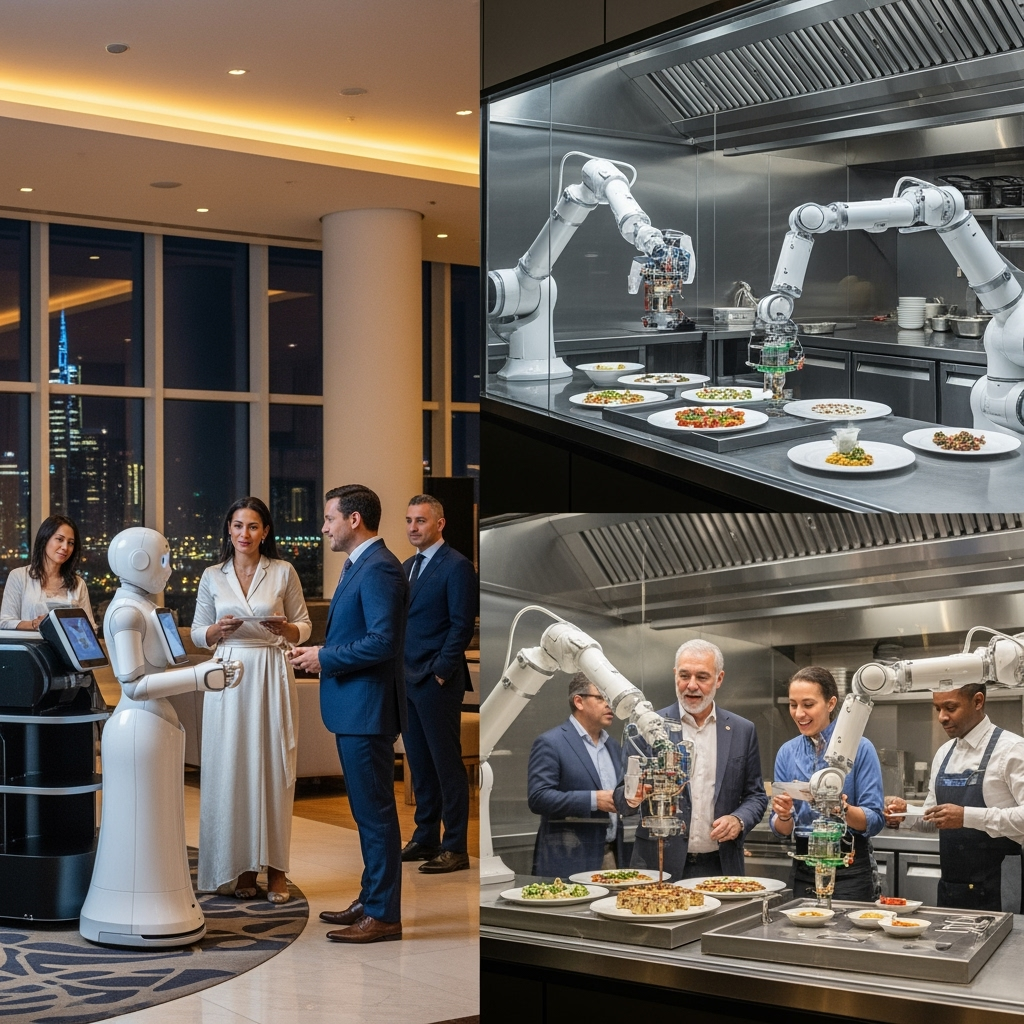
For example, culinary enthusiasts in Dubai, United Arab Emirates, are eagerly anticipating the opening of the ‘Woohoo’ restaurant in September 2025. This comes after it garnered global attention by announcing the employment of ‘Chef AIman,’ an advanced linguistic model in the culinary field, to design the menu and interact with the entire visitor experience.
In addition to this experience, major companies like ‘Etihad Airways,’ ‘Accor,’ and ‘Kerten Hospitality’ have started adopting ‘artificial intelligence’ tools within their daily and marketing strategies, according to ‘IGBI.’ Studies also show that 45% of ‘Gen Z’ travelers (born between 1997 and 2012) already use ‘artificial intelligence’ in their travel planning, compared to 22% of Millennials and 10% of ‘Gen X.’
This behavioral change has prompted hospitality companies to restructure their websites and digital content to align with AI-based search mechanisms, rather than merely optimizing for visibility via Google. For instance, ‘Kerten Hospitality’ has reformulated its content to match traveler inquiries like ‘Where to stay in Al-Ula for stargazing?’ Additionally, it introduced smart selling tools that respond to guest behavior in real-time.
This approach is echoed by officials in other companies like ‘Foodics,’ who are adapting their digital strategies to suit this new phase. These tools offer continuous training easily accessible via personal devices for employees, enhancing efficiency and service levels. In a time when factors such as ‘consistency, localization, and speed’ are key advantages of these technologies compared to traditional methods.