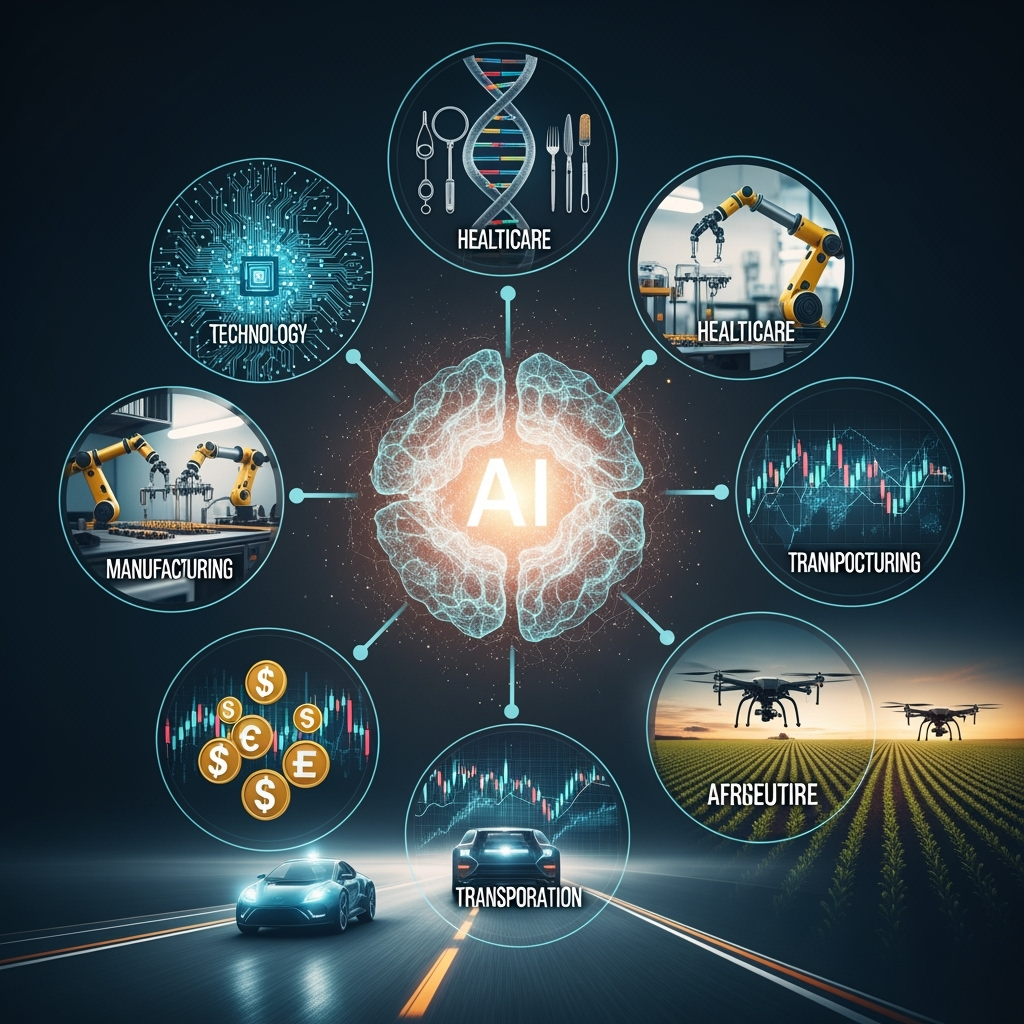
In the past, website development heavily relied on the expertise of developers. However, AI-powered design tools can now generate codes and design user interfaces automatically, enabling non-specialists to create advanced websites and reducing the need for professional developers. These tools have become more precise and efficient in detecting defects and unusual patterns in production lines. Studies show that these systems can improve inspection quality by up to 30%, while reducing downtime and enhancing operational efficiency.
In the media and entertainment sectors, advanced software now reviews texts and corrects language errors automatically. Smart editing tools can perform video editing tasks automatically, such as scene matching, sound adjustment, and adding effects, reducing the need for human intervention. Transportation services are undergoing rapid changes due to self-driving vehicles and the expansion of ride-sharing apps like Uber and Lyft. With the advancement of autonomous driving technologies, the necessity for human drivers may diminish in the coming years.
The manufacturing sector is one of the most affected, as it has contributed to automating many tasks, from predicting malfunctions to optimizing energy efficiency and quality control. With the use of robots and smart systems, the need for traditional labor has significantly decreased. The nature of legal work is changing with the emergence of digital tools capable of conducting legal research, analyzing documents, and drafting contracts automatically. These developments affect the role of legal assistants who used to perform these tasks manually.
Recent studies indicate that algorithms can diagnose complex diseases such as breast cancer and diabetic retinopathy with an accuracy comparable to that of doctors. This development might reshape some medical specialties, particularly those based on image analysis. With the spread of self-service shopping, the need for cashiers and salespeople in stores is diminishing. Technology now offers a smoother and more efficient shopping experience without significant human intervention.
The shift to digital banking services has led to a decline in the demand for traditional employees, as AI is used in risk management, fraud detection, and providing personalized financial advice, changing the nature of jobs within banks. AI-supported booking applications and tourism platforms have impacted traditional travel agencies, enabling users to plan their trips entirely online without intermediaries.
Despite the threats posed by these trends, job disappearance is not inevitable. While some jobs will indeed vanish, the majority will undergo transformations requiring the acquisition of new skills and the adoption of technological advancements. Experts agree that staying in the job market in the digital age requires continuous learning and the development of unique human capabilities that are difficult to replace.