As the 2025 Arab Reading Challenge approaches its grand finale, the Community Champions qualifying round has showcased the inspiring dedication of Arab families in non-Arab countries to keep their children connected to their native language.
Students worldwide are vying for the prestigious title, demonstrating not only their reading abilities but also their profound passion for the Arabic language and their cultural heritage.
The Community Champion category, a vital part of the Arab Reading Challenge, offers Arab students in the diaspora a chance to engage with their cultural roots.
Stay updated with the latest news. Follow KT on WhatsApp Channels.
The finalists, who have successfully navigated the initial stages of the competition’s ninth edition, are currently being assessed by a specialized panel.
The winner of this category will receive a prize of Dh100,000, with Dh70,000 and Dh30,000 awarded to the second and third place winners, respectively.
For many young participants, reaching the finals has been a journey of dedication and a conscious effort to preserve their linguistic and cultural identity.
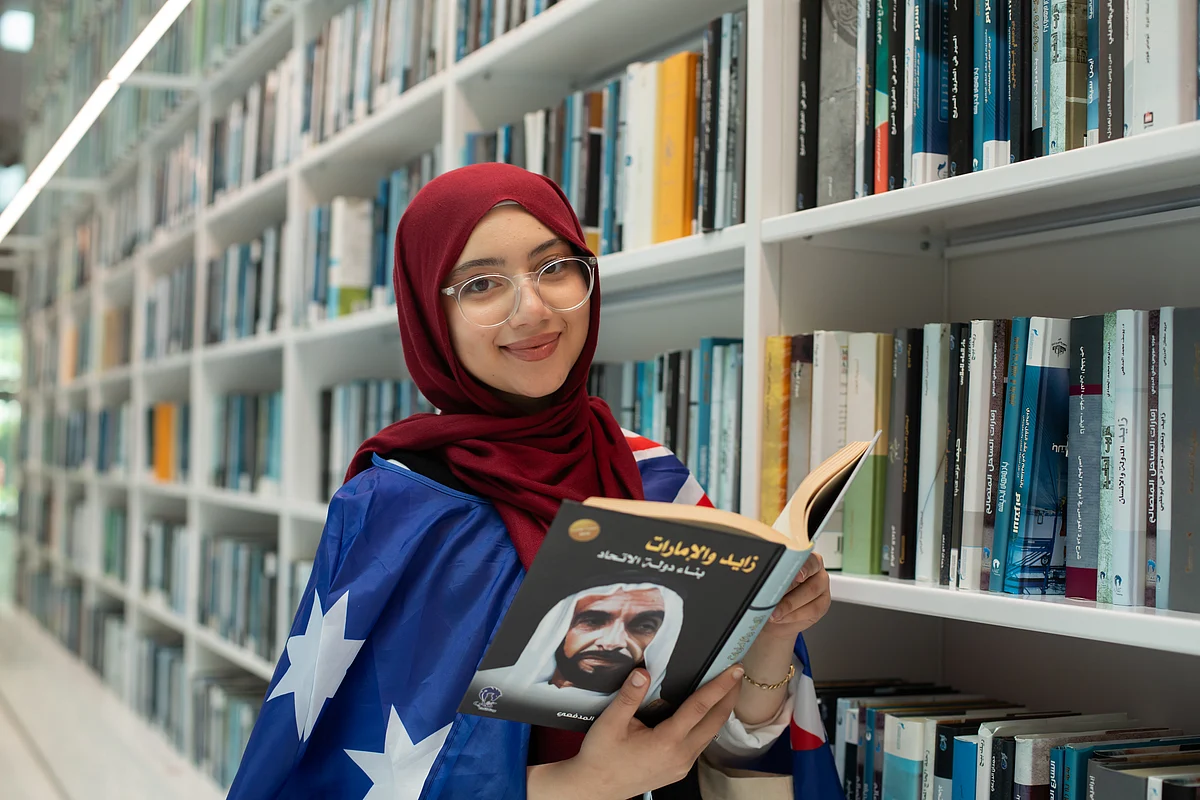
Taqa Abdel Khaleq, a 16-year-old representing Australia, exemplifies this commitment. “I didn’t want to neglect the Arabic language,” she said. “I wanted to tell the world it’s time for Arabic to be revived from neglect.”
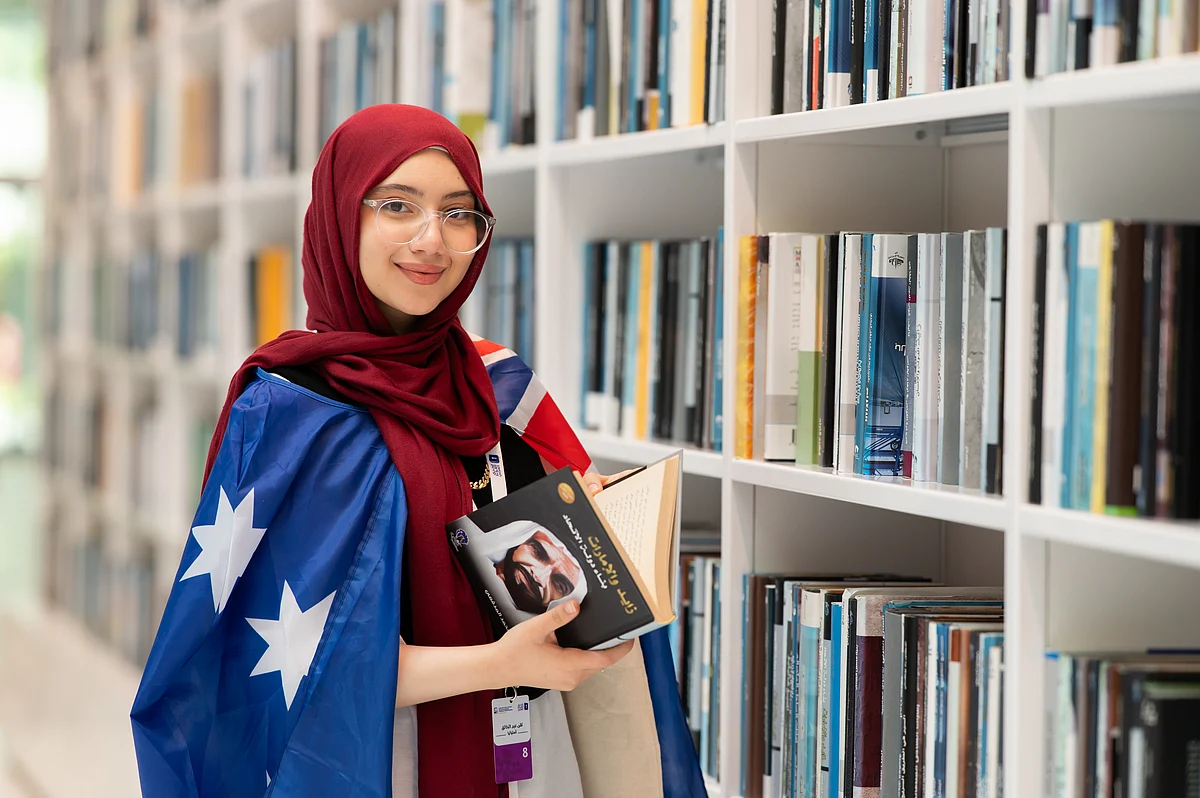
Taqa Abdel Khaleq
Taqa started reading at age seven, though she admits her early years involved more listening than reading. “I listened more than I read, but things developed with me, and my small library in Australia developed with it,” she explained.
Her mother played a crucial role in keeping Arabic a constant presence in her life. “She tried as much as possible to include the Arabic language in my life, whether at home or with my friends,” Taqa recalled.
Arabic cartoons and TV series also significantly contributed to her language development.
For the challenge, she read 25 books, though her total reading extends to 50 or 60 books. Beyond the prize, Taqa values the experience itself. “Even if I don’t win, I think it’s a wonderful experience and I learned a lot from it,” she said, noting the challenge taught her time management by balancing reading with work and studies.
This sentiment is echoed by Jihan Mohammed Murad, an 18-year-old university student from Italy who has lived there for five or six years.
Having read over 500 books, she credits her father for instilling a love of reading in her from a young age. “I was always curious when I saw books lined up on this big shelf and always wanted to know what information was inside them,” she said. “My father is my inspiration, although my mother is the hidden force behind him.”
Jihan’s reading journey also began in Saudi Arabia, where she lived until sixth grade. “They encouraged us to read a lot. I used to present at many conferences and loved reading from there, especially poetry and chanting,” she explained.
Moving to Italy was a significant challenge, as she had to adapt to studying in Italian while maintaining her Arabic proficiency.
For Jihan, maintaining her Arabic connection in a non-Arab environment required a proactive approach. “The challenge was difficult, but having a supportive community is essential,” she explained. “You might find friends at school who speak Arabic but are ashamed to use it because the dominant language is foreign. Forming friendships and creating a small community in Western countries allows you to share your culture and discuss authentic Arab ideas, establishing the Arabic language.”
Her father consistently took her to places where Arabs gather, including community centers and mosques.
She also participates in an Arab youth forum where book ideas are discussed and translated into Italian. “We tell Arabs there is knowledge in Italy, come and learn, and we also tell Italians that we Arabs are not an ignorant nation living in the desert as they say,” she stated.
Her advice to Arabs in other countries is clear. “Continue and find a supportive community for yourselves, even if it’s just one or two friends with ideas, and don’t be embarrassed to speak your language, as it represents your cause and principles.”
Razan Hassan Al-Masri, a 16-year-old in Grade 11 representing the United States, shares a similar dedication story.
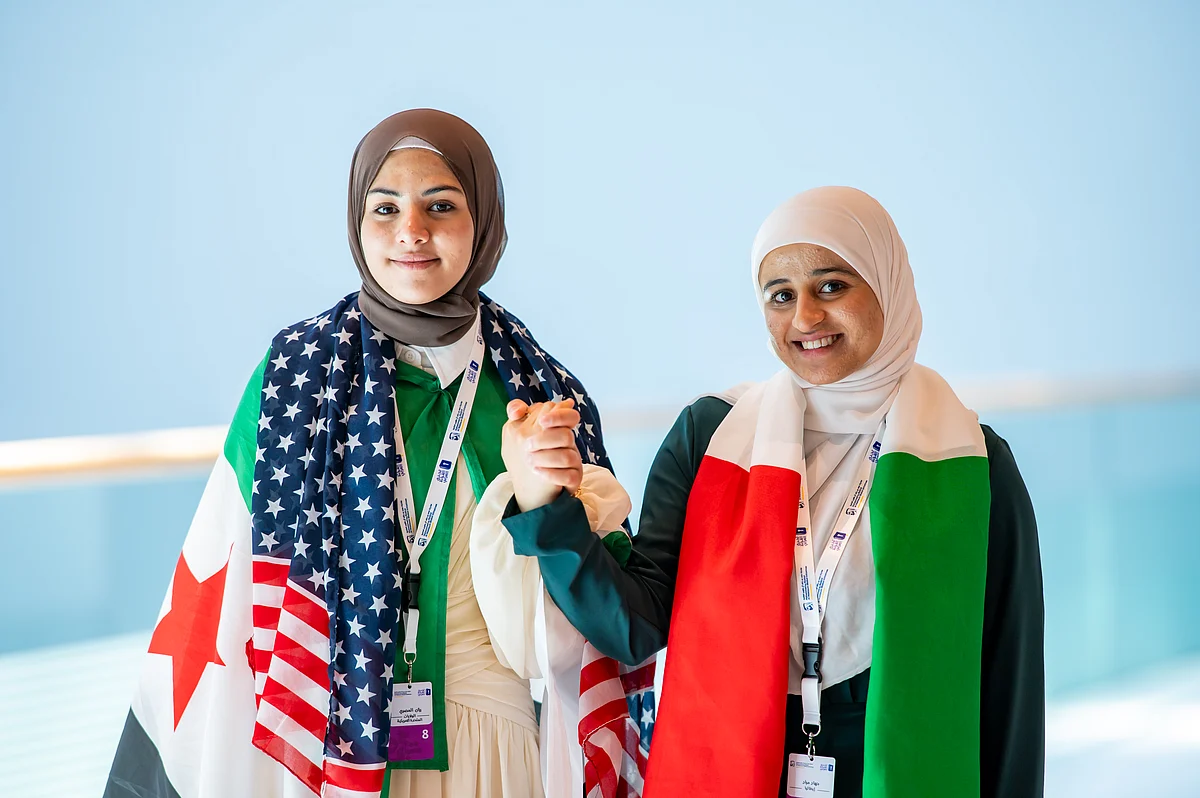
Razan Hassan Al-Masri and Gehad Morad
Of Syrian origin, she learned Arabic during kindergarten in Jordan before moving to the US at age seven. “But I didn’t stop learning Arabic even in the United States,” she emphasized.
Her parents, she explained, have been her primary motivation. Razan continues to take Arabic lessons every Sunday to ensure she doesn’t forget her mother tongue. “It is the language of the Quran first, and then your language, with the most beautiful poems and verses written in it,” she noted.
When asked about the challenges of maintaining Arabic in a non-Arab environment, Razan was candid. “If you’re not in an Arab country, the difficulties arise from a community that doesn’t speak Arabic. They speak the language of the country you live in or English at school,” she said. “But it depends on your family and environment. If you are in a setting that preserves the Arabic language and religion, you’ll likely try to learn more Arabic.”
She emphasized the importance of family and community support. “The environment I live in speaks Arabic. My family speaks Arabic, and I try to read and learn more about my language,” she added.
A UAE perspective on language preservation
While the Community Champions category focuses on diaspora students, the broader challenge also includes participants from Arab countries.
Reem Adel Al Zarouni, a 13-year-old from Abu Dhabi representing the UAE, provides valuable insights into maintaining Arabic pride even in multilingual environments.
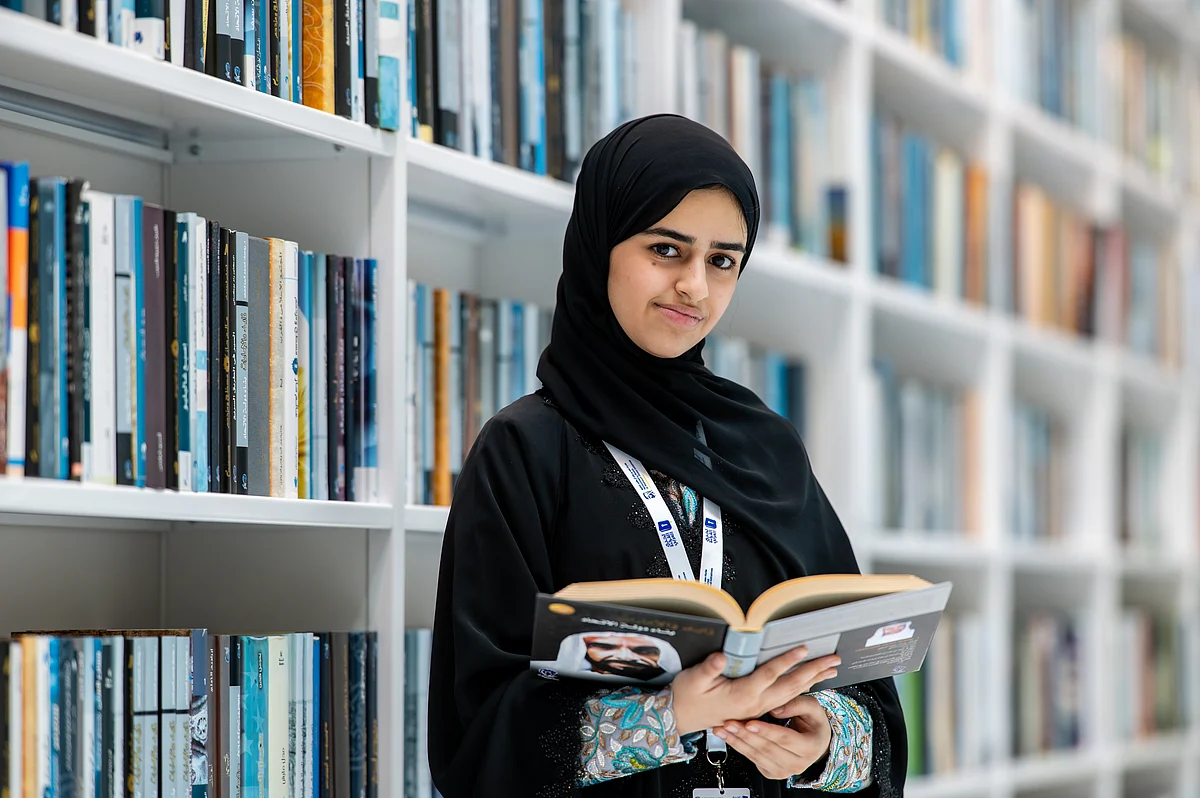
Reem Adel Al Zarouni
Reem’s passion for Arabic began at age three when she first learned letters and started reading. “My father planted the love of reading, and my mother nurtured it,” she explained.
Her father encouraged her to read business and scientific books to build a strong cultural background, while her mother consistently supported her reading choices and monitored her progress.
On children speaking more English than Arabic, Reem offered thoughtful advice. “The English language is important, but we can explore cultures while staying rooted in Arabic. My advice is to always remain committed to your mother tongue. We speak English when needed, but Arabic should be the language of emotion, the basic language in our world. Arabic has a special rhythm.”
Dr. Fawzan Al Khaledi, Director of Programs and Projects at the Mohammed bin Rashid Al Maktoum Global Initiatives, emphasized the inclusive and expanding nature of the challenge. “The initiative aims to promote reading in Arabic among students and make it a daily habit.”
The challenge requires students to read and summarize 50 books during the academic year outside their school curriculum.
In a significant development, the Arab League invited ministers of education in Arab countries to adopt the Arab Reading Challenge as part of the Arabic language curriculum. This decision was issued on December 18, 2024, coinciding with Arabic Language Day.
“We target Arab countries plus Arab students who speak Arabic and non-Arabic speakers living in foreign countries,” Dr. Al Khaledi explained.
The initiative has seen remarkable growth since its inception. “We started with students in the Arab world, then expanded the initiative by adding a new category, People of Determination. This category didn’t exist initially, and we also added the Arabs living in non-Arab countries category.”
The numbers speak to the initiative’s success. “From 2015, when it was launched with 3.5 million participants, today we have 32 million participants. There’s great demand, indicating cooperation between the institution and education ministries,” he noted.
Khadija Al Hoosani, an international judge for the Arab Reading Challenge, explained what the panel seeks in participants. “We don’t want a student who just memorizes information. We want a distinguished student leader who stands confidently,” she said. “We want a student proud of their language and culture, following the vision of Sheikh Mohammed bin Rashid.”
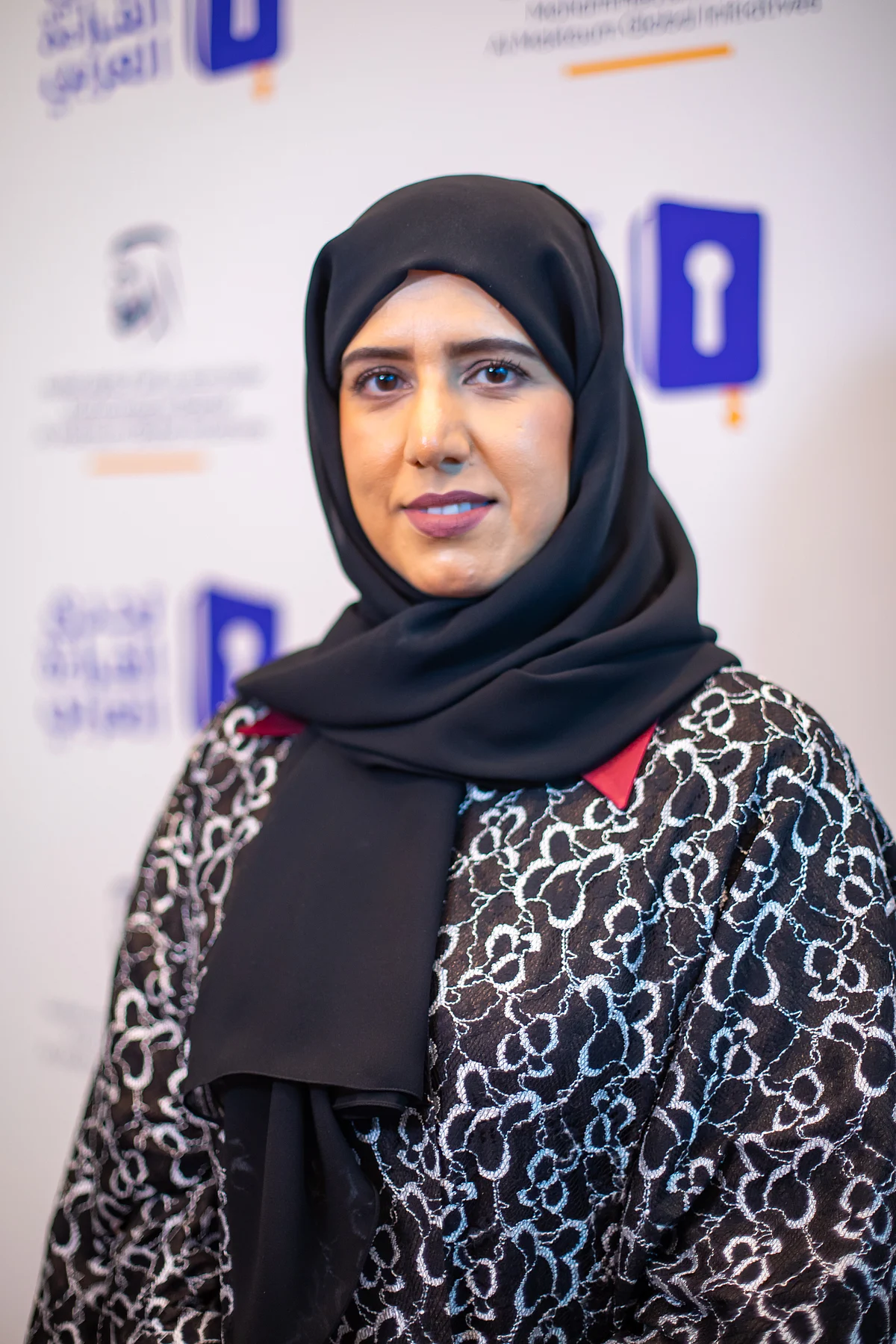
Khadija Al Hoosani
The final qualifying round will determine which students advance to the grand ceremony, where Sheikh Mohammed bin Rashid Al Maktoum, Vice-President and Prime Minister of the UAE and Ruler of Dubai, will crown the winners on October 23.