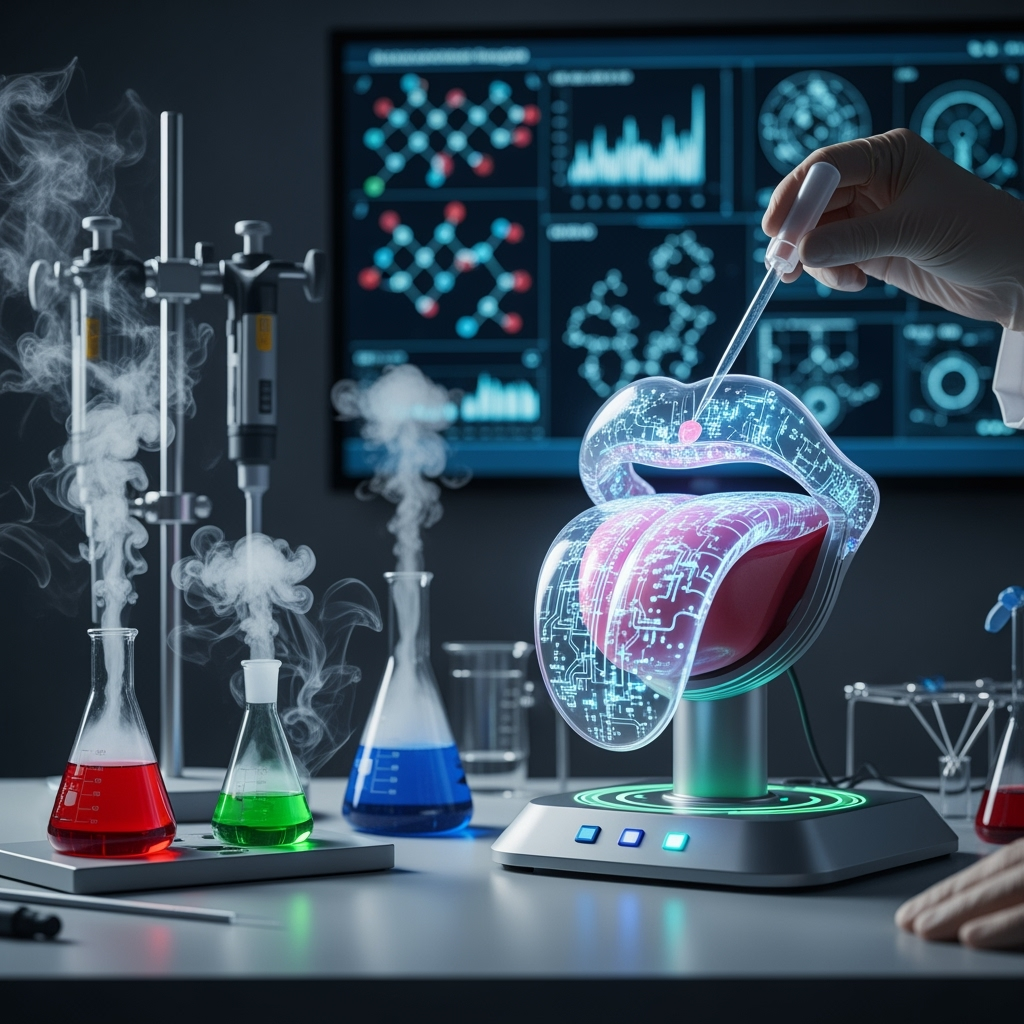
The artificial tongue relies on ultra-thin membranes of “graphene oxide,” which are carbon sheets that act as molecular filters for ionic versions of flavors. Unlike traditional filters that separate large molecules, these membranes slow down ion movement, giving the device the ability to recognize and store flavors in its memory, according to “Live Science.” During experiments, the artificial tongue was able to identify four basic flavors: sweet, sour, salty, and bitter, with an accuracy ranging from 72.5% to 87.5%, reaching 96% when dealing with multi-flavored drinks such as coffee and soda, thanks to its complex chemical structure that facilitates differentiation.
This innovation opens the door to developing advanced automated systems for food safety monitoring and early disease detection through chemical analysis, with the possibility of integrating it into laboratory equipment for analyzing liquid samples.
Additionally, the invention is a significant step towards neuromorphic computing, or “artificial intelligence” systems that mimic the learning mechanism of the human brain.