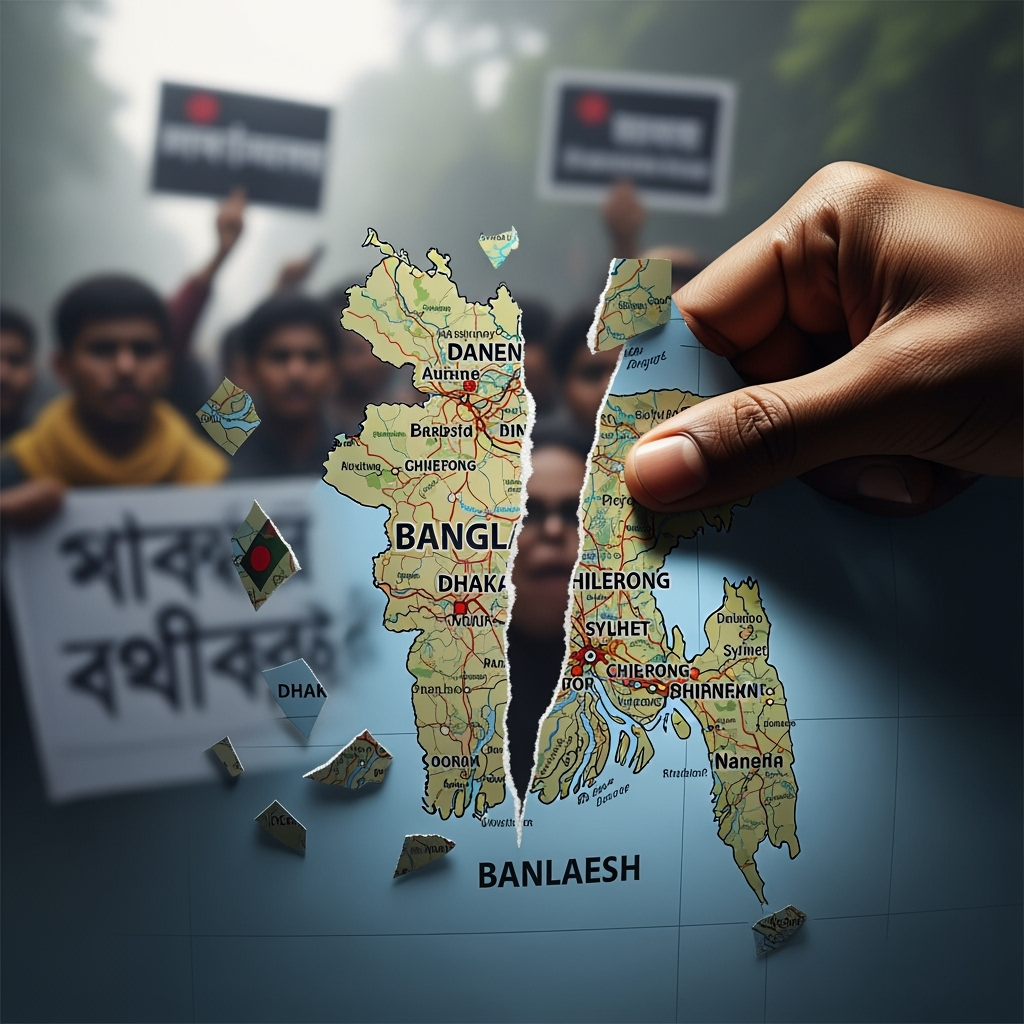
Since a student-led uprising ousted former prime minister Sheikh Hasina last year, Bangladesh has been engulfed in political turmoil, bringing her 15-year autocratic rule to an end.
An interim government, led by Nobel laureate Muhammad Yunus, has pledged to hold elections in February.
However, skepticism remains high in this Muslim-majority nation of 170 million as political divisions deepen and violence escalates.
With elections expected in early February 2026, alliances formed during and after Hasina’s ousting are now fracturing.
Who are the key parties?
With the Awami League, Hasina’s former ruling party, banned, the primary contenders are the Bangladesh Nationalist Party (BNP) and Jamaat-e-Islami.
The National Citizen Party (NCP), created by student leaders of the uprising, is also a significant player.
Rivalries have sparked fears of street clashes, as Yunus attempts to rebuild trust in the electoral process.
Where does Yunus stand?
Yunus, the 85-year-old microfinance pioneer, plans to step down after the elections, asserting there is “no alternative to election”.
US-based analyst Michael Kugelman, who recently visited Bangladesh, suggests some key factions “may have an interest in delaying the elections”.
Yunus’ detachment from daily politics and rumors of military involvement have increased uncertainty.
Recent meetings between army chief General Waker-Uz-Zaman and top officials have fueled speculation.
With a history of coups, the army remains a formidable force in the country.
Why are groups divided?
The contentious issue is the July National Charter, a reform document proposing a two-term limit for prime ministers and increased presidential powers.
While parties have agreed on 84 reforms, they are divided on implementing the charter, particularly its legal authority.
“The main point of contention now is the procedure for implementing them,” said Ali Riaz, vice-chairman of the National Consensus Commission.
The BNP contends it cannot override the current constitution until after the February elections, when a new parliament could ratify it.
Others demand ratification before the elections.
Senior Jamaat leader Syed Abdullah Mohammad Taher told AFP that “a referendum is essential” to allow public opinion on the reforms.
NCP leader Saleh Uddin Sifat emphasized that it would betray those who died in the uprising if there is no “legal basis” before elections.
“We are not going to participate in the election without our demands being fulfilled,” Sifat told AFP.
What are parties arguing about?
Hasina’s Awami League was banned by executive order.
Jamaat demands 13 more groups be barred for past ties to Hasina, including the Jatiya Party.
The BNP opposes such bans, arguing any case against the Awami League should be judicially addressed.
“Banning any political party through executive order is not what we support,” said Salahuddin Ahmed of the BNP, insisting on legal justification.
Yunus has faced bias accusations following a meeting with BNP leader Tarique Rahman in London, upsetting Jamaat and the NCP.
What challenges are ahead?
The interim government is struggling with deteriorating law and order.
Zahid Hussain, former lead economist at the World Bank, described the interim government as “cordial and brave” but also “helpless and bewildered”.
Rights group Ain o Salish Kendra reported 124 mob lynchings this year, with police data indicating a rise in murders, rapes, and robberies.
Analysts suggest Yunus will need full military support to ensure credible elections and guarantee all parties can contest freely.
Mamun Al Mostofa, a political science professor at the University of Dhaka, stated that for timely elections, Yunus would need “unconditional and constant military support”.