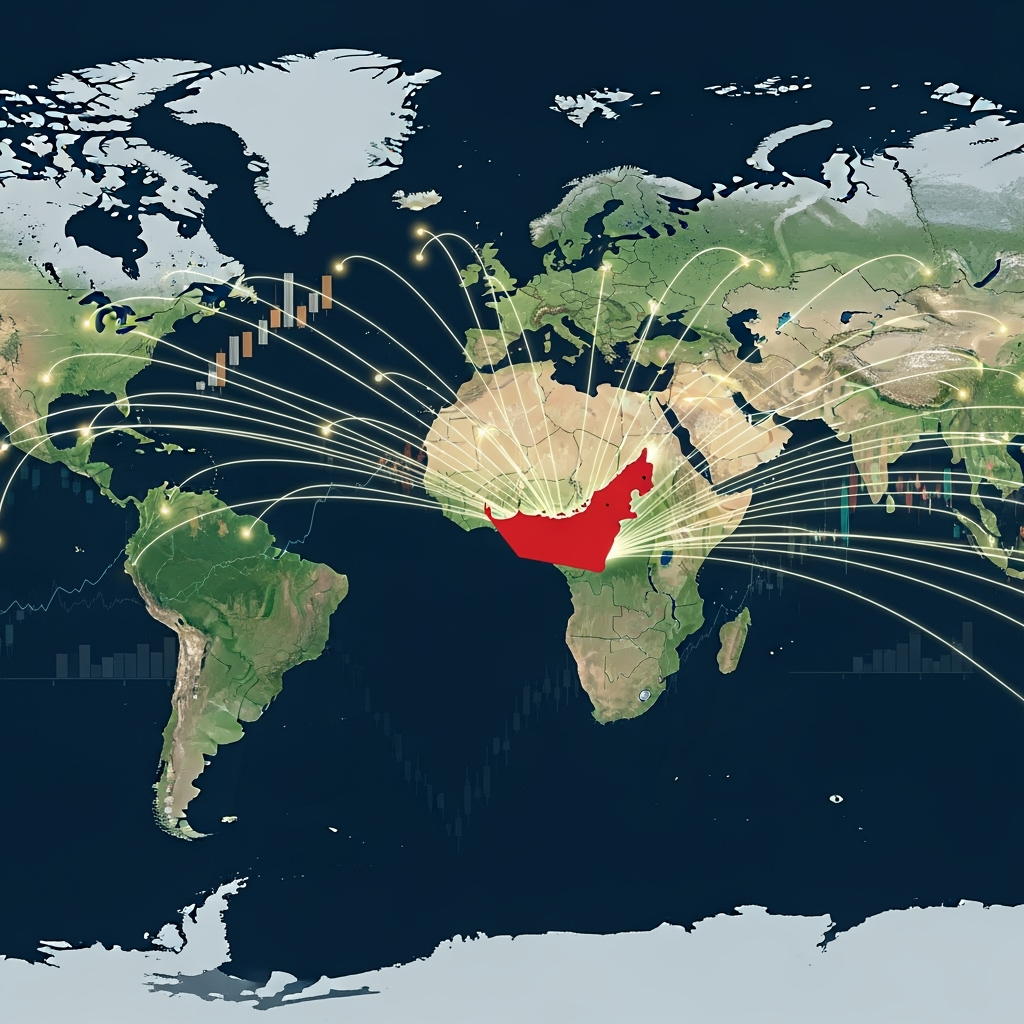
The Comprehensive Economic Partnership Agreement (CEPA) is poised to transform the UAE’s foreign trade and economic relations by lowering tariffs, removing obstacles, and fostering collaboration in pivotal sectors with friendly nations and influential regions.
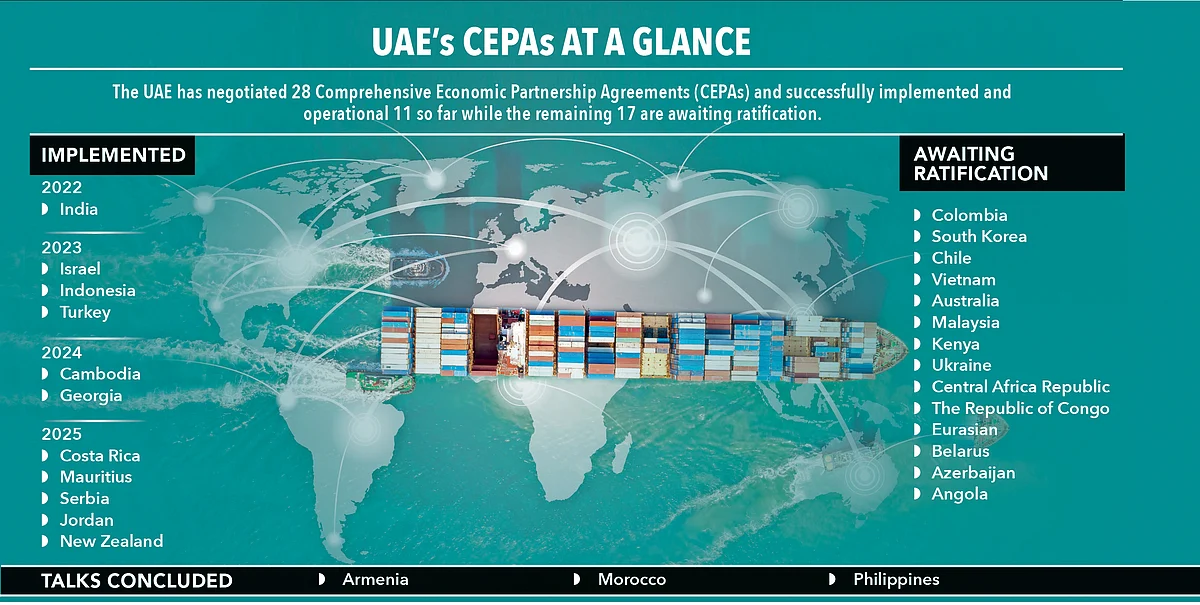
With 28 countries already onboard, the CEPA initiative strengthens economic partnerships and drives sustainable growth, aligning with the UAE’s strategy to enhance trade relations and diversify its economy. This initiative, contributing over Dh135 billion to the UAE’s non-oil trade with partner nations, positions the UAE as a global trade hub thanks to its strategic location, granting access to lucrative markets in Asia, Europe, and Africa.
Already, 11 agreements are in effect and proving beneficial, while 14 are in the process of technical or ratification procedures. Talks with Armenia, Morocco, and the Philippines have concluded positively.
In 2025, the UAE signed seven CEPAs with Malaysia, New Zealand, Kenya, Ukraine, the Central African Republic, the Republic of Congo, and Angola, expanding its trade network and opening new opportunities for its private sector in fast-growing economies globally.
Part of its strategy includes signing CEPAs with Angola, Australia, South Korea, Malaysia, New Zealand, Chile, Colombia, Kenya, Ukraine, Vietnam, the Central African Republic, the Republic of Congo, Eurasia, Belarus, and Azerbaijan, with implementation pending. Talks with Japan, Pakistan, and other partners are also advancing, with deals expected soon.
The CEPA with New Zealand, signed in January 2025, took effect on August 27, projected to raise bilateral trade to $5 billion by 2032, up from $1.5 billion between 2019 and 2023. This marks New Zealand’s first trade agreement with a Middle Eastern nation, a critical step in enhancing economic ties.
Dr. Thani bin Ahmed Al Zeyoudi, UAE Minister of Foreign Trade, called the UAE-New Zealand CEPA ratification a historic milestone fostering innovation and sustainable growth.
“This agreement not only enhances our trade relations but also opens new avenues for investment and collaboration in sectors like food production, education, renewable energy, and advanced technologies,” he noted.
Dr. Monica Malik, Chief Economist at Abu Dhabi Commercial Bank, expressed confidence in the UAE government’s initiative, stating it will boost foreign trade and strengthen GDP.

Dr. Monica Malik, Chief Economist at Abu Dhabi Commercial Bank
“We see CEPAs as very positive for the UAE’s economic outlook, strengthening its global integration and role as a trade hub,” Dr. Malik told BTR.
She emphasized that CEPAs, alongside broader reforms and advanced infrastructure, enhance the business environment.
“We also see CEPAs as crucial for attracting businesses and capital to the UAE,” she added.
Boosting Fostering Trade
The UAE is strategically positioned as an economic hub promoting international trade and investment through CEPAs. It aims for $1.1 trillion (Dh4 trillion) in non-oil foreign trade by 2031 to diversify its economy and reduce oil reliance. In 2024, non-oil foreign trade grew 14.6% year-on-year, reaching $816.7 billion (Dh3 trillion).
Recent data shows CEPA significantly enhancing the UAE’s economy with countries like India, Israel, Turkey, and Indonesia, fostering stronger trade ties, reducing tariffs, and promoting investment for an interconnected economic ecosystem.
For instance, the CEPA with India aims to increase bilateral trade to $100 billion within five years, enhancing sectors such as technology, agriculture, and services. Signed in February 2022 and effective May 2022, it accelerated non-oil trade by 20.5%, with UAE exports to India surging 75% in 2024.
Similarly, the UAE-Israel CEPA promotes collaboration in technology and tourism, significantly growing bilateral non-oil trade, with a $10 billion trade target by 2030.
The agreement with Turkey, effective September 2023, is crucial for diversifying trade, targeting industries like textiles, food, and machinery, while promoting tourism and investment growth. Bilateral non-oil trade, around $19 billion, is expected to reach $40 billion in five years.
Moreover, Indonesia, a key ASEAN player, presents significant potential through its CEPA with the UAE, enhancing access to Southeast Asian markets and boosting sectors like halal products, technology, and renewable energy. Both nations aim for a $10 billion non-oil trade target in five years after implementing CEPA in September 2023. Currently, bilateral trade stands at about $4 billion annually.
Overall, these CEPA agreements position the UAE as a strategic trade and investment hub, fostering economic resilience and growth in a rapidly evolving global landscape. They unlock business opportunities, elevating the UAE’s role in international trade.
Enhancing Competitiveness
The increased trade flow from CEPA is expected to boost the UAE’s competitiveness in attracting global investments and businesses leveraging the region’s growing economic potential. By engaging a broad spectrum of nations, CEPA aims to open new markets for UAE businesses and attract foreign investments.
The CEPA initiative covers diverse sectors, including trade, investment, innovation, sustainable development, and technology. It targets industries like renewable energy, technology, healthcare, agriculture, and logistics. Digital economy agreements targeting sectors like e-commerce and fintech could position the UAE as a digital leader in the Middle East.
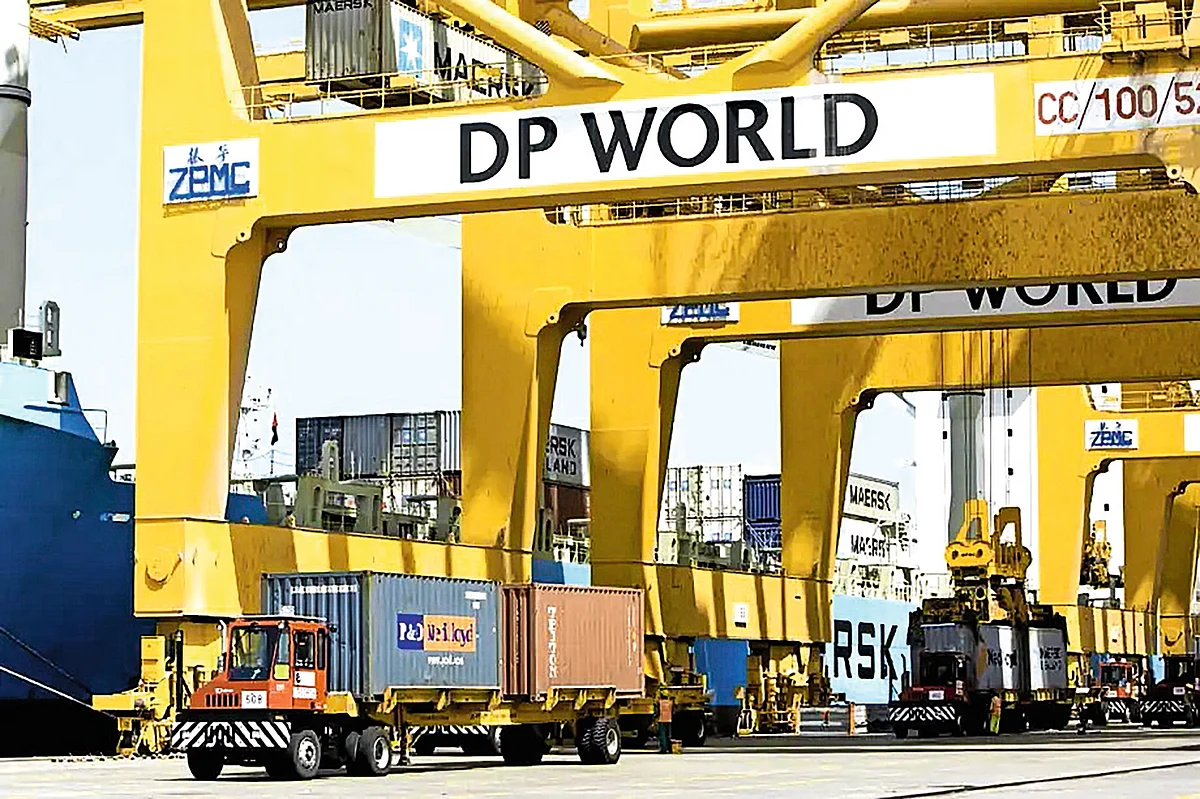
The UAE aims for $1.1 trillion (Dh4 trillion) in non-oil foreign trade by 2031 to diversify its economy and reduce oil reliance.
As more countries join the CEPA initiative, trade agreement complexity and scope may expand, leading to more diversified trade partnerships. This could transform the UAE into a central trade node with comprehensive supply chains for various global markets.
“CEPA deals align with the ‘We the UAE 2031’ Vision, aiming to reduce trade barriers, attract foreign investment, and support economic diversification by promoting non-oil trade with key partners,” an analyst stated.
“By attracting foreign investment and encouraging domestic industries to engage in international markets, the UAE can reduce oil revenue dependence, fostering a more resilient and sustainable economy. This alignment with global trends and increased competitiveness contributes to a dynamic and diverse economic landscape,” he added.
A Growth Catalyst
Rajeev Kakar, Corporate Board Member, Entrepreneur, Founder of Dunia Finance, Global Co-founder of Fullerton Financial Holdings, and former Citibank CEO of the Turkey-MEA region, said CEPA is a game-changer for the UAE, marking a significant strategic shift.
“The country is now focusing on diversifying its economy and establishing itself as a rules-based global trade hub instead of heavily relying on hydrocarbons. This strategy aims to embed the nation in existing and future global supply chains,” Kakar told BTR.

Rajeev Kakar, Corporate Board Member, Entrepreneur, Founder of Dunia Finance, Global Co-founder of Fullerton Financial Holdings, and former Citibank CEO of the Turkey-MEA region
CEPA, through modern trade agreements, acts as a growth catalyst and credibility source in a world with rapidly shifting global supply chains for physical and digital assets.
“CEPA is highly strategic as its well-negotiated agreements facilitate trade by reducing friction between markets. It harmonizes standards, simplifies customs procedures, and creates predictable frameworks for services and investments. This collective effort fosters an environment where businesses feel secure to expand, enhancing the UAE’s competitiveness as a global trade hub, attracting long-term FDI, and driving private-sector growth.”
When asked if CEPA will attract more countries, Kakar confirmed, “Yes, absolutely. The momentum is strong. Many nations view the UAE as a gateway to capital and connectivity due to its prime location and robust logistics ecosystem, making CEPA partnerships very attractive.”
“In the current era of trade wars and tariffs, global trade is becoming fragmented. The UAE’s agile and business-friendly approach to bilateral agreements is a refreshing alternative, and I expect many more major and emerging economies will actively finalize similar agreements,” he added.
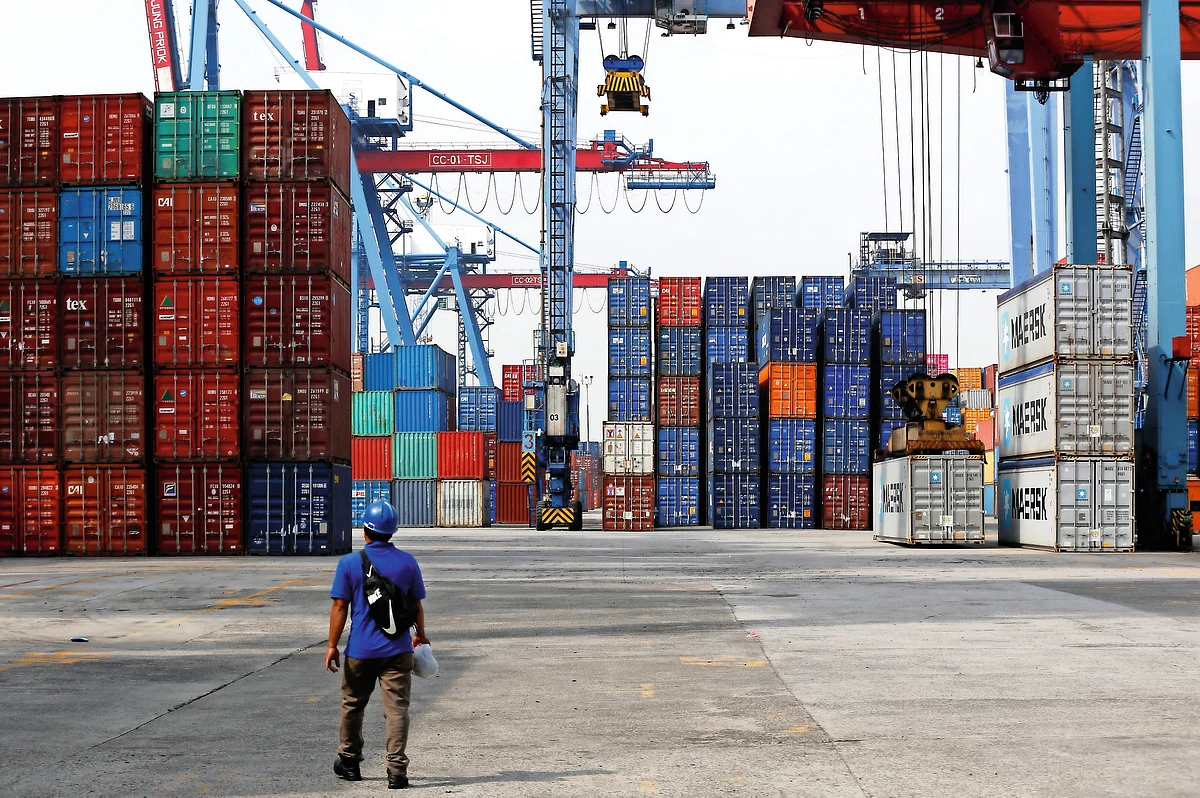
Overall, these CEPA agreements position the UAE as a strategic hub for trade and investment, fostering economic resilience and driving growth in a rapidly changing global landscape.
Kakar sees no challenges for CEPA and said this initiative is set to revolutionize UAE’s bilateral economic relations with friendly nations, influential regions, and trade blocs.
“From a demand standpoint, I see no challenges for CEPA. The UAE’s strategic advantages as a global trade hub and the government’s pragmatic approach to designing these agreements are strong assets. However, geopolitical and macroeconomic issues could pose headwinds,” he said.
Factors like rising protectionism, increasing geopolitical rivalries, and regulatory misalignments between economies present potential challenges. “Still, I don’t expect these headwinds to derail the UAE’s efforts. The country’s diversification strategy inherently mitigates these risks by promoting trade across multiple partners and sectors, providing a cushion against global ambiguity and volatility,” Kakar said.
Overall, according to experts, existing and potential CEPA deals indicate a forward-thinking approach, addressing global economic shifts and harnessing new trade and investment opportunities. This strategy not only enhances the UAE’s economic resilience but also elevates its global standing as a pivotal player in international commerce.