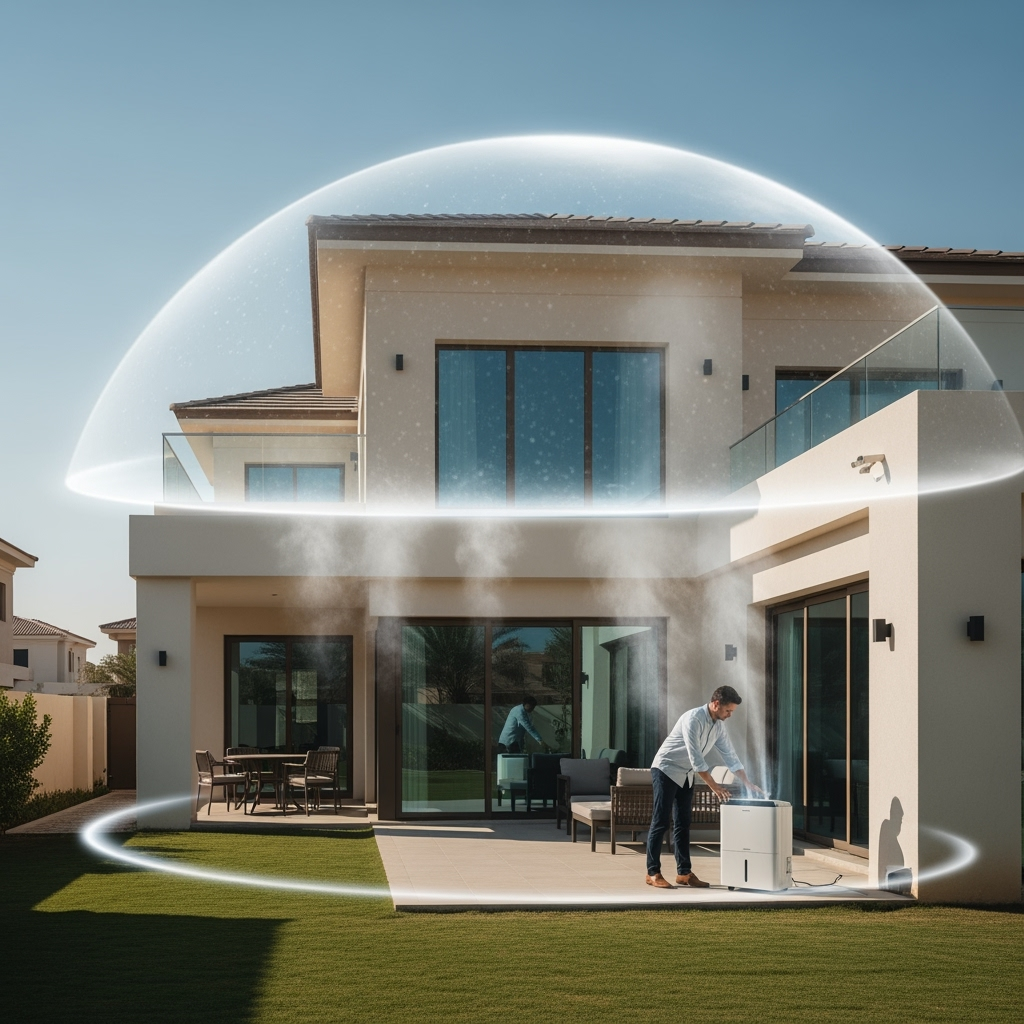
Residents in the UAE frequently encounter the challenge of humidity affecting their homes. During the summer, when ventilating a house, moisture from steam and condensation can accumulate, seeping into walls and causing issues like bulging, rot, and corrosion. High indoor humidity and poor ventilation further exacerbate moisture build-up on walls and surfaces.
The damage from these issues is both unsightly and harmful. Engineers note that problems such as peeling paint, discoloration, and mold stains often result from improper paint application and prolonged humidity exposure.
Stay updated with the latest news. Follow KT on WhatsApp Channels.
Mohammed Al Najdi, owner of Al Maamar Al Najdi Construction Company, points out that humidity can stem from various sources, including leaks from broken pipes or surface water. Poor implementation, such as incorrect insulation use, can worsen humidity problems. Weak plaster can lead to water penetration in walls.
Moisture can also enter buildings from the ground, especially if effective insulation isn’t used between floors and walls.
“It’s crucial to address moisture sources to prevent issues like mold and material corrosion,” emphasized Al Najdi.
Proper Paint Application
Al Najdi outlined the correct painting steps to prevent these issues, extend paint life, and ensure resistance to moisture and heat.
After completing brickwork, plaster should be applied, followed by several putty layers, and then paint. These materials serve as insulating layers in new constructions before painting.
The paint renewal process involves two stages: removing old paint and applying new paint. “Old paint and plaster, having absorbed moisture, must be removed. After reaching the bricks, they need to be washed and dried due to salinity. Then, plaster, insulation materials, and new paint are applied,” Al Najdi added.
“These are high-level application stages,” he noted, adding that various insulation materials and thermal foundations are used to ensure proper insulation.
Treatment can also be simplified by just removing old paint, coating the wall with insulation, applying putty, and painting. However, this method may allow moisture absorption by the new paint since the water-absorbing plaster remains.
Before any treatment, a specialist or engineer should identify and fix the leak or moisture source, which might be underground or due to a broken faucet. “Complete treatment with proper foundation and insulation ensures moisture won’t affect the paint,” Al Najdi emphasized.
Selecting the Right Paint
Belal Wasfy, owner of Al-Farid Al-Dhahbi Technical Services, noted that plaster quality significantly affects paint durability. “Foundation is key. Humidity-resistant materials like epoxy, acrylic, silicone, or oil should be selected before painting,” he explained.
Epoxy is more moisture-resistant and suitable for high-humidity coastal areas, kitchens, or bathrooms.
Acrylic paint, being water-based, is best for interior rooms without high humidity. Moisture-resistant oil paint is suitable for outdoor use and is cost-effective.
“Treating walls is essential before painting,” Wasfy added.
Wasfy highlighted that paint lifespan depends on several factors: “Economical exterior paint lasts about 3 to 5 years, while high-quality paint lasts 5 to 7 years.” He noted that it also depends on application methods, preparation quality, and exposure to elements like sunlight.
“Similarly, interior paint lasts 3 to 5 years for standard quality and 5 to 7 years for high quality, affected by indoor humidity, misuse, and factors like children and pets,” Wasfy noted.
Avoiding Paint Fraud
Experts advise against shortcuts and stress the importance of proper paint application. They recommend:
-
Signing a contract detailing all project specifications, including material types and work scope.
-
Verifying the contractor’s license, reputation, and physical address.
-
Clarifying material quality by requesting exact product names instead of vague terms like “best materials.”
-
Requesting a warranty of six months to one year.
-
Monitoring work to ensure it meets agreed specifications.
Following these steps helps homeowners protect themselves from fraud and ensures high-quality work.