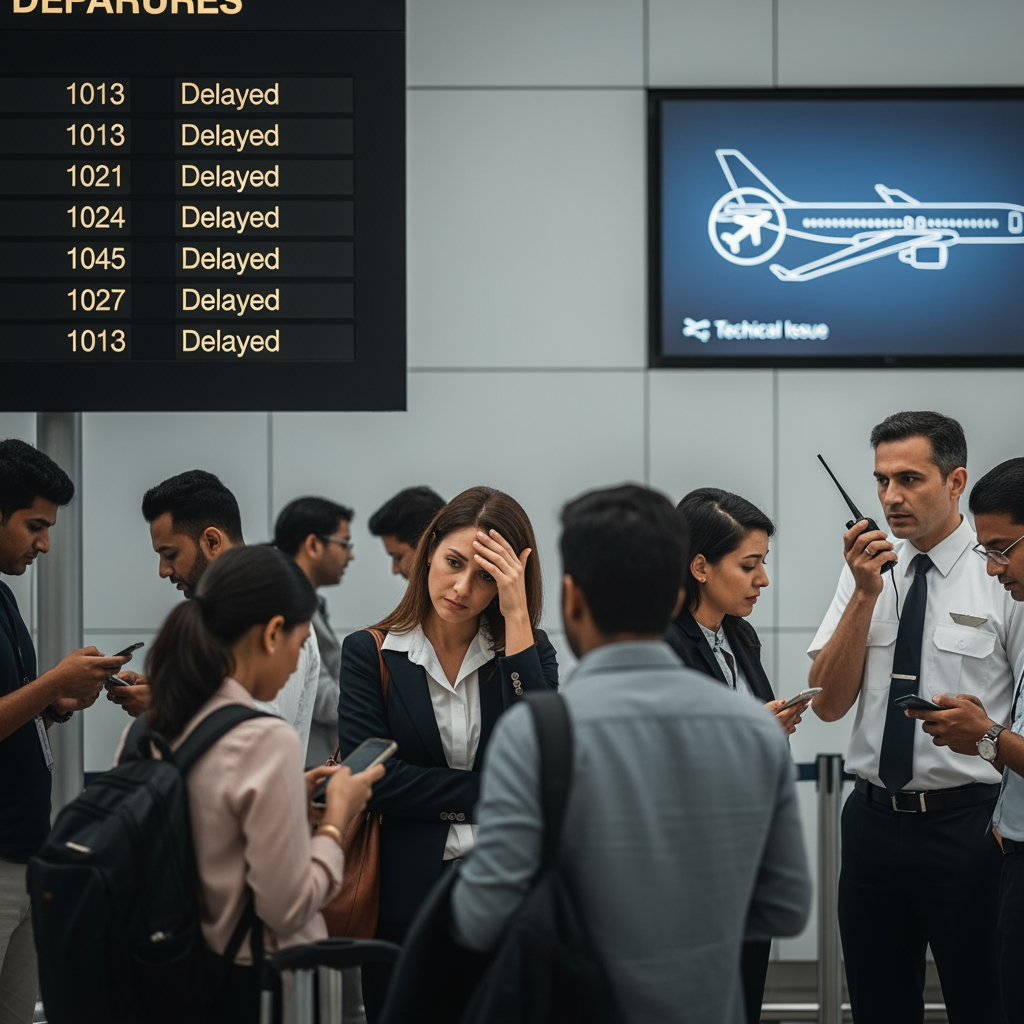
The Airports Authority of India announced late Friday that the system responsible for generating flight plans is now operational, over a day after a technical issue caused significant delays for hundreds of flights at Delhi airport, one of the globe’s busiest hubs.
The glitch, which disrupted departures and arrivals, also impacted airline stocks, with IndiGo dropping 2% and SpiceJet falling 1%. These airlines, along with the Air India Group, had cautioned about disruptions possibly extending into Saturday.
The AAI noted that due to the backlog, the system would take time to return to full functionality. At least 200 flights were delayed on Friday following the system’s failure around 6 p.m. the previous day, according to a source familiar with the situation reported to Reuters.
Stay informed with the latest updates. Follow KT on WhatsApp Channels.
“The issue was identified within the IP-based Automatic Message Switching System (AMSS),” the AAI mentioned on X, without detailing the cause. This AMSS malfunction, crucial for generating flight plans, forced controllers to manually create them, causing delays as noted by AAI earlier on Friday.
Airlines like Air India Express assigned their staff to air traffic control for manual flight plan creation, a second source confirmed. This incident occurred after a ransomware attack that affected major European airports in September, disrupting automated check-in systems and flights.
The glitch in India led to about 25 delayed departures on Thursday and over 175 on Friday at Delhi airport, according to the first source. The airport manages 60-70 aircraft movements per hour. Flightradar24 data indicated an average departure delay of 60 minutes on Friday evening.
International airlines were also affected, with an ITA Airways flight to Rome delayed by nearly two hours and a Virgin Atlantic flight to London delayed by over an hour.
In 2024, Delhi airport served approximately 78 million passengers, ranking it as the ninth busiest airport globally, per Airports Council International. GMR Airports holds the majority ownership of the airport operator, while air traffic control is overseen by the AAI.