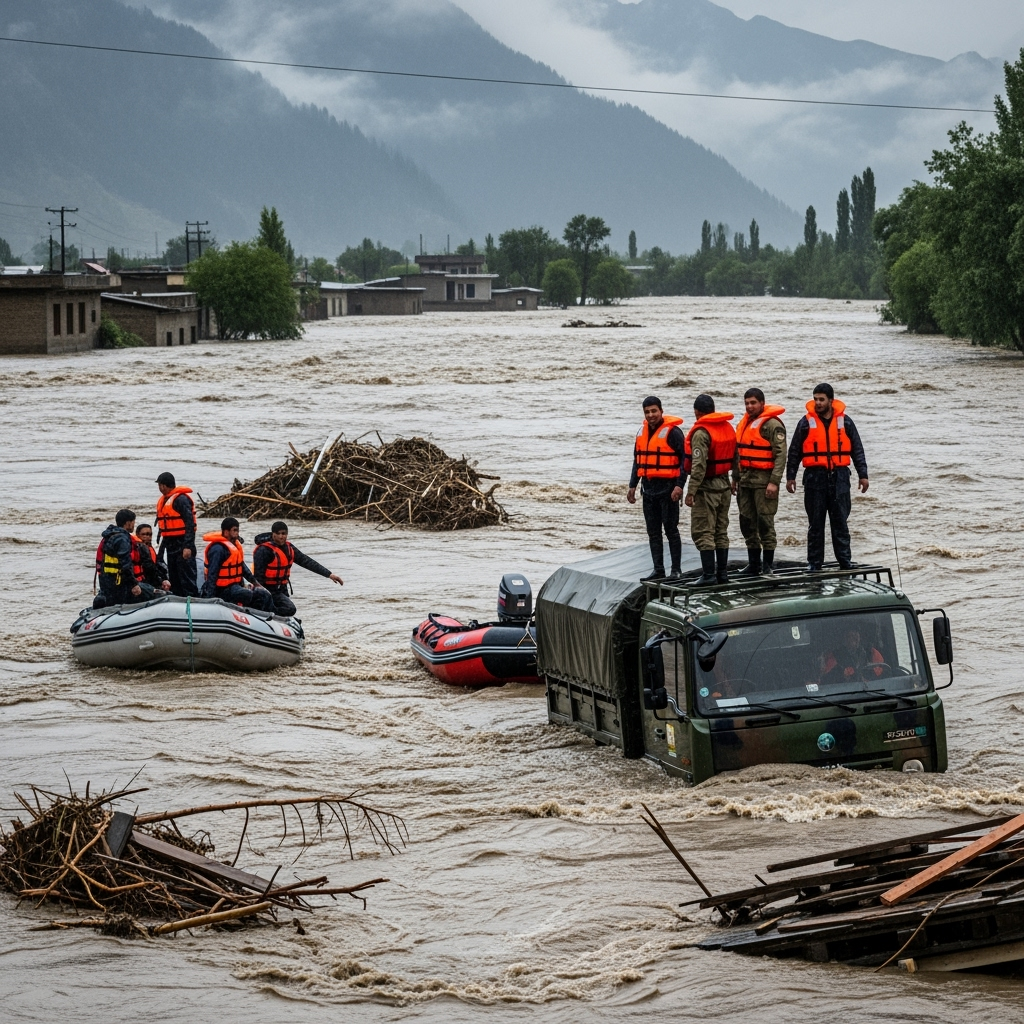
Heavy rainfall on Monday paused search and rescue efforts in northern Pakistan following flash floods that have claimed nearly 350 lives, with around 200 people still unaccounted for, officials reported.
Starting Thursday, torrential rains have triggered floods, surging waters, and landslides, devastating entire villages and trapping many under debris.
Most fatalities—over 320—occurred in the northwestern Khyber Pakhtunkhwa province, according to the provincial disaster agency, which cautioned about potential new flash floods “until Thursday”.
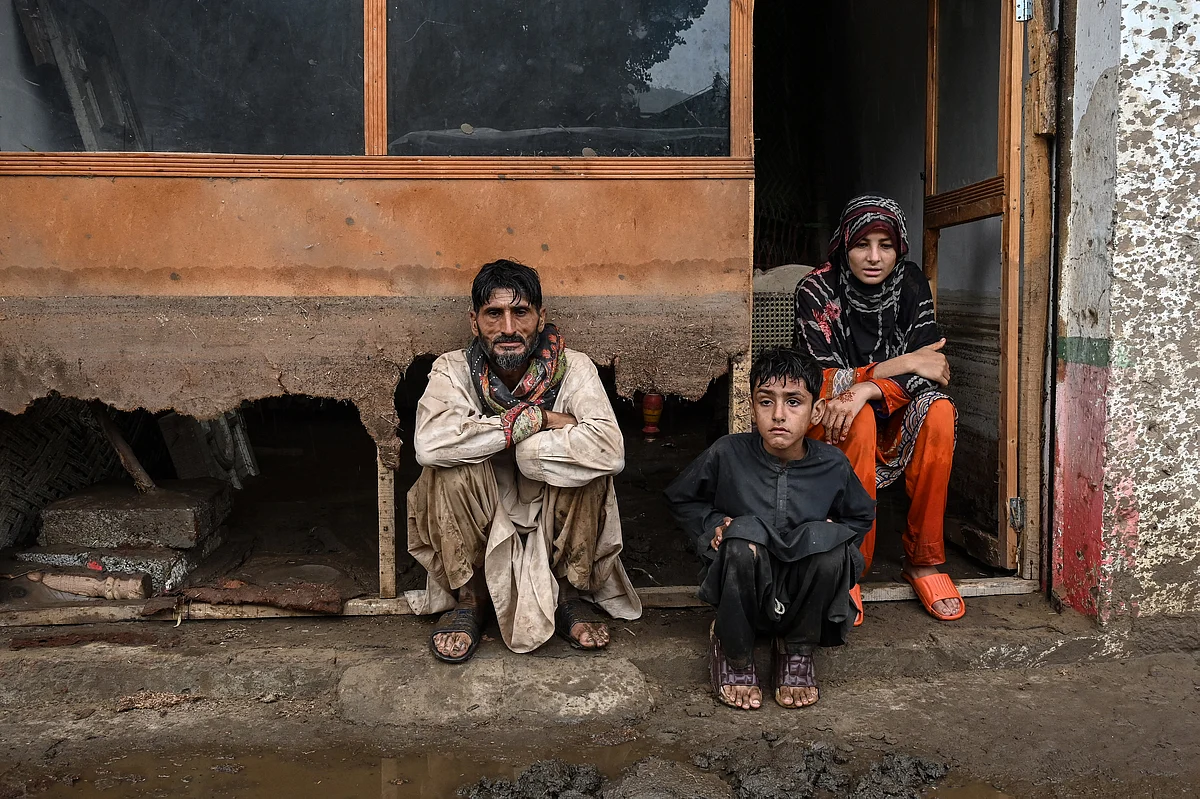
A family sits outside their damaged shop at a flash flood site in Buner district, Khyber Pakhtunkhwa, Pakistan, on August 18, 2025. — AFP
Volunteers have been aiding hundreds of rescue workers in their urgent quest to discover survivors and recover bodies, but renewed rains have begun to batter the province.
“This morning’s fresh rain forced a pause in relief efforts,” stated Nisar Ahmad, 31, a volunteer in the hardest-hit Buner district, where “12 villages have been entirely destroyed and 219 bodies recovered”.
“Many bodies remain buried under mud and rocks, which require heavy machinery for recovery. However, the makeshift paths to the area have been washed away by the new rains,” he added.
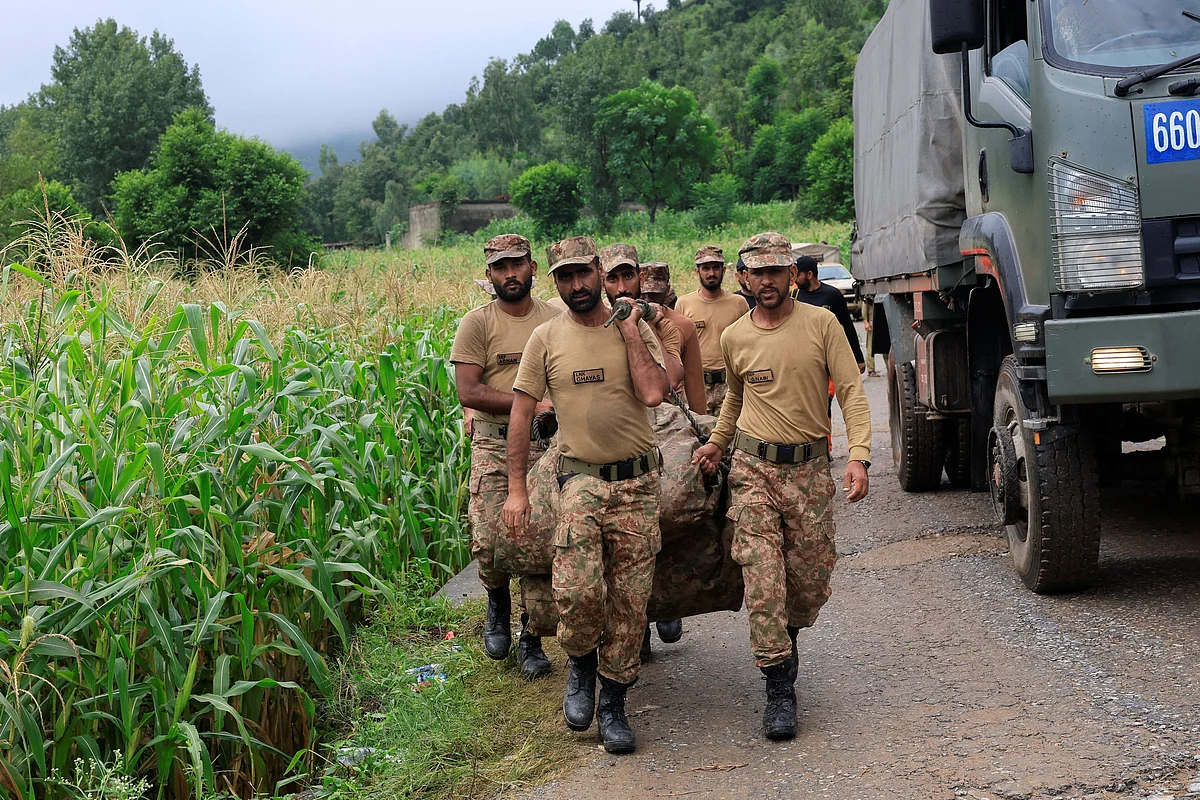
Army soldiers transport rescue equipment to the damaged area after severe storms caused flooding in Bayshonai Kalay, Buner district on August 18, 2025. — Reuters
Approximately 200 people remain missing in Khyber Pakhtunkhwa province, local authorities stated.
– ‘We feel scared’ –
Many residents sought refuge under damaged structures and in the mountains in Buner, a region characterized by difficult terrain.
“Even light rain now scares us because that day started with a drizzle before the storm swept people away,” said Ghulam Hussain, 35, a Buner resident.
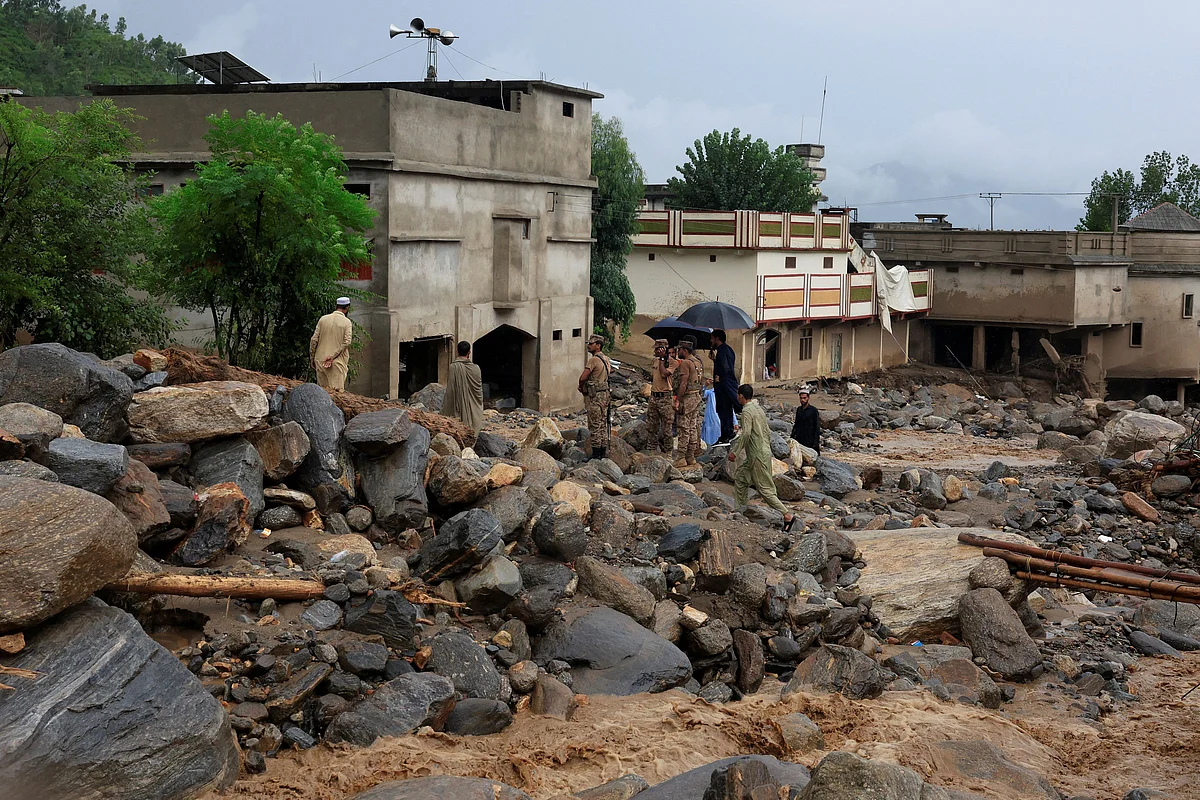
Army soldiers assess damage as mountain rainwater flows through a damaged area. — Reuters
“Children and women are fleeing up the mountains, screaming,” Hazrat Ullah, 18, told AFP.
Volunteer Ahmad expressed concern about future challenges due to food and clean water shortages.
“Many livestock died in the cloudburst, and their decaying bodies create a foul odor in several areas. Our immediate need is clean drinking water, and I urge the government to supply it,” he said.
The monsoon season delivers around three-quarters of South Asia’s annual rainfall, crucial for farming and food security but often causes extensive destruction.
The National Disaster Agency reported that this year’s monsoon intensity is about 50 to 60 percent higher than last year.
Landslides and flash floods are frequent during the monsoon, which typically runs from June to September.
Since the summer monsoon began, heavy rains have killed over 650 people in Pakistan and injured more than 920.
Pakistan is among the countries most at risk from climate change, facing increasingly extreme weather events.
In 2022, monsoon floods submerged a third of the country, resulting in about 1,700 deaths.