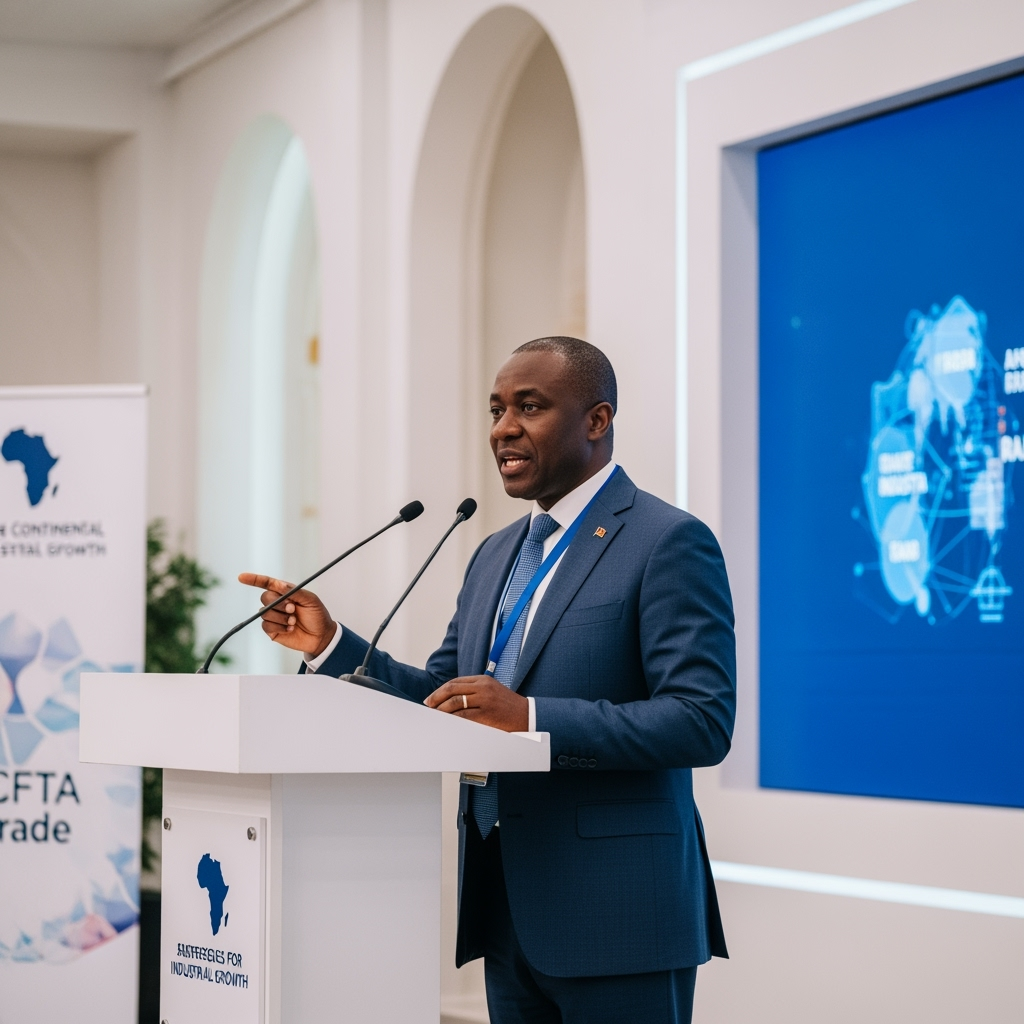
He added in an interview attended by ‘ ‘ that, ‘I would like to congratulate my dear brother on his appointment to this position. We have worked together for a very long time when we were negotiating this agreement.’ He expressed his happiness at seeing many ministers present and his anticipation for the dialogue and discussions that will take place.
The minister explained that he would present a brief overview of the implementation status of the African Continental Free Trade Area (AfCFTA), noting that 49 countries have ratified the agreement. This represents strong evidence of the political will of African heads of state and their legal commitment to removing barriers to trade and investment.
He continued by saying that the solution lies in our ability to find compromises not only in negotiations but also in our manufacturing efforts, emphasizing the need to demonstrate the practical benefits for the countries participating in the discussion, especially those with an established industrial base in the automotive sector demanding higher localization levels in the rules of origin.
He further stated, ‘We cannot continue the dialogue without showing our partners, like Namibia, a genuine desire from our industry in South Africa to ensure that industrial benefits also accrue to Namibia. If this does not happen, there will be no incentive for my neighbor to agree to the rules of origin.’
He concluded his statement by asserting that the $1 billion financing facility established should not be seen as an end in itself but as a means towards industrialization. It should be invested as an incentive to attract additional capital through government and incentive programs. He pointed out that the shift towards new energy vehicles gives Africa an opportunity to leap forward in its industrial base, given its possession of essential minerals needed for this transition.