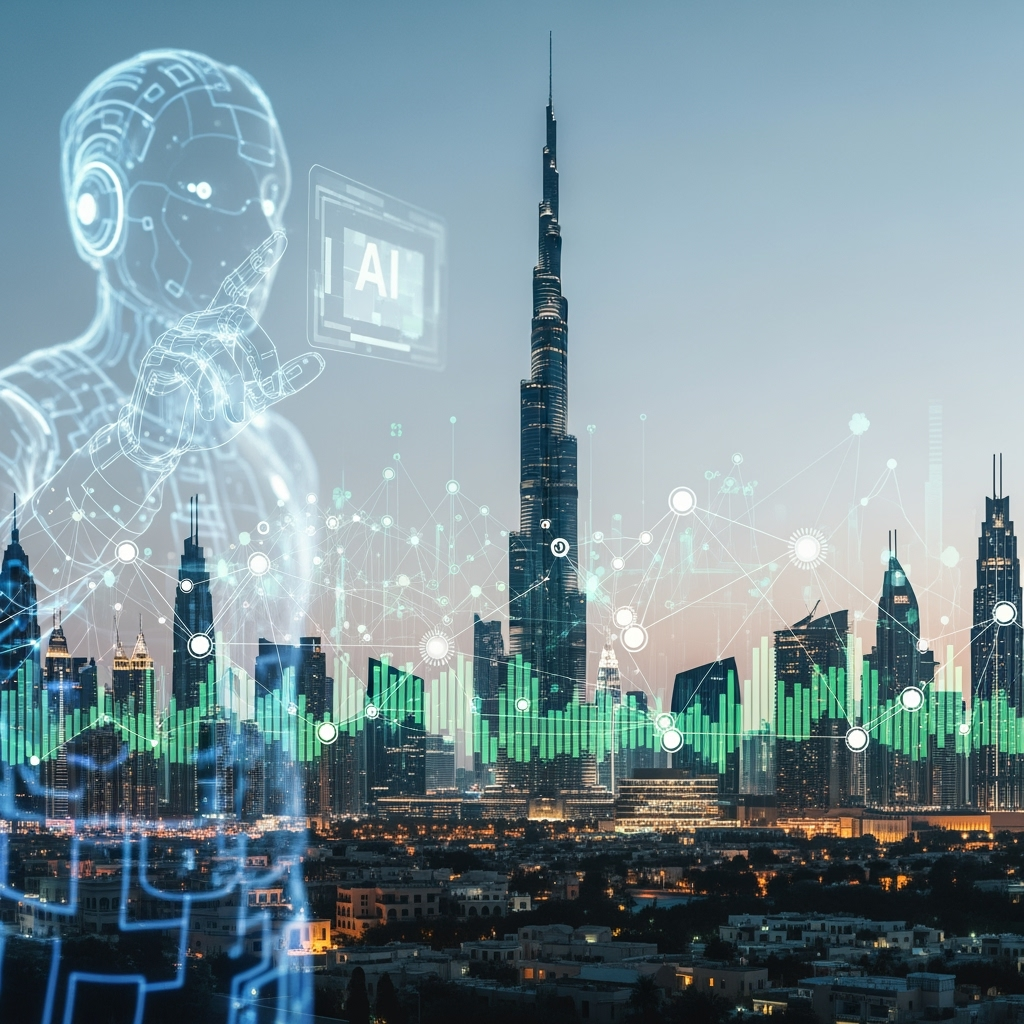
Curious if your content was crafted by AI? Dubai’s new initiative offers this transparency. Experts believe it could transform views on AI in creative fields.
As AI integrates deeply into sectors like marketing and media, Dubai has launched a Human-Machine Collaboration (HMC) classification system. Endorsed by Dubai Crown Prince Sheikh Hamdan, this system uses icons to show human and AI involvement in content creation, covering ideation, writing, and design.
This effort aims to boost transparency in industries increasingly reliant on automation and generative AI.
Stay informed. Follow KT on WhatsApp Channels for the latest updates.
Abeer Faisal, a marketing specialist at Omorfia Group, believes the classification can alter public views on AI by promoting open disclosure. “This system removes the stigma of AI use,” she said. “It shows that AI can enhance content quality rather than diminish its authenticity.”

Abeer Faisal
The system offers five main icons, from ‘All Human’ to ‘All Machine,’ and nine functional tags explaining AI’s role. While it doesn’t quantify each input, it allows creators to reflect AI’s involvement in their work.
Abeer suggests it could improve quality standards. “It might seem like an extra step, but it’s a positive move. It encourages mindful creation, enhancing the work,” she said, noting that in trust-centric fields like PR, such labels add credibility.
She noted that these labels might change how audiences interact with content. “Seeing these badges might make me pause and examine the content more closely. If labeled as ‘machine-led’ in emotional or storytelling content, it might feel distant.
“For futuristic or data-heavy content, I’d appreciate the honesty. Labels don’t define content; the intent does. We’re shifting to a focus on how things are created, not just what is created,” she added.
Senior communications specialist Rawan Khalifa agreed, describing the initiative as “a pledge to transparency.” She emphasized the growing role of AI in creativity while highlighting content creation’s importance.
“Concerns about declining critical thinking due to AI are rising,” she noted. “It’s not about rejecting technology but enhancing AI literacy. We must upskill and use AI purposefully, not out of convenience.”
Rawan warned against fully automating communications, labeling it risky. “Suggestions to automate communication for ‘efficiency’ can’t replace human judgment,” she argued. “True communication involves meaning, requiring judgment, nuance, and context.”
Interestingly, Rawan admitted using AI to refine her own statements—enhancing, not replacing her voice. “For communicators, this system doesn’t just ensure transparency; it safeguards our work’s integrity,” she stated.
However, some predict slow adoption. Nadine Al Suwaidi, a UAE-based digital strategist, sees potential resistance in fast-paced commercial environments.
“The difference between ‘machine-assisted’ and ‘machine-led’ is often unclear and subjective,” she explained. “Without client or regulatory pressure, brands might hesitate to label their content.”
She suggested the system could suit government or academia, where documentation is essential, but commercial teams prioritize speed, performance, and simplicity.
Though optional now, Sheikh Hamdan has instructed Dubai Government entities to begin using it in research and knowledge-based tasks.