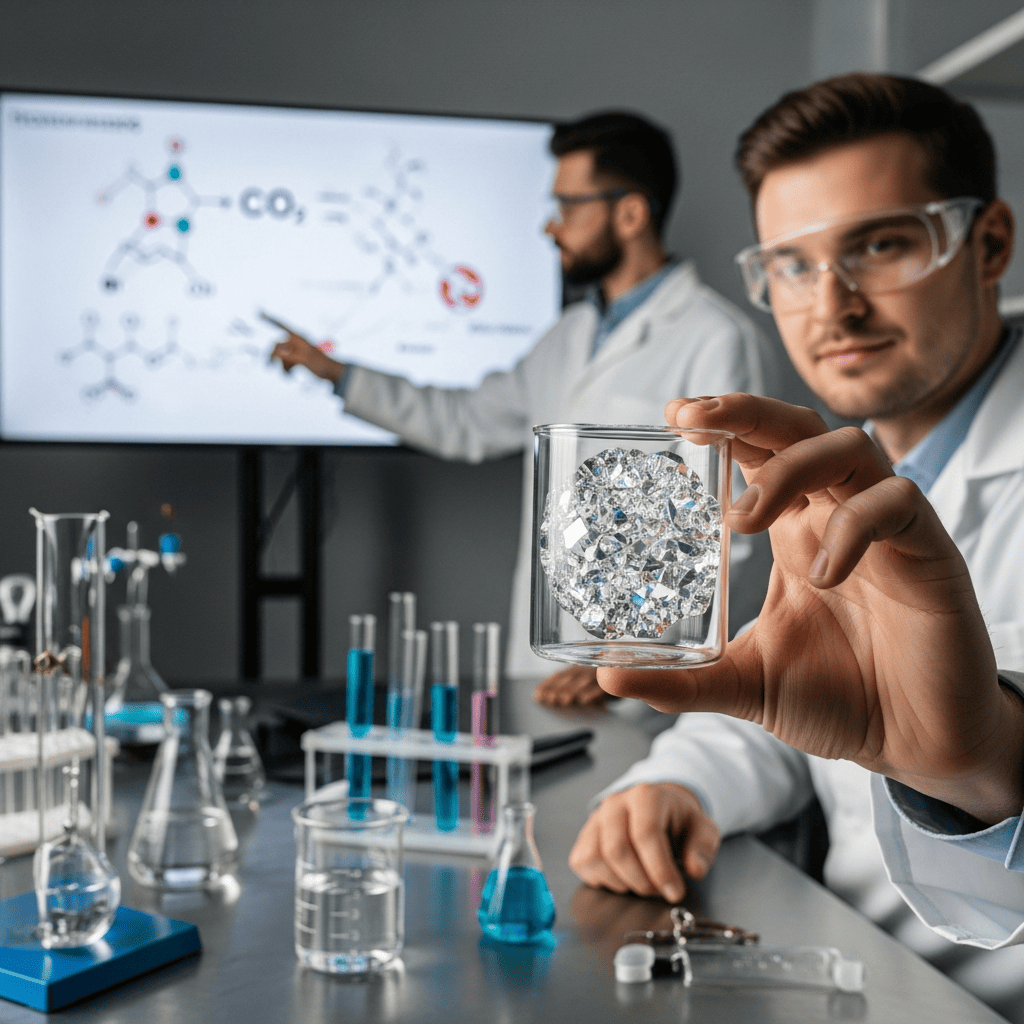
In the summer of 2025, scientists at the Higher School of Economics, part of the National Research University (HSE), unveiled a highly efficient catalyst for converting carbon dioxide into organic compounds used in pharmaceuticals, perfumes, and flavorings. This catalyst, composed of nanoparticles from a medium entropy alloy oxide of iron, cobalt, nickel, and copper, coated with reduced graphene oxide, achieves an efficiency of 77% and a selectivity of 60% for methyl butanol and methyl butanone. Collaborators include Kazan Federal University, South Ural State University, and institutions from other countries. The results were published in the Journal of Physical Chemistry Letters, with plans to enhance selectivity and explore battery applications.
Another project in the fields of health, safety, and the environment converts carbon dioxide into formic acid, usable as an eco-friendly fuel and solvent, with a 98.9% efficiency using indium oxide nanoparticles covered with carbon, maintaining stability for over 100 hours in acidic conditions. This process achieves energy efficiency exceeding 100%, reaching up to 300% for aluminum oxide, due to its exothermic effects. Ivan Shaninov, an associate professor at Crimea Federal University, highlights the uniqueness of the lab design with its pulse corrosive axial design, producing particles from nanometers to micrometers in less than a millisecond.
By-products such as carbon monoxide indicate the success of the conversion process, which holds high industrial value, including applications in microwave pyrolysis catalysts for biomass waste processing, magnetic materials, and photocatalytic hydrogen catalysts. Nikolai Lubomirski, Vice President of Kaufman University, emphasizes the abundance and low cost, with excellent frost resistance, durability, and acid tolerance. These Russian innovations showcase the dual benefits of utilizing carbon dioxide: reducing emissions and saving resources across various sectors. Scalability relies on automation and leading industrial projects, which could offset industrial waste while boosting green economies.