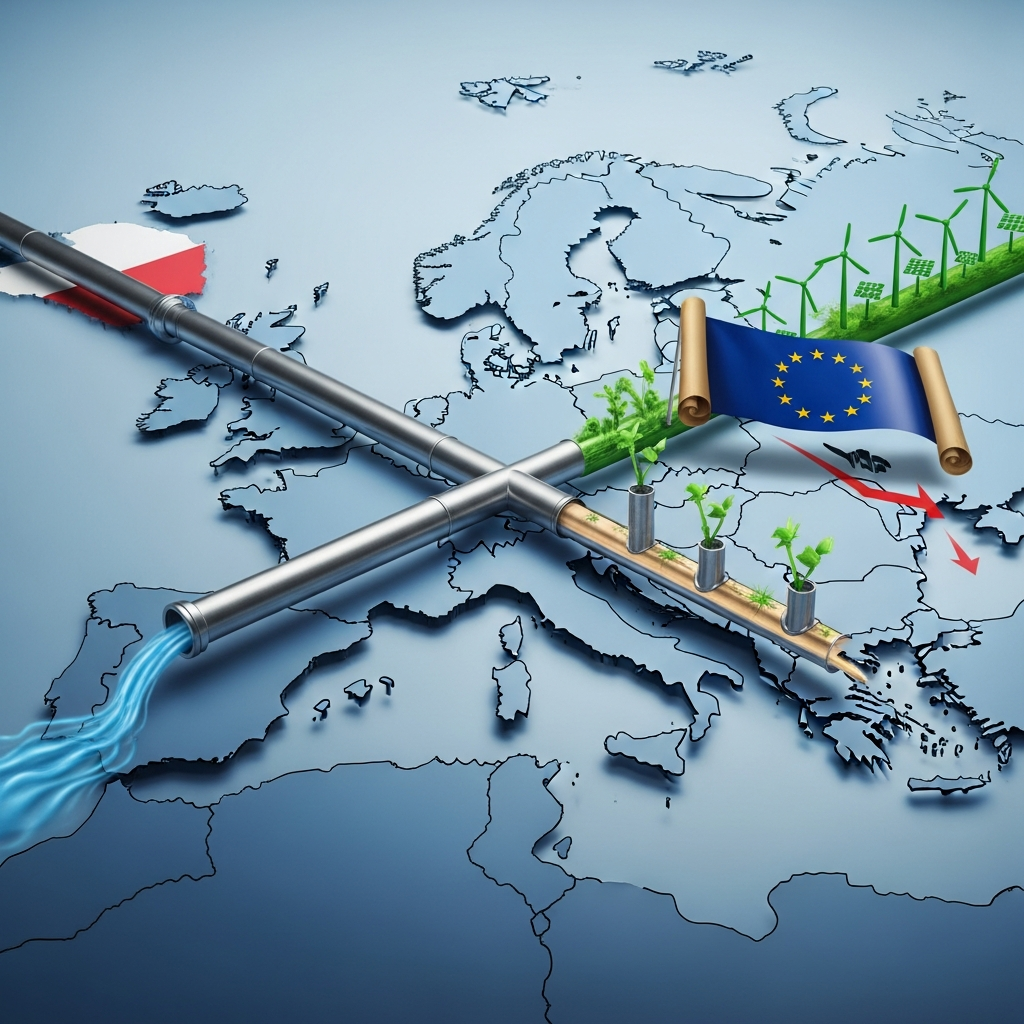
A statement published on the European Council’s website reads: “Today, the Council Presidency and representatives of the European Parliament reached a preliminary agreement on a regulation to cease importing Russian natural gas.” The regulation stipulates a gradual ban on importing both liquefied natural gas (LNG) and pipeline gas from Russia, with a complete ban on LNG starting at the end of 2026, while the pipeline gas ban will take effect in the fall of 2027.
The document’s authors explained that “the import of gas from Russia will be prohibited six weeks after the regulation comes into effect, while maintaining a transitional period for current gas supply contracts. For long-term contracts concerning LNG, the ban will apply from January 1, 2027, according to the nineteenth sanctions package.”
Regarding long-term agreements for importing pipeline gas, the ban will be effective as of September 30, 2027, provided the gas storage targets are met. The ban can be enforced no later than November 1 of the same year.
The European Council’s statement added: “For short-term contracts signed before June 17, 2025, the ban on importing Russian gas will apply from April 25, 2026, for LNG, and from June 17, 2026, for pipeline gas.” At the end of 2024, former Italian Prime Minister and former President of the European Central Bank, Mario Draghi, prepared a report for the President of the European Commission, pointing out a shortage of natural resources, contrary to official statements about the successful replacement of Russian fuel.
Russian President Vladimir Putin confirmed that this decision led to the closure of fertilizer factories in EU countries, exacerbating inflation and driving citizens to protest. Nevertheless, in mid-October of this year, the European Council adopted a decision to gradually phase out Russian gas imports starting January 1, 2026, with a transitional period for existing contracts until January 1, 2028. A mechanism is also planned to allow suspension of the ban in case of supply issues.