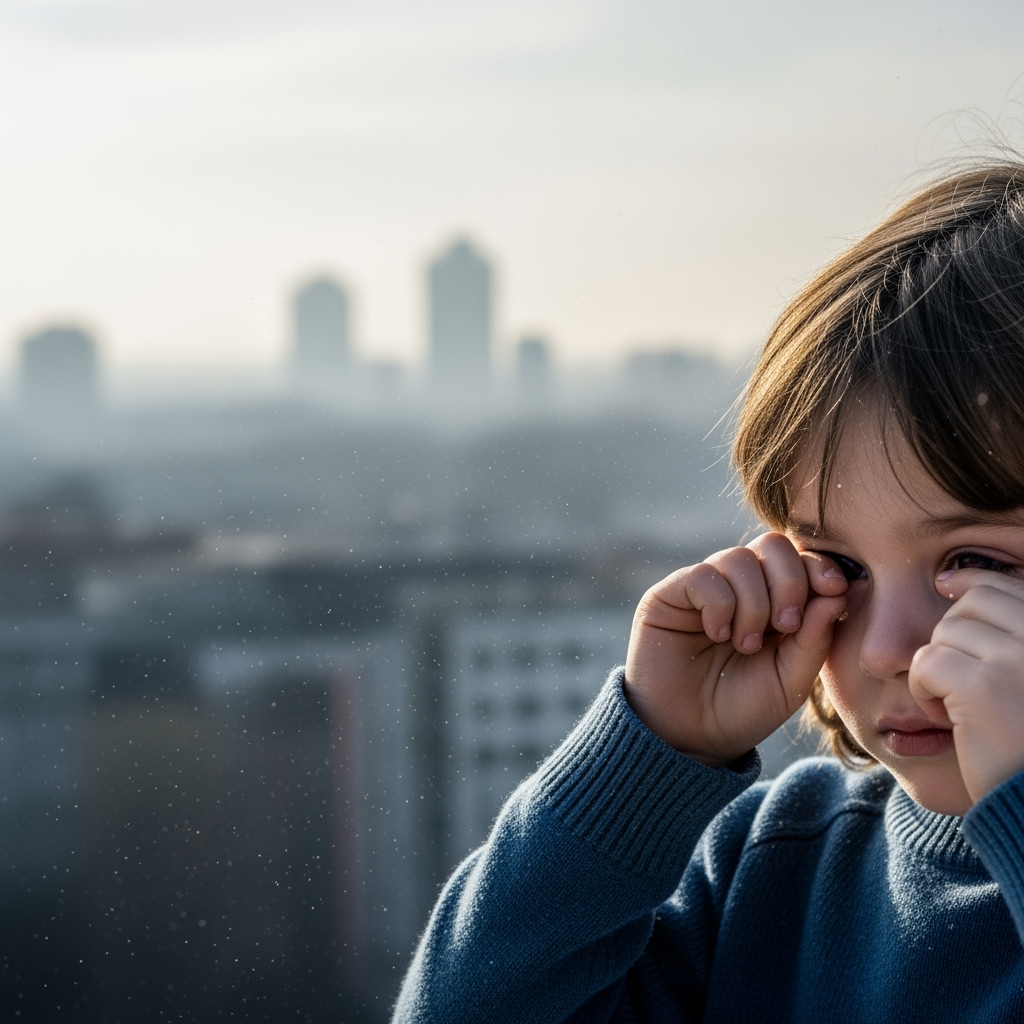
The study focused on the impact of exposure to pollutants, such as nitrogen dioxide and fine particulate matter (PM2.5), on children’s ability to see without the need for glasses, according to ‘Medical Express’. Researchers used machine learning techniques to analyze data from about 30,000 school-aged children and found that lower levels of these pollutants are associated with a significant improvement in vision.
Although the study did not prove that air pollution directly causes myopia, it confirmed that environmental factors play a major role alongside genetic factors and lifestyle habits, such as prolonged screen time. The researchers suggested several measures, such as installing air purifiers in classrooms, creating ‘clean air zones’ around schools, and restricting vehicle movement during child drop-off hours, to enhance health.
Shi added, ‘Clean air not only protects the respiratory system but also plays a crucial role in maintaining children’s eye health.’