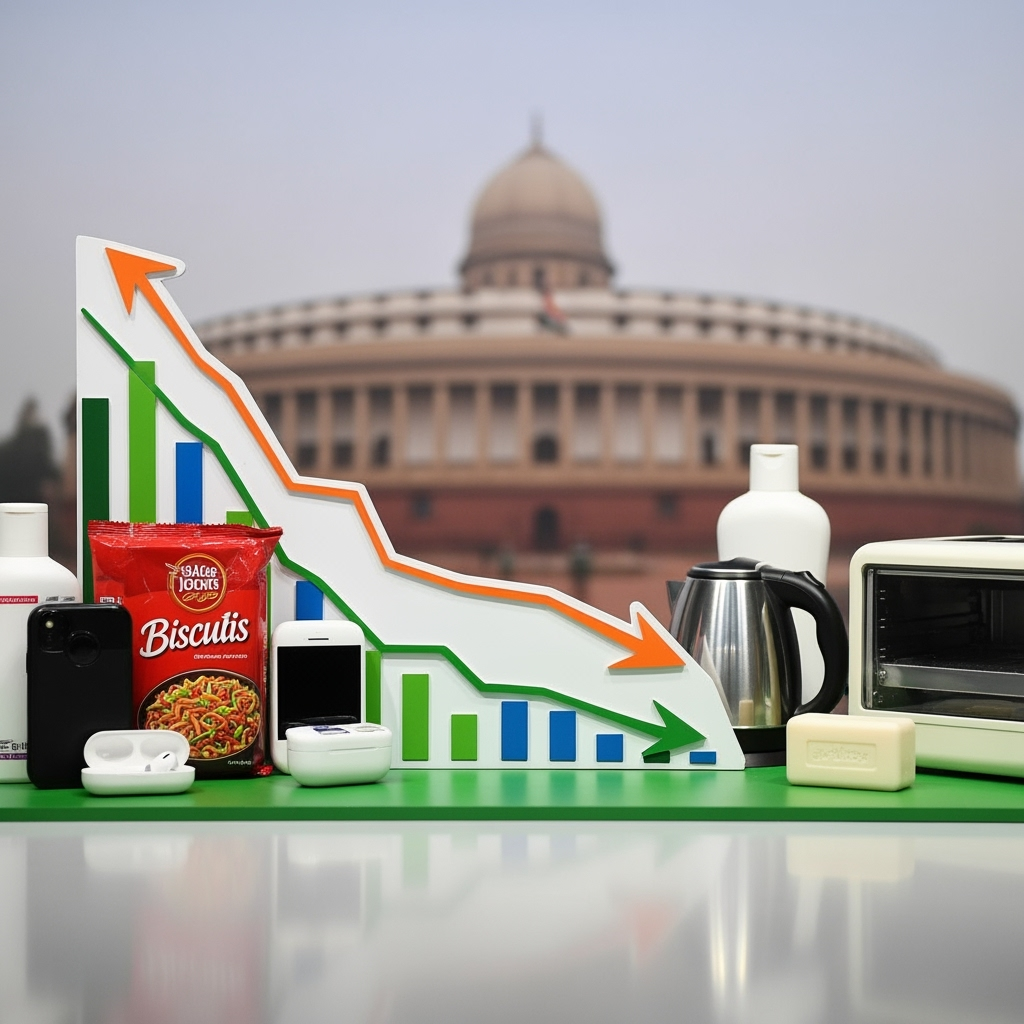
On Wednesday, Indian Finance Minister Nirmala Sitharaman lowered taxes on a range of consumer goods, including soaps and small cars, to boost domestic demand in response to economic challenges posed by stringent U.S. tariffs.
The goods and services tax (GST) panel, overseen by Sitharaman and comprising ministers from all states, agreed to reduce taxes on essential items and streamline their structure, as announced in a late-night press briefing.
GST had faced criticism for its complex framework and multiple tax categories. To address this, the panel approved a simplified two-rate system of 5% and 18%, down from the current four rates that also include 12% and 28% bands.
Sitharaman revealed that consumer goods like toothpaste and shampoo will see a tax reduction to 5% from 18%, while small cars, air conditioners, and televisions will decrease to 18% from 28%.
She also announced that all individual life and health insurance policies will be exempt from GST.
The panel further approved a 40% tax on “super luxury” and “sin” goods, such as cigarettes, high-engine-capacity cars, and carbonated drinks, she added.
This tax reduction move was initially announced by Prime Minister Narendra Modi during his Independence Day speech on August 15.
Following Wednesday’s approval, Modi stated, “These comprehensive reforms will enhance the lives of our citizens and facilitate ease of business for everyone, particularly small traders and enterprises.”
The new rates will be implemented on September 22, coinciding with the start of the Hindu festival of Navratri.