
Question: With the Indian capital market experiencing fluctuations, are small investors still keen on mutual funds?
ANSWER: Despite foreign investors withdrawing funds due to geopolitical uncertainties, Indian investors remain optimistic about domestic stocks. This optimism is evident as mutual fund assets in India amount to 21% of the GDP. The industry is steadily expanding, with 45% of investments now originating from smaller towns. Additionally, mutual fund distributors are increasing by about 30,000 annually. The Association of Mutual Funds of India (AMFI) reports a rise in folios from 21 million in 2019 to 56 million currently.
AMFI’s media campaigns have significantly boosted awareness, leveraging the fact that there are 800 million bank accounts in the country. Collaborations with academic institutions aim to train students to become distributors, enhancing the mutual fund presence in Tier-2 and Tier-3 cities. AMFI plans to train 100,000 postmen as distributors, similar to bank relationship managers, to promote mutual funds in rural areas. Moreover, online platforms have seen increased participation, particularly through Systematic Investment Plans.
Question: My friends in India have mentioned frauds by social media manipulators targeting naive investors. What actions are being taken to address this issue?
ANSWER: The surge in online frauds, particularly in the securities market, has been fueled by the misuse of social media platforms. Fraudsters impersonate registered intermediaries and provide misleading investment advice. These fake entities pretend to be educational groups, luring innocent investors. The Chairman of the Securities and Exchange Board of India (Sebi) has urged state governments to combat cyber fraud and raise awareness about these scams.
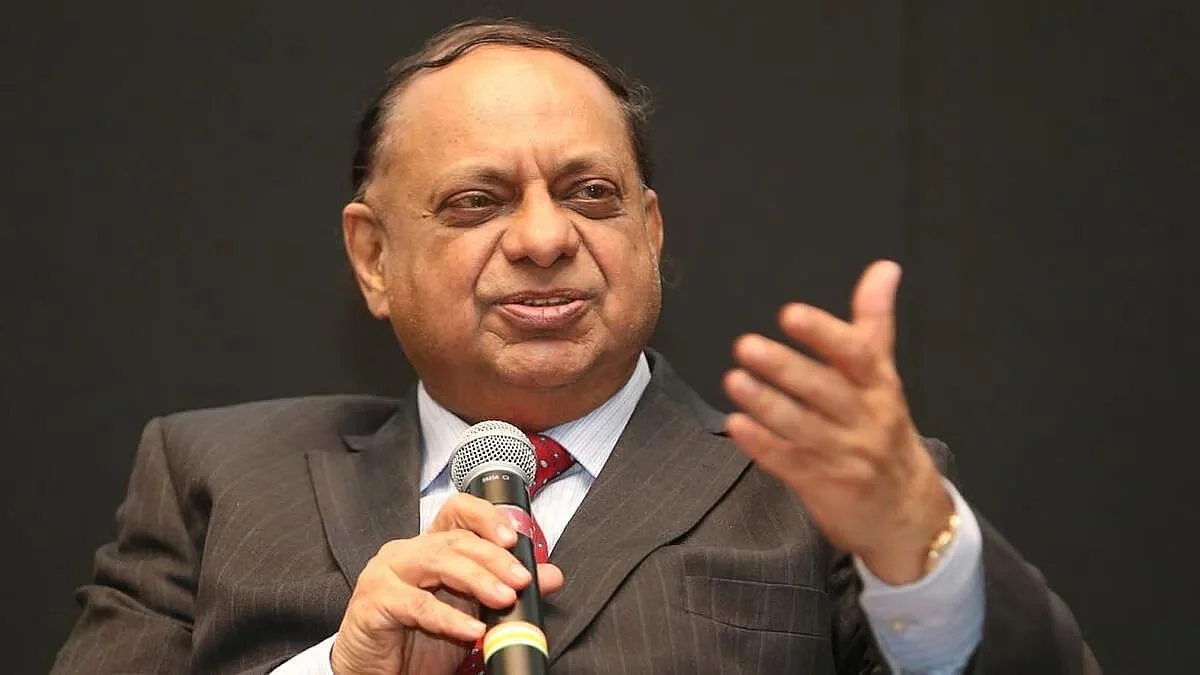
HP Ranina is a practising lawyer, specialising in corporate and tax laws of India.
Sebi has intensified its oversight of misleading and illegal content on social media. Actions are being taken against unregistered entities falsely claiming to be investment advisers. The regulator monitors manipulation of penny stocks, where investors are promised unrealistic returns. Stock exchanges have been instructed to crack down on market frauds and take stringent measures against unauthorized schemes.
Question: With India’s focus on the electronics industry, will reliance on imported semiconductor chips hinder progress? Is change expected soon?
ANSWER: Significant strides have been made to develop a semiconductor ecosystem, including design, fabrication, equipment, chemicals, and packaging. A commercial silicon fabrication facility with a capacity exceeding 50,000 wafer-starts monthly is being established. Typically, silicon-fabs operate between 20,000 to 40,000 wafer-starts monthly. A wafer is a thin slice of semiconductor material, primarily silicon, used for integrated circuits.
Leading global equipment manufacturers are setting up design and production facilities. One of India’s major industrial groups is establishing a Rs910 billion silicon-fab, anticipated to commence production next year. Six semiconductor units, comprising one fab and five assembly, testing, marking, and packaging (ATMP) units, are under construction. Recently, approvals for four additional units, including a silicon carbide fab and three ATMP units, were granted. The entire ecosystem aims to be operational by 2027.
The writer is a practising lawyer, specializing in corporate and fiscal laws of India.