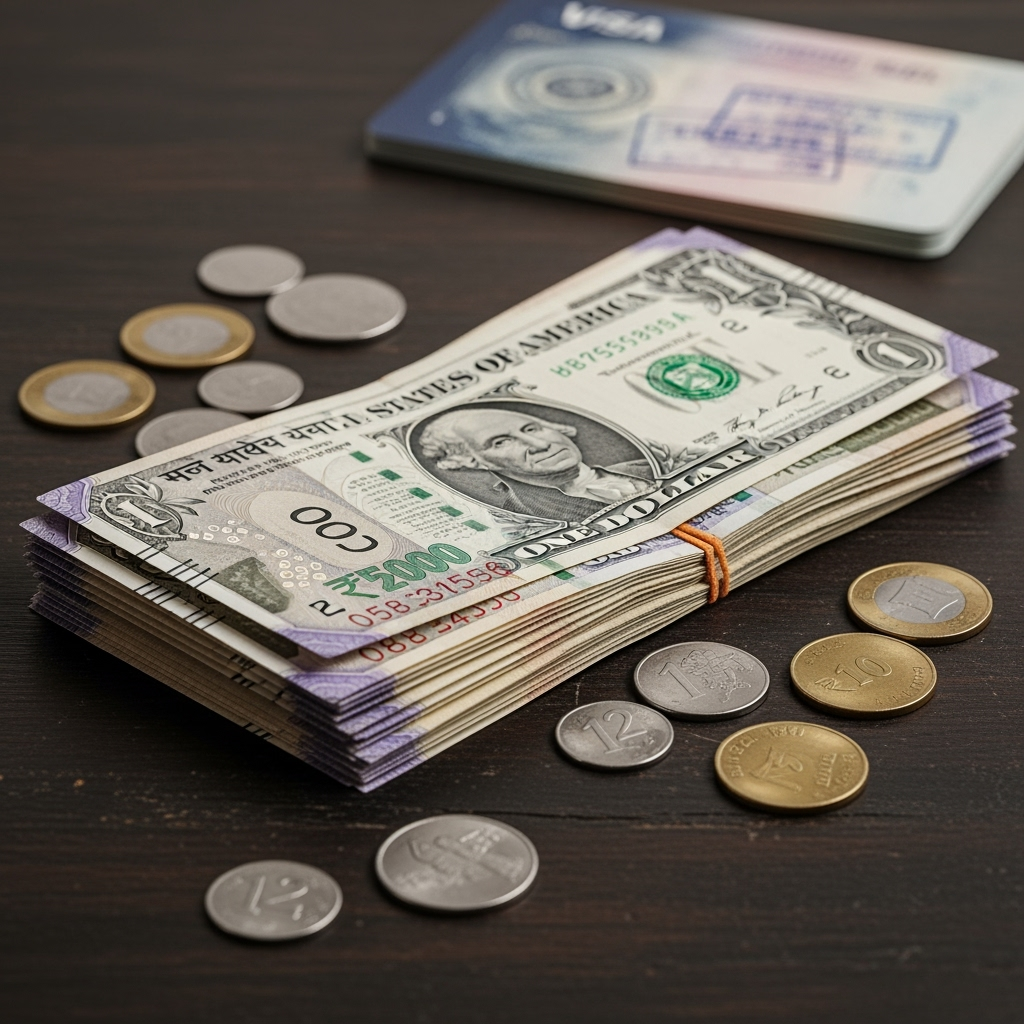
On Tuesday, the Indian rupee hit a historic low, pressured by the US hike in visa fees, worsening the currency’s frail outlook.
The rupee fell to an unprecedented 88.62 against the US dollar, exceeding the previous record of 88.4550 set two weeks prior. Indian NRIs sending money home will now receive ₹24.1 per dirham.
This decline followed a sharp rise in H-1B visa fees, which may slow the placement of Indian workers in US companies, potentially impacting the profitability of India’s IT sector. Consequently, this might affect equity flows as foreign investors reassess their investments in IT firms.
Stay updated on the latest news. Follow KT on WhatsApp Channels.
The reduced deployment of workers to the US could also affect remittances, reducing dollar inflows to India. The visa fee increase comes amid existing external pressures, with 50% US tariffs on Indian goods – the highest in Asia – expected to impact exports.
“The rupee faces rising pressures from tariffs at 50% and the recent visa news negatively affecting equity flows, particularly in the IT sector,” said Dhiraj Nim, FX strategist at ANZ Bank.
The Reserve Bank of India (RBI) has room to allow the rupee to weaken gradually, he noted. With inflation projected at 4–4.5% for fiscal 2026-27, a slight decline is manageable, he added.
There are signs that the RBI is adopting this strategy. The central bank has intervened in the market to support the rupee without defending any specific level.
Interventions are calculated to ensure the currency’s depreciation remains orderly, allowing adjustment without market disruption, according to bankers.
On Tuesday, the central bank likely sold dollars through state-run banks near the 88.50 level to support the rupee before letting it slide further.
The rupee has lagged behind its Asian peers this year, missing out on the benefits of the recent decline in the dollar index. High US tariffs on Indian goods have dampened export prospects and restricted foreign capital inflows, affecting the currency.
Foreign investors have withdrawn over $15 billion from Indian equities in 2025.