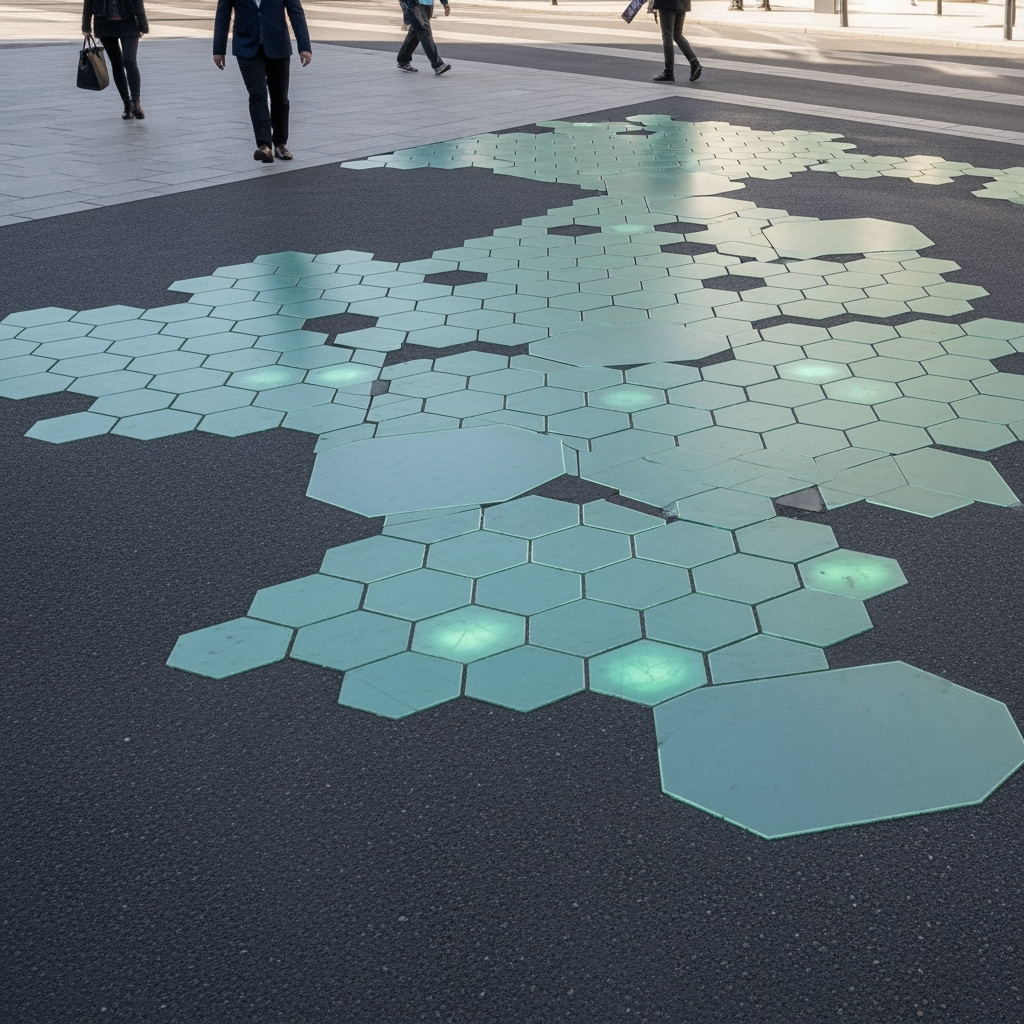
Cities around the world are exploring innovative ways to harness renewable energy beyond traditional sources like solar and wind power. Among the emerging innovations are energy-generating pavements, which transform simple walking or running into usable electricity, as reported by a website.
The generation of piezoelectric energy relies on materials that produce an electric charge when mechanically pressed. These materials are integrated with certain types of ceramics or polymers beneath the surface of pavement tiles. When pedestrians step on these tiles, the piezoelectric elements are compressed, generating small bursts of electricity.
Therefore, these installations are best suited for areas with heavy foot traffic, such as busy city squares, train stations, and commercial areas. The initial cost of installing such systems is currently high, and the mechanical pressure from continuous pedestrian movement requires durable components and regular maintenance to ensure their longevity.
Moreover, integrating this technology into public spaces encourages community involvement in using clean energy and raises awareness of innovative sustainability practices. These pavements offer a creative and interactive way to power parts of our cities while making daily walking an environmentally friendly act.
Although still in its early stages, this technology has the potential to reshape our view of energy and urban design in the coming years.