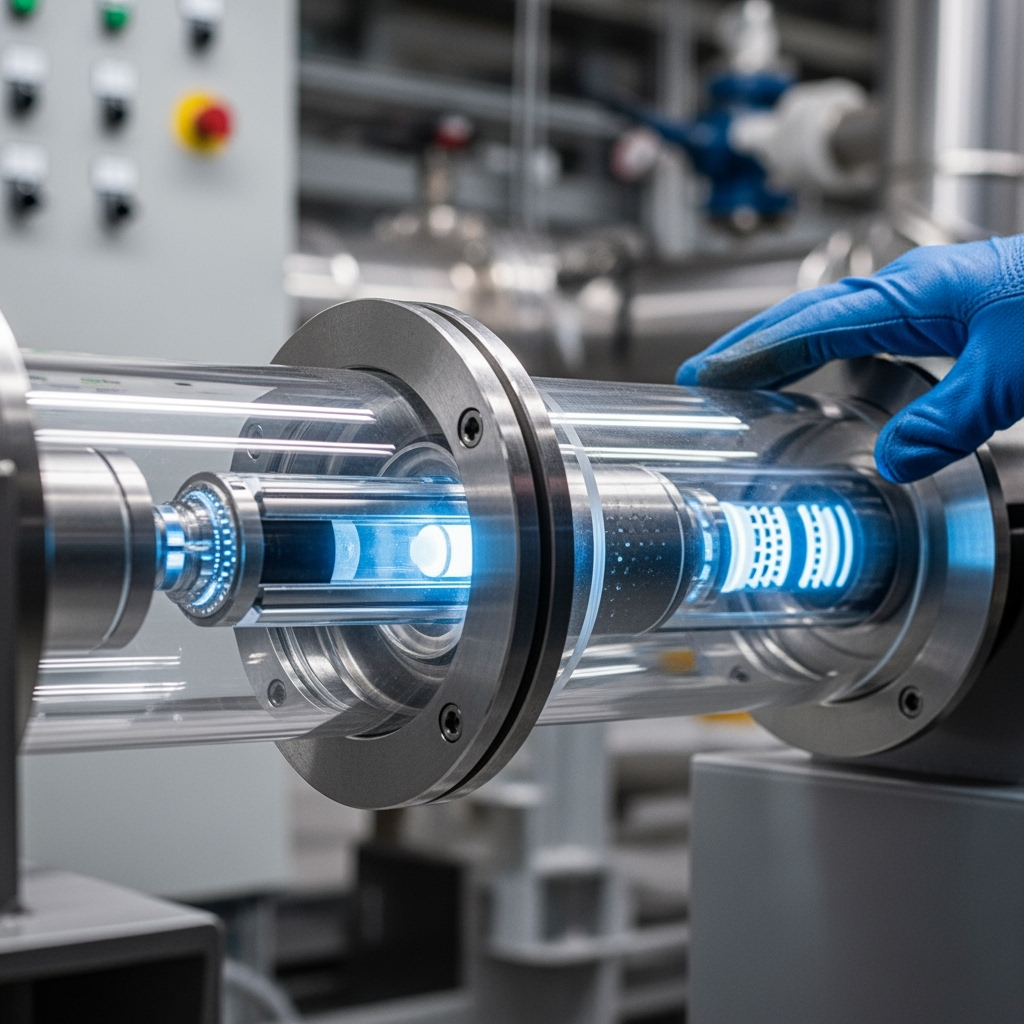
The study mentioned by the university indicated that pipes for pumps and compressors often undergo high loads, corrosion, and temperature changes during oil and gas production. For instance, during hydraulic fracturing, the temperature of the pipes can rise very quickly. Due to these variations, traditional threaded connections in pipes lose their tightness, leading to leaks and reduced production efficiency, as reported by researchers from North Caucasus Federal University.
Ivan Kovalenko, a researcher in the oil and gas engineering program at North Caucasus Federal University, said: “The difficulty lies in the fact that heating the pipes causes the connections to expand differently, which weakens the contact stresses in the threads. Current designs either do not provide sufficient reliability or significantly complicate the design,” noting that they proposed a solution to this problem based on using a threaded connection with fluoroplastic seals.
Kovalenko added: “Our solution is unmatched. It not only increases operational reliability but is also cost-effective, as metal-plastic pipes are cheaper, lighter, and more corrosion-resistant.” He added that the use of metal-plastic pipes in oil and gas wells was previously limited by the need for their ends to be equipped with metal coupling elements that have sufficient strength and tightness.
According to the North Caucasus Federal University, the invention they proposed will improve the reliability and cost-effectiveness of gas well operations. Additionally, it received a patent RU2825910C1, after the results were included in the summary of “Promising Scientific and Technical Developments for the Fuel and Energy Complex” issued by the Russian Energy Agency in 2025.