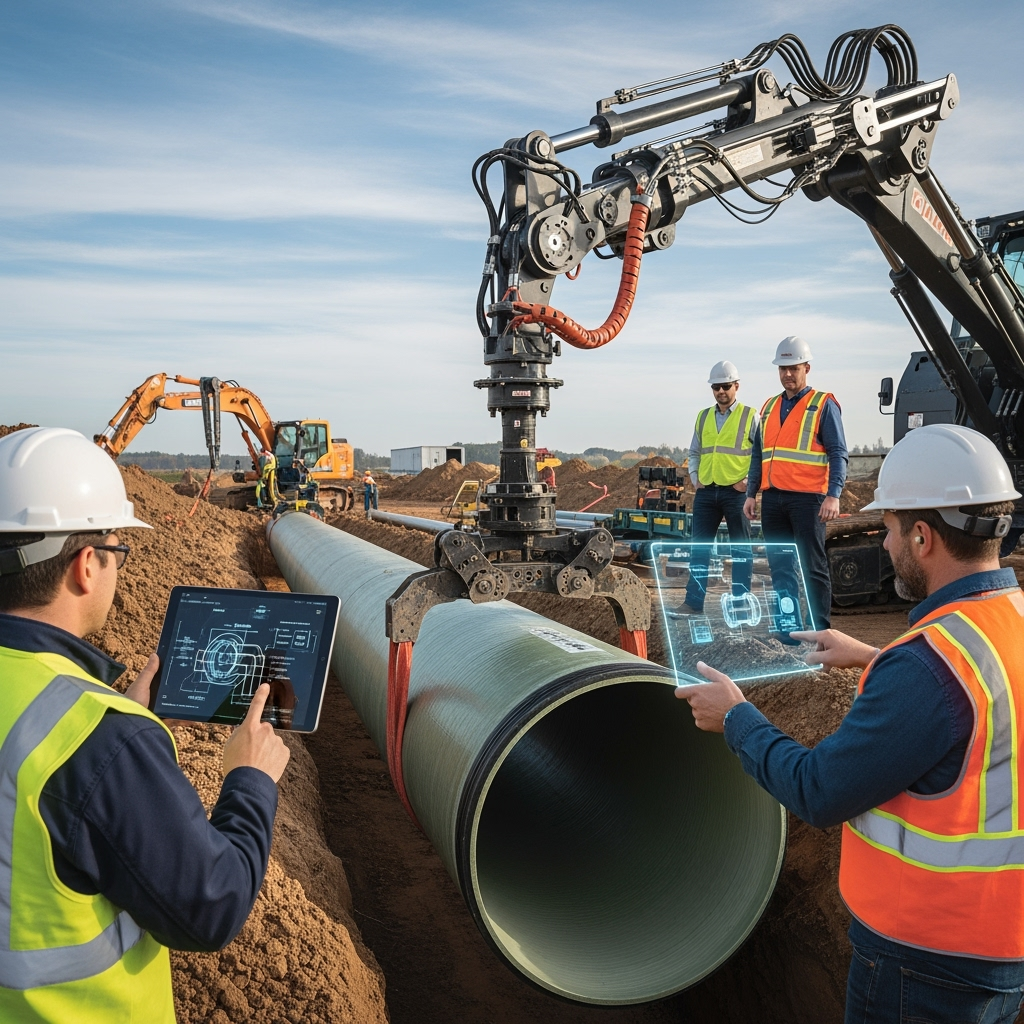
Fiberglass pipes are actively used for transporting the initial mixture of oil and water (emulsion), but their installation faces significant challenges. The outer part of these pipes is durable, while the inner part is extremely fragile. Scientists explained that when assembling these pipes using traditional methods, mechanical damage and fluid leaks may occur. The difficulty lies in the fact that traditional hand tools and tension belts can damage the outer layer of the pipe when tightened.
Scientists proposed a solution, which is a device consisting of movable and fixed clamps equipped with soft rubber elements to protect the surface of the pipe from damage. It is also equipped with a motor capable of providing the required torque. The use of soft pads allows precise fixation of the pipe, preventing direct metal contact with its surface and maintaining product integrity during installation.
Alexander Diakonov, head of the Higher School of Oil and Gas, said: “Introducing this technology into production will improve the quality of repair and construction work, increase competitiveness, and is a constructive solution to enhance labor productivity and reduce costs during the construction and repair of pipelines.”
Scientists concluded that the proposed development allows for extending the service life of the entire pipeline system, eliminating errors that may occur during installation work, and significantly reducing time.