Araqchi stated that “the enemy failed in all its objectives during the 12-day war,” noting that “on the first day of the war, they were talking about unconditional surrender, and on the last day they were talking about an unconditional ceasefire,” according to Iran’s IRNA. He added, “They were saying: Come negotiate for surrender, and during that period, the President of the United States wrote a tweet with only three words: Unconditional Surrender,” continuing, “They thought that through surprise and the strikes they directed, Iran would surrender in two or three days, but that did not happen.” The Iranian Foreign Minister confirmed that “in this war, the skies of Israel, with all its multi-layered defenses and with the help of Western countries, were at the disposal of Iranian missiles,” pointing out that the missiles, used for the first time in a real war, are hitting their targets with more accuracy and consistency day by day, after fixing all their weaknesses.
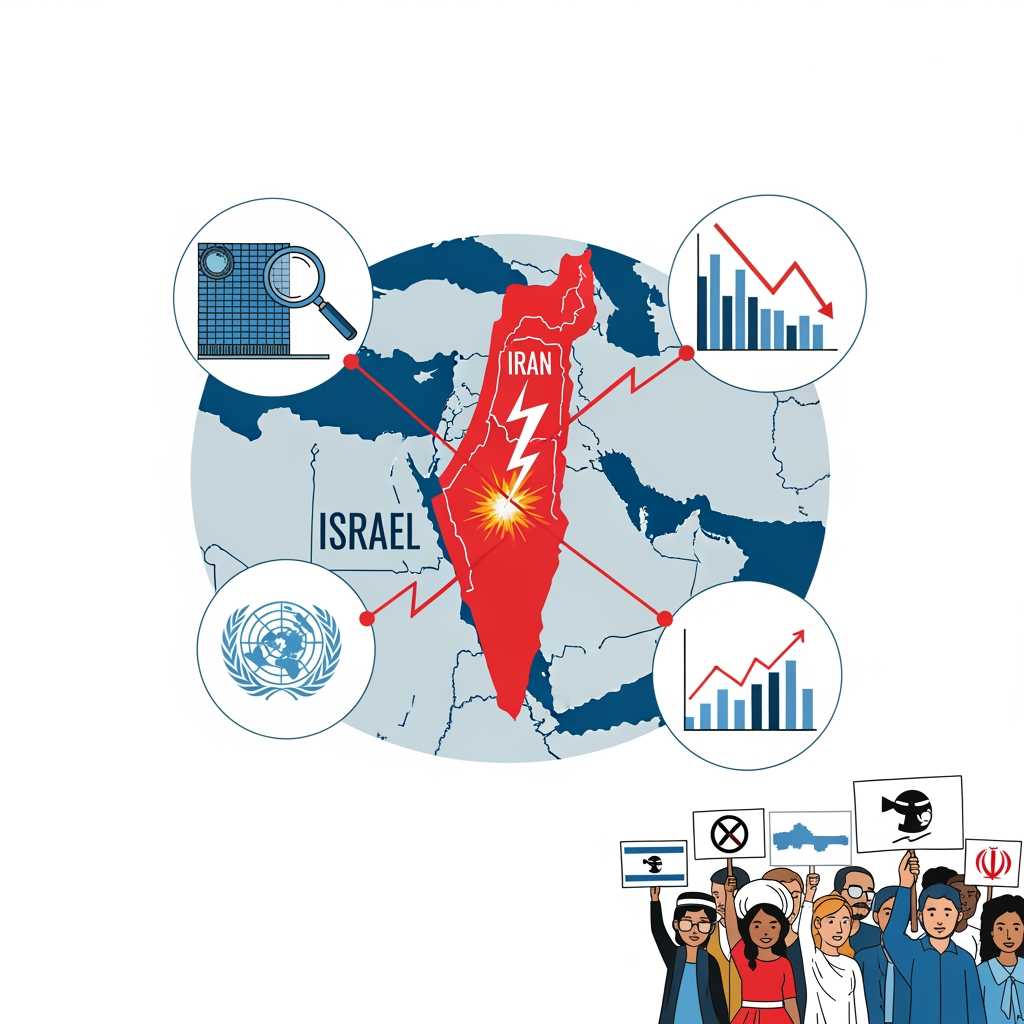
On June 13, surprise airstrikes were launched in an operation called “Rising Lion,” targeting military sites and nuclear facilities in Iran, most notably the main uranium enrichment facility at Natanz. The Israeli strikes led to the death of a number of prominent nuclear scientists, military leaders, and Iranian officials, most notably the commander of the Revolutionary Guards, Hossein Salami, the Chief of Staff of the Army, Mohammad Bagheri, and the commander of the Aerospace Forces in the Revolutionary Guards, Amir Ali Hajizadeh.
Iran responded against Israel with a military operation called “The True Promise 3,” during which it targeted dozens of military sites and airbases in Israel.