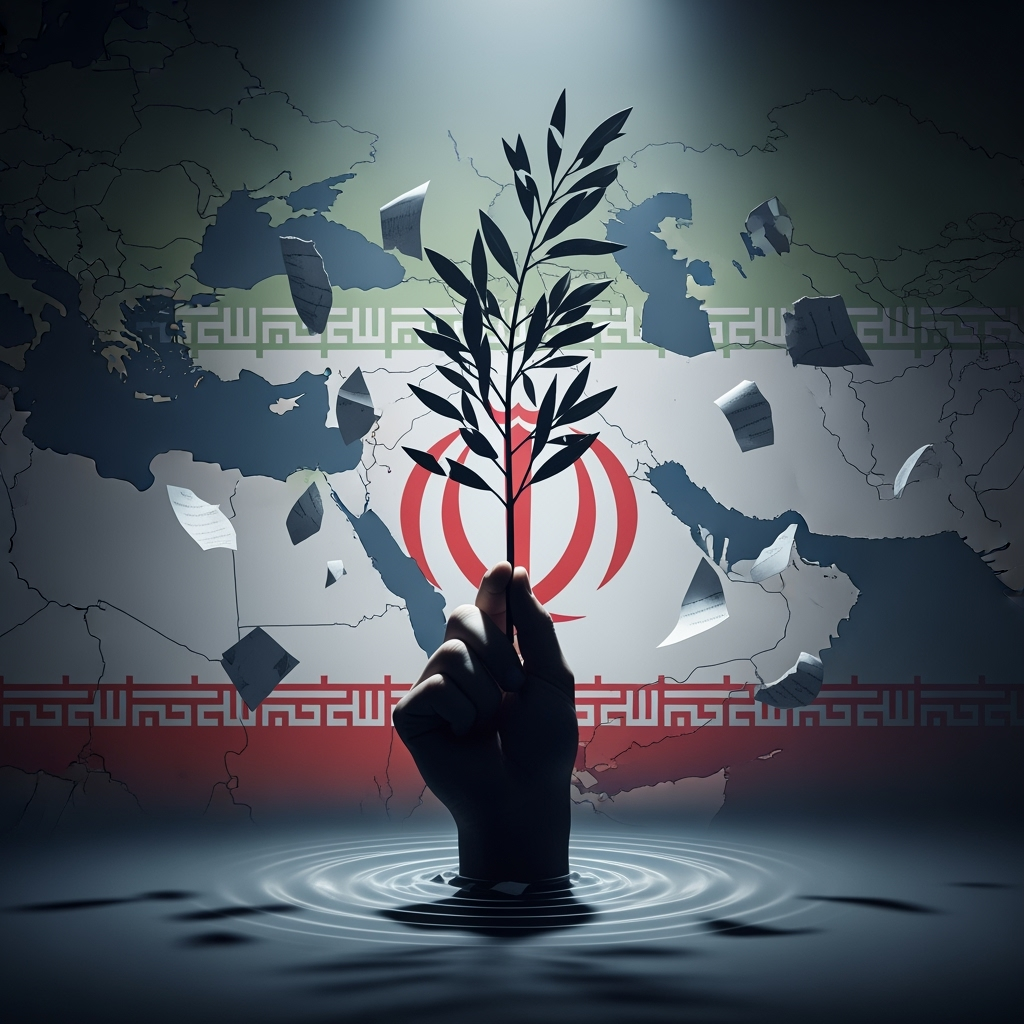
Baghai added in a press statement that “the parliament cannot be prevented from approving the withdrawal from the Nuclear Non-Proliferation Treaty,” expecting the plan to be approved quickly with strong support in parliament. He continued, “Withdrawing from the Nuclear Non-Proliferation Treaty means losing all United Nations rights to monitor Iran’s nuclear program.” Hussein Ali Haji Deligani, Deputy Chairman of the Article 90 Committee in the Iranian Parliament, announced that the country’s Shura Council “is preparing to draft an urgent bill.” Deligani told the American channel “Fox News” that “parliament will begin discussing the bill next week after completing its legal course,” confirming that this step comes as a “direct response” to the European “troika”—Germany, the UK, and France—activating the “trigger mechanism” to re-impose UN sanctions on Tehran. The Iranian parliamentary official added that withdrawing from the treaty represents “the simplest initial response” from Tehran, noting that parliament intends to take other steps described as “deterrent and painful” against the countries pushing to re-impose sanctions.
Meanwhile, Hamid Qanbari, Iran’s Deputy Foreign Minister for Economic Diplomacy, said in an interview with Iranian state television that “any attempt to re-impose sanctions via resolution 2231 will not affect Iran’s trade dealings,” indicating that his country will take all necessary measures to thwart them. Qanbari described the sanctions imposed on his country as “illegal” from the start, considering that most have lost their impact on individuals and companies. He severely criticized the European stance, pointing out that the European countries that described the US withdrawal from the nuclear agreement as illegal “are repeating the same behavior today.” He added, “We are not saying that the trigger mechanism is without impact; any sanction is significant, but it should not be exaggerated.”
In parallel, Iranian Foreign Minister Abbas Araghchi announced that the foreign ministers of France, the UK, and Germany, along with Kaja Kallas, had a phone conversation with him, informing him of their intention to activate the sanctions re-imposition mechanism. A statement issued by the Iranian Foreign Ministry explained that the European ministers informed “our Foreign Minister Abbas Araghchi in a phone conversation an hour ago, of their intention to notify the UN Security Council officially about launching the sanctions re-imposition mechanism on Tehran under the nuclear deal provisions.” According to the statement, the ministers confirmed their readiness to work over the next 30 days to “find a diplomatic solution” to prevent the return of previous Security Council resolutions.
In the same context, the Panama Mission, currently presiding over the UN Security Council, announced that the European “troika” has submitted an official letter requesting the activation of the sanctions re-imposition mechanism against Iran. In a parallel development, US Secretary of State Marco Rubio confirmed that his country “remains ready for direct dialogue with Iran to resolve disputes over its nuclear file,” noting that re-imposing sanctions “does not contradict ongoing diplomatic efforts but rather enhances them.” The “trigger mechanism” dates back to the 2015 nuclear agreement between Iran and the “P5+1” group, which allowed for the lifting of international sanctions in exchange for restricting Iran’s nuclear program. This mechanism stipulates that if Iran breaches its commitments, any party to the agreement can re-impose UN sanctions within a short period. After the US withdrew from the agreement in 2018 during President Donald Trump’s first term, the debate over the legitimacy of continuing this mechanism intensified, with Tehran considering it legally void after that withdrawal.