In a public session of the council, Qalibaf explained that “in recent days, the enemy has raised some concerns among the people by preparing an atmosphere to start the process of applying the ‘trigger mechanism’. Officials of the Islamic Republic have repeatedly explained the illegality of using this method, and other member states of the UN Security Council, such as Russia and China, have officially announced this,” according to Iran’s Mehr news agency.
He confirmed that “the decision of the Islamic Republic of Iran regarding the ‘trigger mechanism’ and its implementation will soon be announced,” emphasizing the need for actions that make the European Troika’s (France, Germany, UK) decision to activate sanctions costly and illegal.
Kazem Gharibabadi, Iran’s Deputy Foreign Minister for Legal and International Affairs, stated on Monday that “the actions of the three European countries,” confirming that “international organizations, unfortunately, operate within a political framework.” He added, “These countries oppose the ‘trigger mechanism’, and Iran has the opportunity to consult with them on this issue,” continuing, “This is an opportunity not only for Iran but also for Europe to correct its mistake.”
Gharibabadi added: “The final statement of the Shanghai Summit includes several important clauses proposed by Iran, condemning American and Zionist aggression against Iran, and emphasizing the full and non-selective implementation of Resolution 2231.”
A statement from Iran’s Foreign Ministry explained that European ministers informed “our Foreign Minister Abbas Araghchi, in a phone conversation an hour ago, of their intention to formally notify the UN Security Council to trigger the re-imposition of sanctions on Tehran, within the framework of the nuclear agreement.” According to the statement, the ministers confirmed their readiness to work within the next 30 days to “find a diplomatic solution” that prevents the return of previous Security Council resolutions.
In the same context, the Panama Mission, which chairs the UN Security Council this month, announced that the European Troika has submitted an official letter requesting the activation of the mechanism to re-impose sanctions against Iran. It added that “the United States remains committed to direct engagement with Iran to reach a peaceful and lasting solution to the Iranian nuclear issue. I urge Iranian leaders to take the necessary steps immediately to ensure their country does not possess a nuclear weapon and follow the path of peace, thereby enhancing prosperity for the Iranian people.”
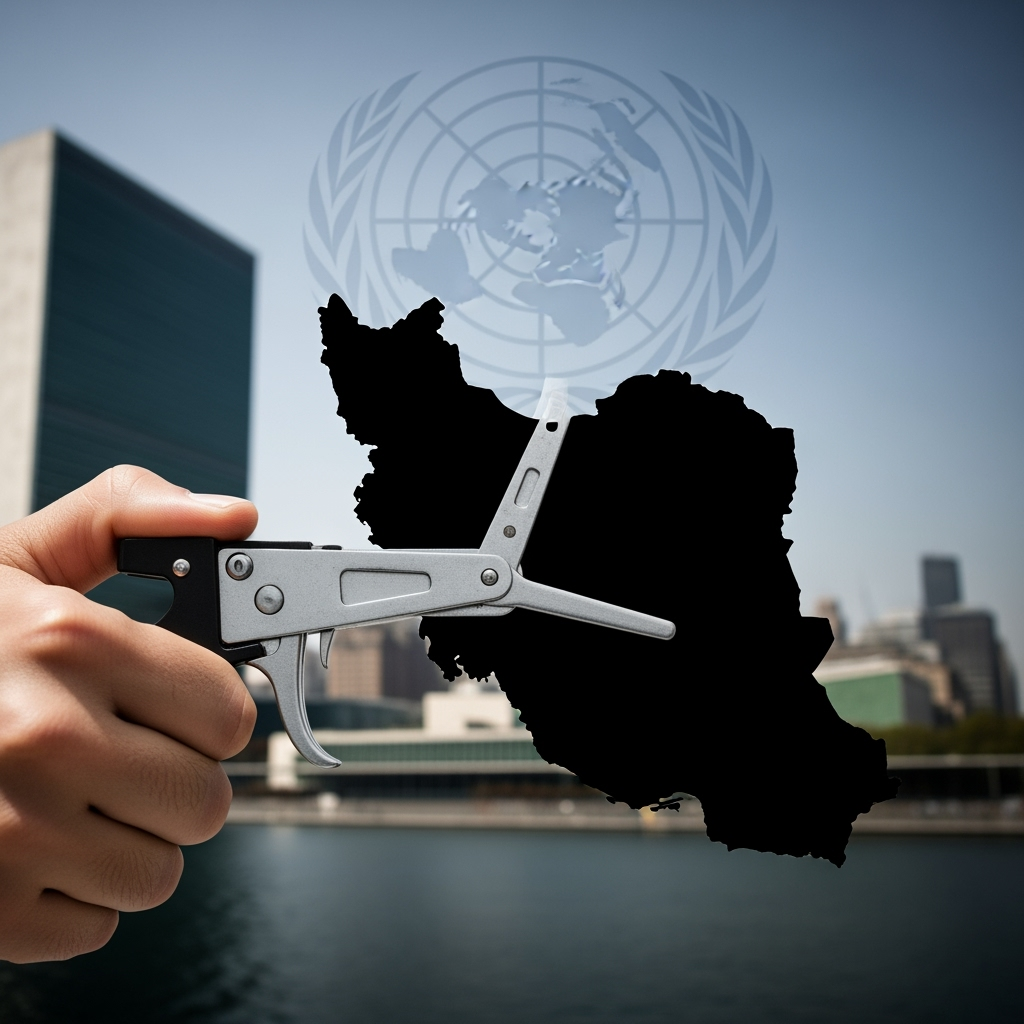
The ‘trigger mechanism’ refers to the nuclear agreement signed in 2015 between Iran and the P5+1 group, which allowed for the lifting of international sanctions in exchange for limiting Iran’s nuclear program. This mechanism states that if Iran violates its commitments, any party to the agreement can restore UN sanctions within a short timeframe. After the United States withdrew from the agreement in 2018, during President Donald Trump’s first term, the debate over the legality of continuing to use this mechanism intensified, with Tehran arguing it lost its legal validity after that withdrawal.