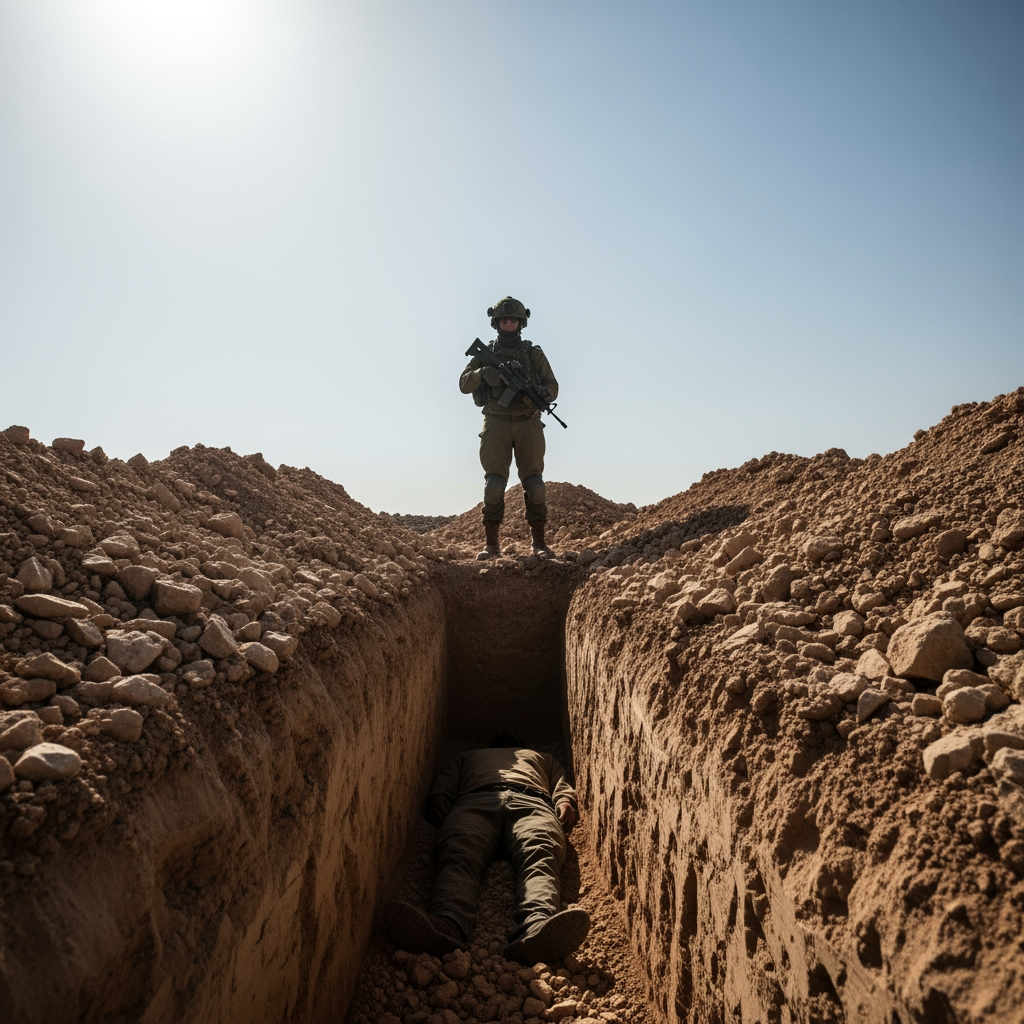
The Israeli army released a statement this Wednesday evening, announcing that it had eliminated a member of the Lebanese Hezbollah, named Hussein Jaber Deeb, who was part of the Radwan Force in southern Lebanon. The army stated that “earlier today, Israeli army forces, led by the Northern Command and through the Air Force, killed Hussein Jaber Deeb, a member of the Radwan Force unit of Hezbollah.” The army claimed that “Hussein Jaber Deeb was promoting terrorist plots against the State of Israel and its citizens,” emphasizing in its statement the continued efforts to eliminate what it alleged were threats directed at the State of Israel.
It clarified that “over the past month, approximately 20 elements whose activities violated the understandings between Israel and Lebanon have been eliminated.” In the same context, Israeli army estimates indicate that “Hezbollah possesses thousands of rockets, most of which are short-range and inaccurate, and that Israel is currently working on dismantling its organizational and human capabilities and military infrastructure as part of a campaign aimed at reducing its power before reaching what Tel Aviv considers the ‘forbidden limit.’
Meanwhile, the Israeli army expresses concern about the possibility of Hezbollah attacking an Israeli military site in Lebanese territory or in the Mount Dov area, aiming to pressure the Lebanese government, which is under international pressure to disarm the party. Israeli reports indicate that the army is on high alert, especially as the region enters the winter season, which, according to estimates, may provide field conditions that Hezbollah could exploit to carry out limited attacks.
This comes after Israeli Channel 13 reported that U.S. envoy Tom Barak stated he had given the Lebanese army a chance to make “significant changes” in the Hezbollah weapons dossier, warning that failure to do so could give Israel a “green light” to conduct military operations, with support and understanding from Washington. The ceasefire agreement between Hezbollah came into effect on November 27, 2024, and the Israeli army was supposed to complete its withdrawal from areas it occupied in southern Lebanon by January 26. However, Israel did not adhere to the deadline and maintained its military presence in five strategic points in the south of the country, continuing to conduct airstrikes against various areas in Lebanon, citing “ensuring the protection of northern settlements,” while Lebanon firmly rejects Israeli aggressions and demands their cessation.