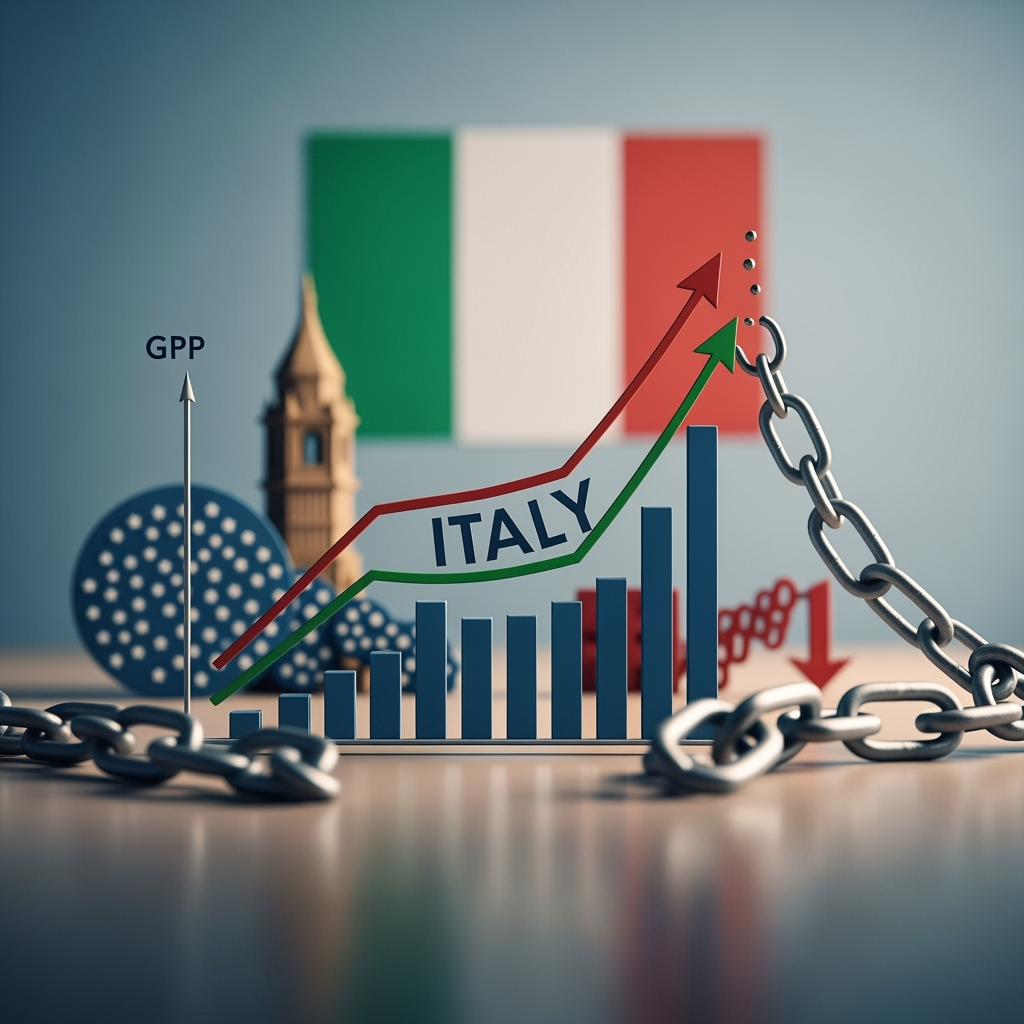
Italy intends to uphold its GDP growth forecasts of 0.6% for this year and 0.8% for 2026 in its upcoming budget plan, as stated by Economy Minister Giancarlo Giorgetti on Sunday. This decision comes despite the uncertainties posed by U.S. import tariffs.
The government initially projected these GDP growth figures in April, with Giorgetti noting that they had already considered the potential effects of changing trade dynamics on the euro zone’s third-largest economy.
“We are confident in reaffirming our GDP estimates for these years,” Giorgetti mentioned at a political event in Rome. “We had already incorporated the impacts of the trade war and its associated challenges.”
In the second quarter, Italy’s economy contracted by 0.1% compared to the previous three months, primarily due to adverse trade flows. However, industrial output saw a 0.4% increase in July from the prior month, indicating some resilience in the long-struggling manufacturing sector.
The government is set to present updated GDP forecasts and multi-year budget targets to parliament by October 2, forming the basis for next year’s budget.
Giorgetti stated that no additional fiscal tightening would be necessary to reduce Italy’s deficit below the EU’s 3% of GDP threshold next year, paving the way for the country to exit the EU’s infringement procedure. In July, he mentioned that Italy could lower the deficit below 3% this year.
Countries under the EU’s excessive deficit procedure have limited flexibility in taxation and spending, as EU regulations mandate them to decrease their deficits by a specified amount annually.
Giorgetti reaffirmed the government’s commitment to alleviating the tax burden on middle-income families, though details on financing this initiative were not disclosed.
Sources indicated that his co-governing League party expects national banks to contribute over 1 billion euros ($1.17 billion) to the government’s 2026 budget.