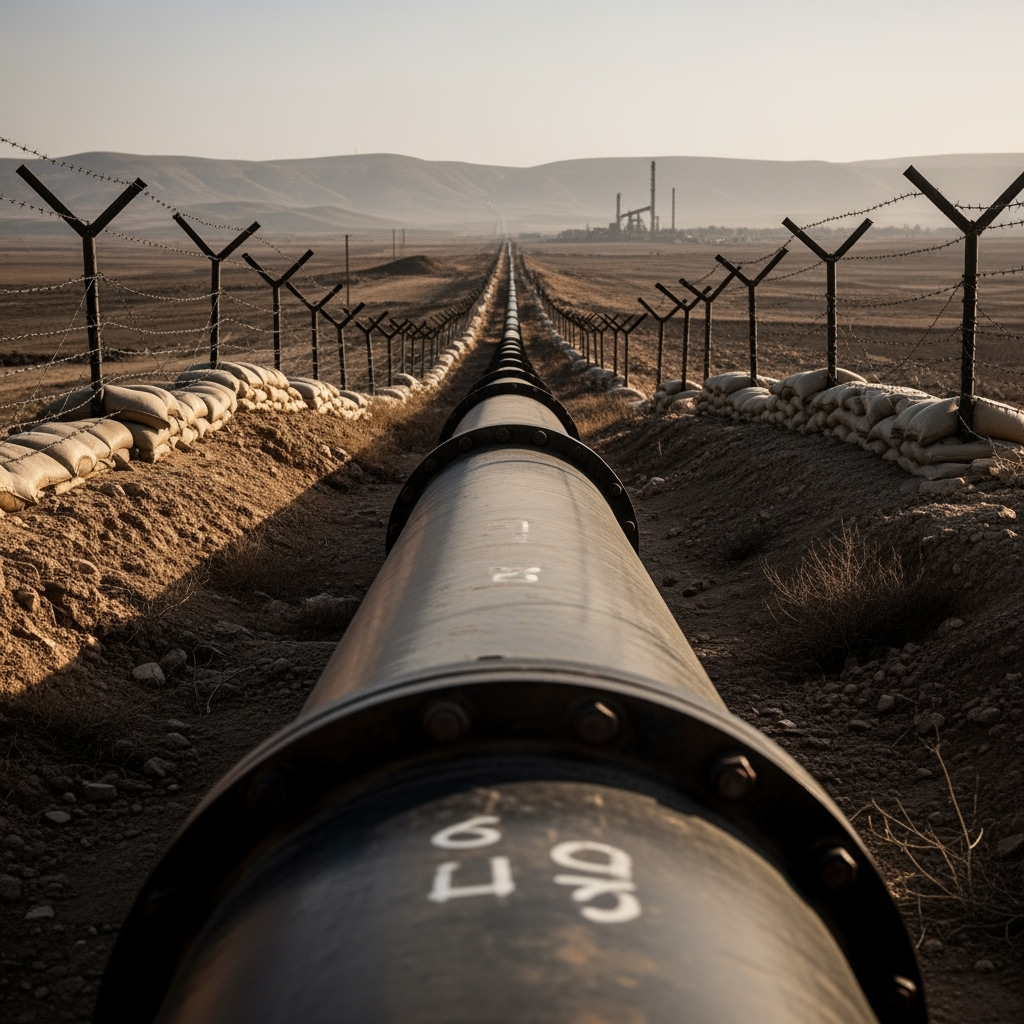
The oil pipeline connecting the Kirkuk field in Iraq to the Baniyas port in Syria dates back to the early 1950s, serving as an outlet for Iraqi crude through the Mediterranean, according to the “Energy” platform. The report noted that despite discussions about attempts to revive the pipeline, ongoing security and economic challenges raise many questions about the feasibility of restarting the line, which has been inactive for nearly 22 years.
It added that Asian countries are the main recipients, with China, India, and South Korea leading the way, obtaining between 78% and 80% of Iraq’s medium and heavy Basra crude. For Syria, the pipeline facilitates direct access to Iraqi oil at a cheaper price, thereby reducing the import bill.
The report highlighted that this comes as Damascus implements a plan to restructure the energy sector, which has suffered a 14-year war. The plan includes establishing a holding company to manage oil and electricity files and creating a new refinery.
The “Kirkuk-Baniyas” pipeline was established in 1952 by the British company British Petroleum after World War II, which had significant oil investments in both countries. The operation of the “Kirkuk-Baniyas” oil pipeline has historically been intermittent, influenced by regional developments and internal changes in Syria and Iraq.
In 2010, oil pumping through the “Kirkuk-Baniyas” pipelines resumed for the third time, but this was short-lived due to systematic destruction under the attacks of international coalition aircraft during the period when ISIS (a terrorist organization banned in Russia and internationally) controlled its routes in Syria and Iraq.