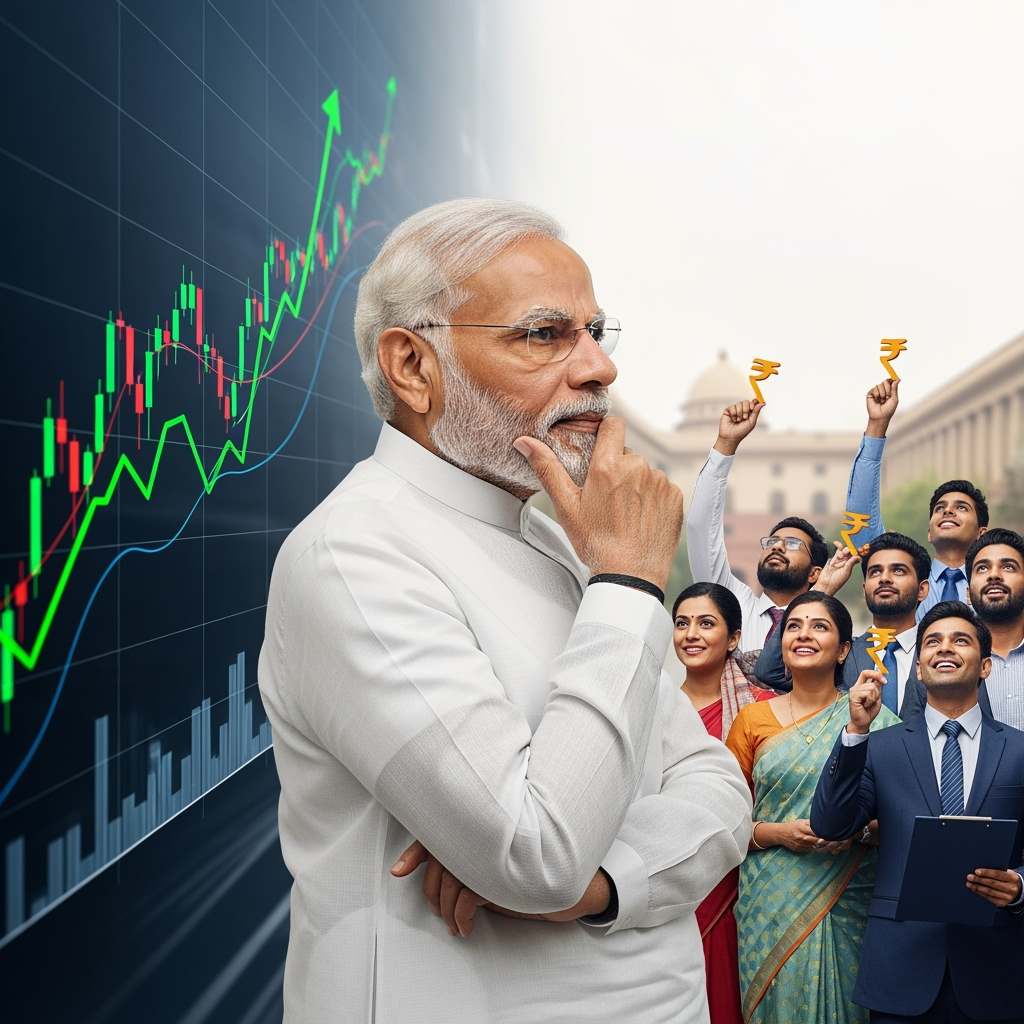
Indian Prime Minister Narendra Modi’s most significant tax cuts in eight years are expected to pressure government finances but are receiving accolades from businesses and political analysts. They believe these cuts will enhance his standing in the ongoing trade dispute with the United States.
In the most substantial tax reform since 2017, Modi’s administration announced major revisions to the complex goods and services tax (GST) system on Saturday. These changes will make everyday essentials and electronics more affordable from October, benefiting consumers and companies like Nestle, Samsung, and LG Electronics.
During his Independence Day address on Friday, Modi encouraged Indians to purchase more domestically made goods, mirroring calls from his supporters to boycott American products after Donald Trump raised tariffs on Indian imports to 50% as of August 27.
The tax reduction plan carries a price since GST is a key revenue source. IDFC First Bank projects the cuts will boost India’s GDP by 0.6 percentage points over 12 months but will cost state and federal governments $20 billion annually.
However, it is expected to lift weak stock market sentiments and provide political gains for Modi ahead of a crucial state election in Bihar, according to Rasheed Kidwai, a fellow at the New Delhi-based Observer Research Foundation.
“The GST reduction will affect everyone, unlike income tax cuts, which only benefit 3-4% of the population. Modi is making this move due to pressure from U.S. policies,” Kidwai noted. “This will also aid the stock market, which is now politically significant as it includes many retail investors.”
India introduced the major tax system in 2017, integrating local state taxes into the new, nationwide GST to unify its economy for the first time.
However, the most significant tax reform since India’s independence faced backlash for its complex structure, taxing products and services under four slabs – 5%, 12%, 18%, and 28%.
Last year, India declared caramel popcorn would be taxed at 18%, while the salted variety would be at 5%, highlighting GST’s complexities.
Under the new system, India will eliminate the 28% slab – covering cars and electronics – and shift nearly all items from the 12% category to the lower 5% slab, benefiting a broader range of consumer goods and packaged foods.
Government statistics reveal that the 28% and 12% tax slabs together accounted for 16% of India’s annual GST revenue of approximately $250 billion last fiscal year.
‘A Brighter Gift’ and Politics
Bihar, a politically significant state, will hold elections by November. A recent VoteVibe agency survey indicated Modi’s opposition has an advantage, mainly due to a job shortage.
“Any tax cut is widely appreciated by the public. However, the timing is undoubtedly driven by political needs,” stated Dilip Cherian, a communications consultant and co-founder of the Indian public relations firm Perfect Relations.
“This move seems to reflect both frustration and acknowledgment of a broad public backlash against high and burdensome tax rates.”
Modi’s ruling Bharatiya Janata Party has capitalized on the tax announcement, posting on X that during the Hindu festival of lights, Diwali, “a brighter gift of simpler taxes and more savings awaits every Indian.”
Modi has pledged to support farmers, fishermen, and cattlemen following Trump’s unexpected tariff announcement on India, after trade negotiations between New Delhi and Washington broke down over disagreements on opening India’s extensive farm and dairy sectors and halting Russian oil purchases.