Narratives have become tools in the battle for public trust, and journalists must stop assuming storytelling is unbiased, warned award-winning broadcaster Emily Maitlis in Abu Dhabi on Monday. She emphasized that the struggle for truth now involves not just facts but whose version of reality can spread faster and resonate more.
During the Bridge Summit, moderated by Ted Kemp, Chief Content Officer at Khaleej Times, Maitlis noted that stories have always wielded power, from tribal survival strategies to royal manipulation of history. The difference today is the unprecedented speed and scale at which competing truths clash online.
“If I can be louder and reach more people, my version becomes reality,” she stated. “That is our current reality.”
Stay updated with the latest news. Follow KT on WhatsApp Channels.
Bridge Summit 2025, taking place from December 8 to 10 at the Abu Dhabi National Exhibition Centre (ADNEC), gathers global leaders from media, entertainment, and the creative economy under one roof. This three-day event spans diverse content and industry sectors, including media, the creator economy, gaming, music, technology, and visual storytelling.
Kemp questioned whether storytelling once united societies before digital platforms divided them. Maitlis disagreed, arguing that unity was a temporary illusion during the mass broadcast era. Before and after that, stories have always divided audiences into believers and non-believers.
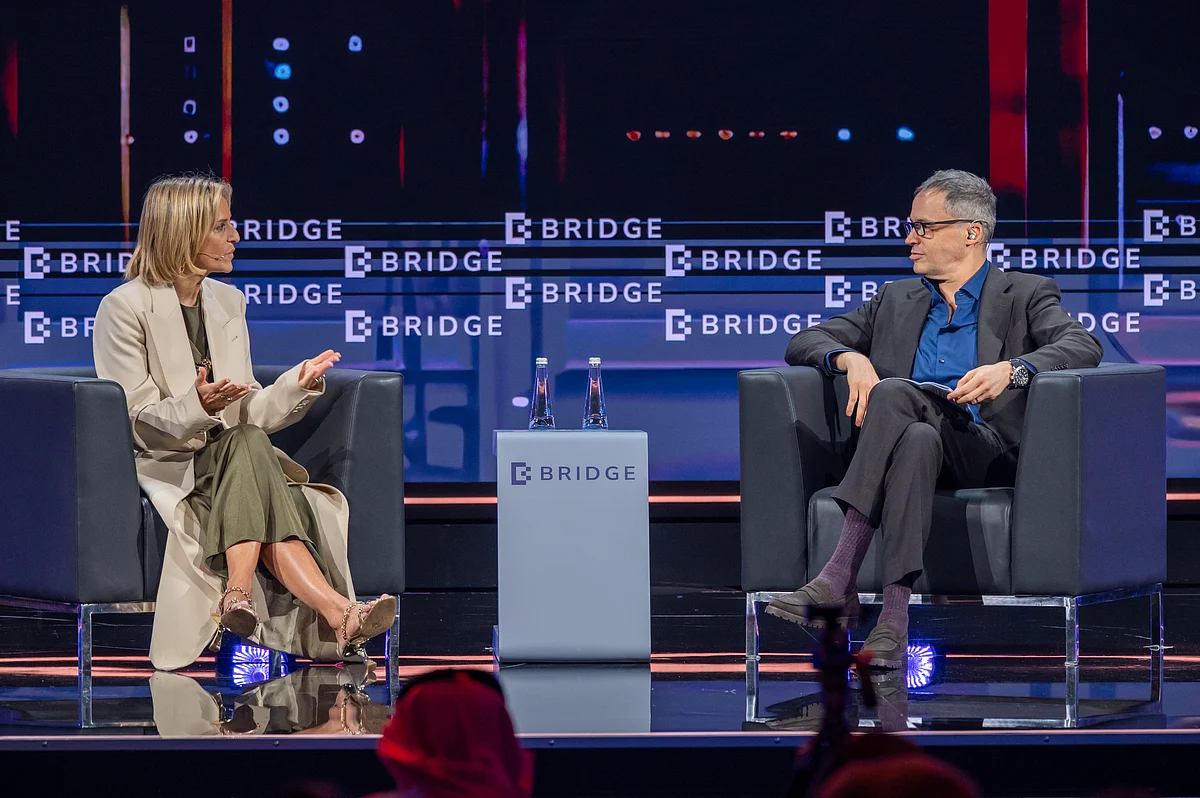
She highlighted the real danger isn’t storytelling with a purpose but storytellers concealing it. “Propaganda is blunt; persuasion is subtle,” she said. “Even with an agenda, truth is complex. It will challenge you. Journalists must be ready to reveal that.”
Maitlis referenced her significant BBC interview with Prince Andrew in 2019, where he addressed allegations regarding his ties with the late convicted sex offender Jeffrey Epstein. This interview was an example of storytelling driven by public interest rather than narrative control.
The interview quickly became a global sensation, revealing inconsistencies in the Prince’s statements compared to earlier claims, sparking widespread backlash, and causing a major PR crisis for the British royal family.
She expressed her responsibility to ask questions that Epstein’s victims couldn’t direct at him personally.
“I had one shot and couldn’t afford mistakes,” she said. “If you want answers from Prince Andrew, ask him directly. That was the power of that interview. One person, on camera, speaking for himself.”
Kemp highlighted that journalists now compete with influencers, activists, and AI, all promoting persuasive narratives in the same attention space. Maitlis suggested radical transparency as the solution.
“Every story has intent,” she said. “Trust comes from acknowledging that and informing the audience when something doesn’t fit. Truth will never be pristine. Concealing its flaws is how we completely lose it.”