According to the National Research University ‘MIET’, chronic neuralgia does not result from physical damage to body tissues as in ordinary pain, but rather from a disorder in the nervous system. These symptoms can arise from injuries, certain types of diabetes, cancer, chemotherapy, and limb amputations. Patients may feel pain in missing parts of the body.
Associate Professor Mikhail Savelyev at the Institute of Biomedical Systems of the National Research University of Electronic Technology explained that the electrodes used for this purpose are in solid contact with biological tissues, and thus, electrical stimulation may leave scars that do not allow current to pass through and prevent further stimulation.
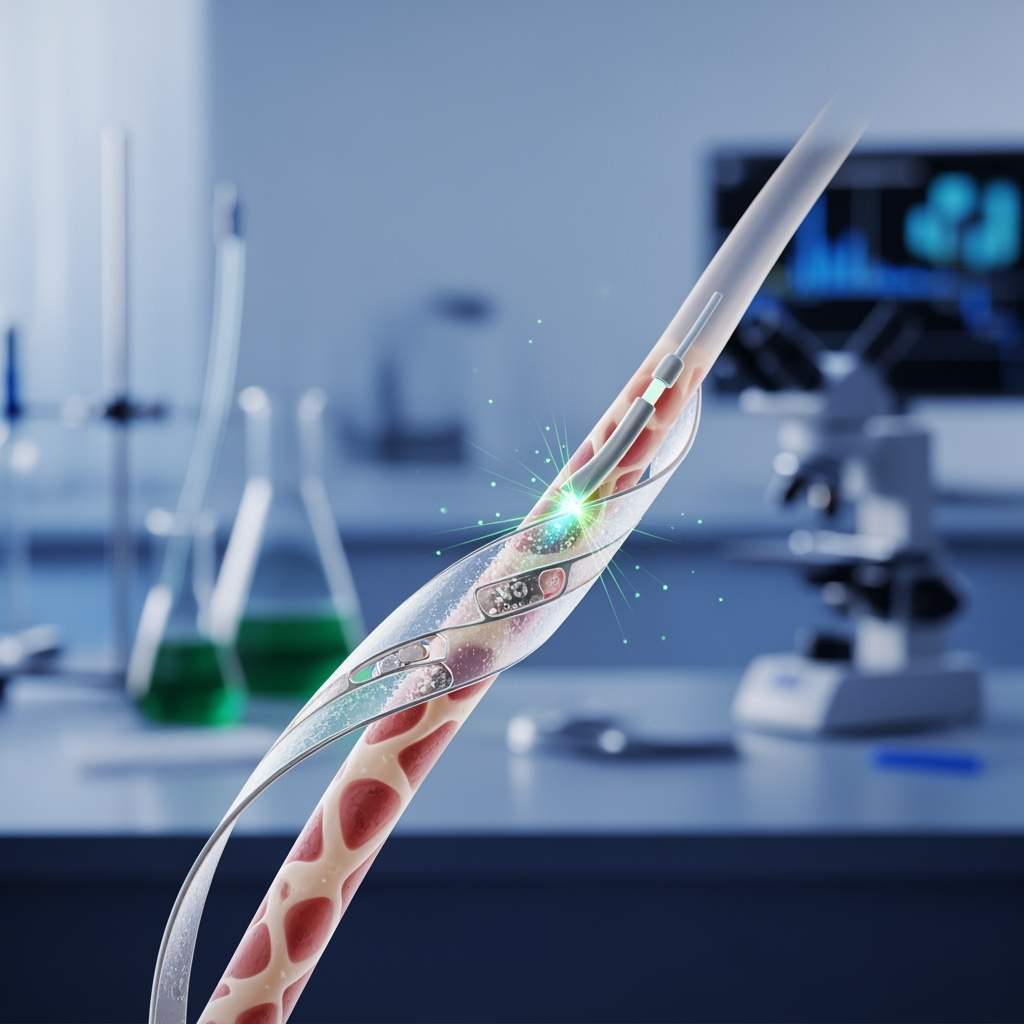
Scientists from the National Research University (MIET), in collaboration with colleagues from the ‘Technological Center’ Scientific and Production Complex, the Nanoelectronics Institute of the Russian Academy of Sciences, and Sechenov University, have developed a new electrode material for procedures that seamlessly contacts body tissues.
Regarding the innovative material, Mikhail Savelyev stated, ‘The proposed material can be used as electrodes or as coatings for them. There are more than 500 million patients worldwide suffering from neuralgia, about a third of whom are dissatisfied with the treatment process, and all are candidates for electrical stimulation of nerve tissues.’
Savelyev explained that the material is composed of chitin extracted from mollusk shells, carbon nanotube structures that provide electrical conductivity, and eosin particles, a cell dye that provides cross-linking for the material. He pointed out that this combination not only makes the material biocompatible but also allows for the creation of electrodes in various shapes.
Savelyev added, ‘This was achieved through the selection of laser effect properties. In the future, specialists plan to test the new compound for electrically stimulating nerve tissues in the spinal cord.’