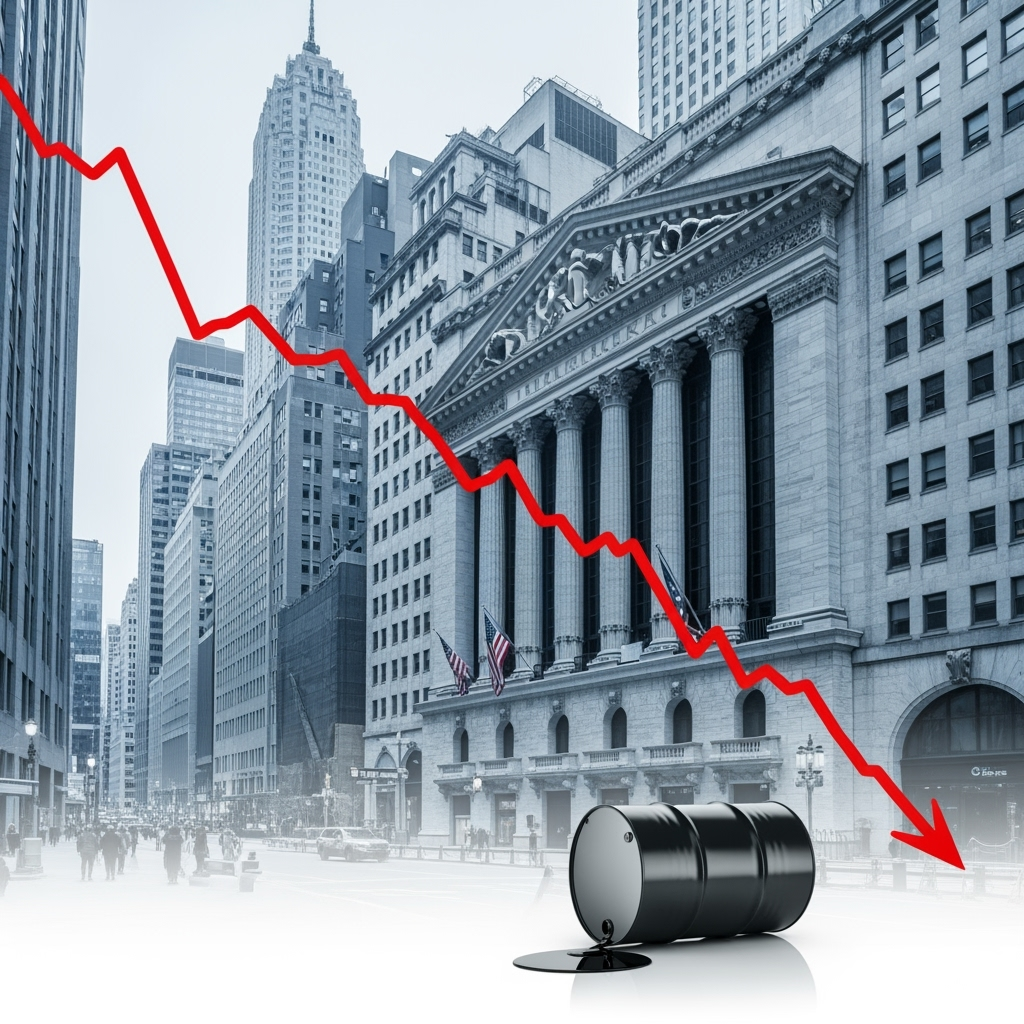
On Thursday, oil prices dipped as traders shifted focus to U.S. economic concerns despite the Federal Reserve’s decision to cut interest rates for the first time this year, signaling a more relaxed monetary policy.
Brent crude futures decreased by 63 cents, or 0.9%, to $67.32 per barrel at 1:14 p.m. EDT (1714 GMT). Meanwhile, U.S. West Texas Intermediate (WTI) crude declined by 66 cents, or 1.0%, to $63.39. The Fed reduced its policy rate by a quarter-point on Wednesday, indicating further rate cuts throughout the year in response to a weakening job market.
Typically, reduced borrowing costs fuel oil demand, potentially raising prices.
“The Fed acted because the economy clearly shows signs of slowing,” stated Jorge Montepeque, managing director at Onyx Capital Group. “They’re aiming to restore growth.” Last week, new U.S. unemployment claims dropped, reversing the prior week’s rise, but the labor market softened due to reduced worker demand and supply. Additionally, U.S. single-family home construction hit a nearly 2-1/2-year low in August amid a surplus of unsold homes, hinting at continued economic challenges this quarter.
Persistent oversupply and weak fuel demand in the U.S., the world’s top oil consumer, also pressured the market. U.S. crude stockpiles fell sharply last week as net imports hit a record low and exports surged to near two-year highs, according to the Energy Information Administration on Wednesday.
A 4-million-barrel rise in U.S. distillate stockpiles, surpassing expectations of 1 million barrels, heightened demand concerns in the top oil-consuming nation, affecting prices.
In Russia, the world’s second-largest crude producer after the U.S. in 2024, the Finance Ministry revealed a new strategy to protect the budget from oil price volatility and sanctions targeting its energy exports. Meanwhile, Ukraine claimed its drones targeted a significant Russian oil-processing and petrochemical complex as part of an intensified effort to disrupt Russia’s oil and gas sector.
Exxon Mobil CEO Darren Woods informed the Financial Times that the U.S. oil giant does not plan to resume operations in Russia.
Keeping Russian barrels out of the global market could drive prices up.
However, Kuwait’s oil minister, Tariq Al-Roumi, anticipates increased oil demand post-U.S. interest rate cut, especially from Asian markets.
Kuwait, an OPEC member, sees rising demand, while in Qatar, another OPEC member, QatarEnergy raised al-Shaheen crude’s term price for November loadings to an eight-month high.
In Germany, Europe’s largest economy, parliament approved the first annual budget since fiscal reforms, ensuring record investments for economic revival and increased defense spending. In the Middle East, Israel launched airstrikes against Hezbollah targets in south Lebanon to prevent the group’s resurgence.