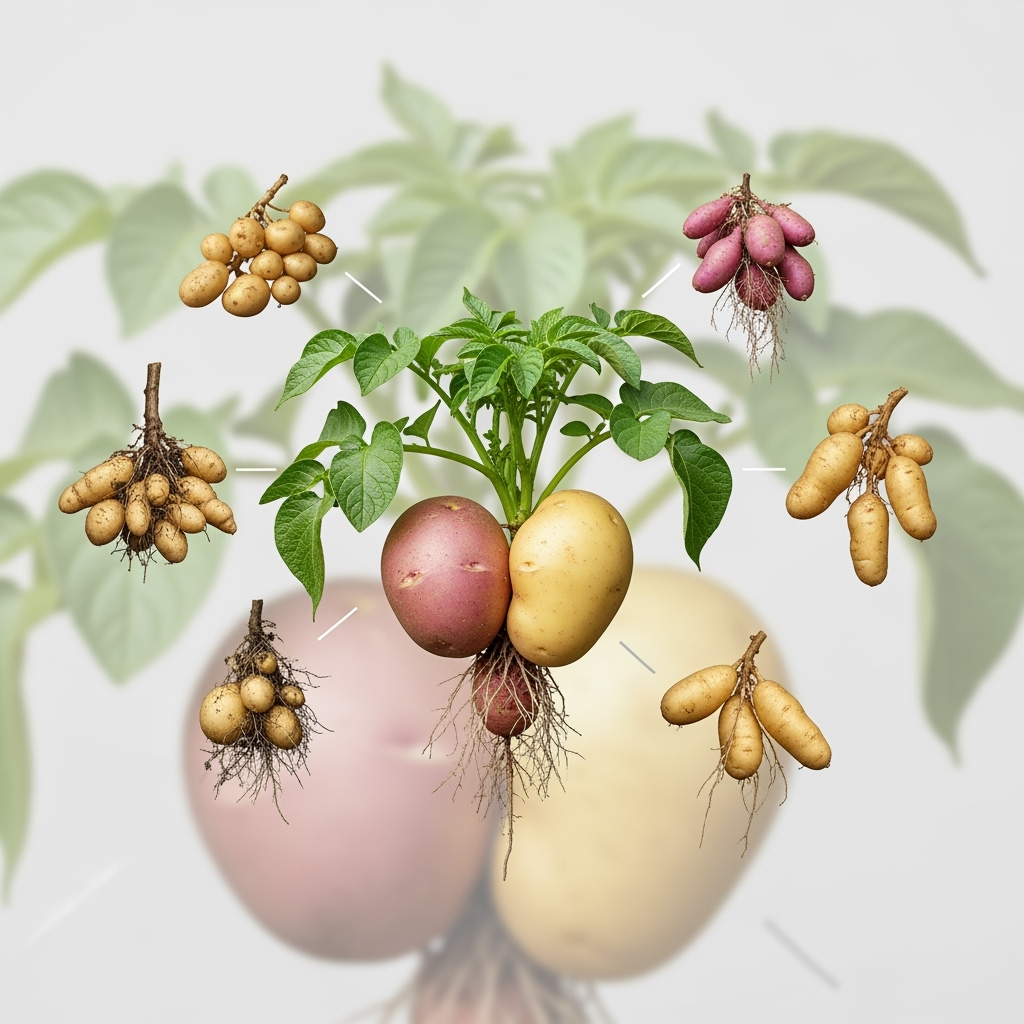
The study published in the scientific journal ‘Cell’ revealed that potatoes originated from a natural hybridization between wild tomatoes and the plant ‘I-tuberousum’ in the Andes Mountains around 9 million years ago. The wild tomatoes growing in that mountainous region interbred with the ‘I-tuberousum’ plant, leading to the merging of their genetic materials and the formation of a new plant, the potato.
Professor Sanwen Huang from the Agricultural Genome Institute in Shenzhen, China, explained that ‘the tomato is the mother, and I-tuberousum is the father, but their relationship was not clear from the start.’ Researchers noted that the potato plant resembles ‘I-tuberousum’ in its above-ground appearance, but the difference becomes apparent when the plant is uprooted, as ‘I-tuberousum’ lacks tubers and has thin underground stems.
Professor James Mallet, a professor of evolutionary biology at Harvard University, commented on the importance of the study, stating: ‘It is pioneering and shows how a single hybridization event can lead to the emergence of a new member or even a new type of plant.’ The study clarified that the potato inherited a stable genetic composition from both ‘parents,’ allowing it to store energy in its tubers and resist harsh conditions like winter and drought, in addition to reproducing without the need for seeds or pollination.
Potatoes first appeared in the Andes Mountains and were introduced to Europe in the 16th century aboard Spanish ships. Although initially met with skepticism, they quickly became a staple food due to their nutritional value and ability to grow in diverse conditions.