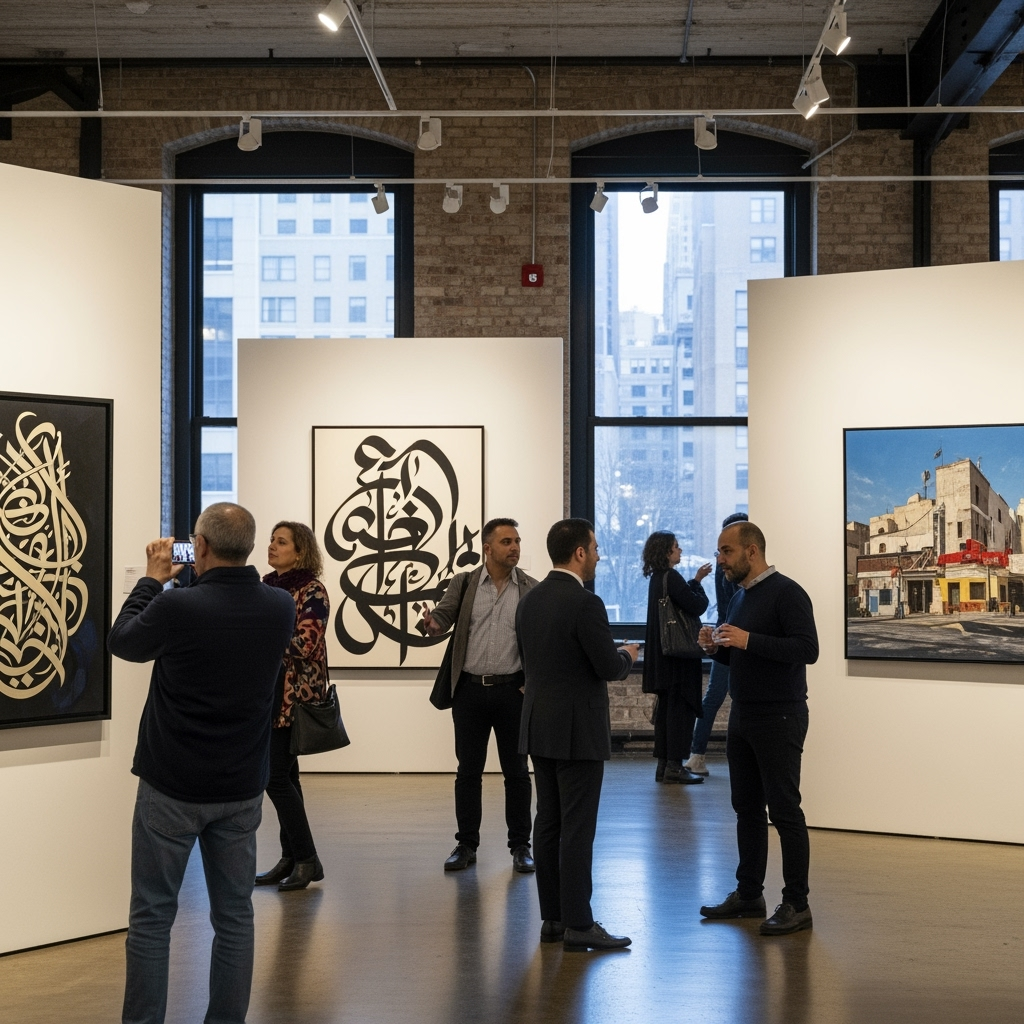
Envision a creative haven nestled in the heart of New York, where silence resonates more than spectacle, where paper embodies subtle poignancy, and where an Arab voice redefines global art experiences. This sanctuary is a reality. It’s an institute featuring a gallery meticulously curated by Mohammed Al-Thani, a Qatari collector and curator, who brings together artworks from around the globe to his venue in The West Village, aiming to bridge the world with Arab and Islamic heritage.
Minimalist in design yet profound in significance, Al-Thani’s collection is elegantly arranged at the Institute of Arab and Islamic Art (IAIA), which he founded in Manhattan in 2017. His work invites audiences not to merely ‘understand’ art, but to ‘experience’ it. In an art world often preoccupied with grandeur, Al-Thani’s approach offers a quiet counterpoint.
“I believe in storytelling,” Al-Thani states, a philosophy that underpins his work. This storytelling doesn’t require deep comprehension but rather evokes memories and movement through artistic expressions. Raised in the Gulf and deeply influenced by the oral traditions of Arab culture, he incorporates this ancestral rhythm into his exhibitions through space and silence.
His journey into curation wasn’t just driven by a passion for art’s language, but also by a sense of duty to “reimagine contemporary art narratives.”
“Growing up amidst misconceptions about the Arab and Islamic worlds, cultural interaction was often stifled,” he explains. “Curating allowed me to challenge these stereotypes and reveal the richness beyond the simplified portrayals often shown to the world.”
Thus, his curation became a gentle form of activism, a means of rewriting history and reviving overlooked voices, particularly those of marginalized artists. “I ask: Can their work move the viewer? Does it defy norms? Can it inspire a new visual dialogue?” Through his exhibitions and gallery curation, he offers visitors an intimate visual experience that fosters genuine connections to the space.
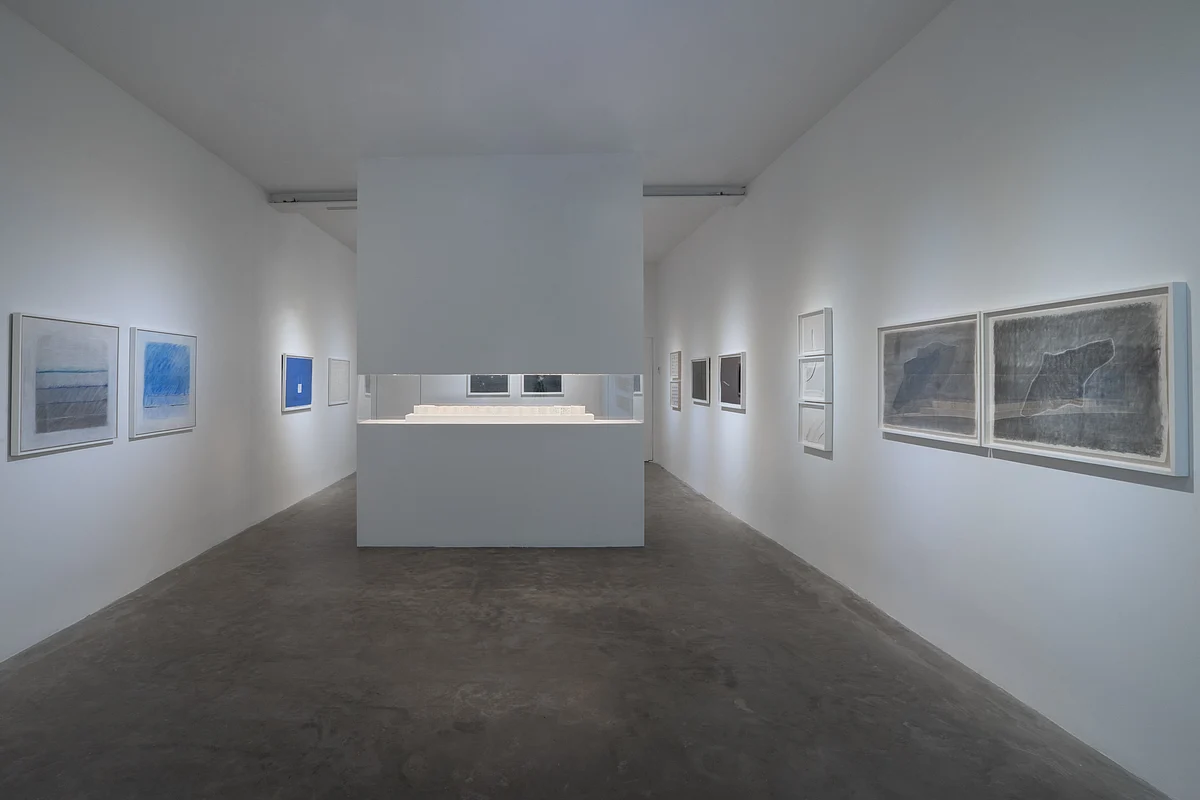
Institute of Arab and Islamic Art in Manhattan, New York
One of his latest exhibitions, ‘Torn Time’, marked the U.S. institutional debut of Turkish-American artist Bilgé. Known for her minimalist, paper-based creations, Bilgé’s works are delicate yet imbued with profound spiritual and emotional weight. “There’s something transcendent in her handling of paper,” Al-Thani observes. “She tears, slices, and exposes the fibers, creating a palpable sense of rupture and intimacy.”
Al-Thani hopes this exhibition will inspire and astonish people with what can be achieved using a simple medium like paper. He effectively translates abstract spiritual experiences into tangible gallery settings, reminding viewers of paper’s power and how significant ideas and emotions can thrive in modest settings.
“In a time when art is becoming larger and more costly, I want people, especially young artists, to remember that even something as simple as paper can convey profound ideas. It doesn’t need to shout to be powerful.”
This notion of quiet strength permeates Al-Thani’s work. Whether setting up a show, discovering an artist, or designing a layout, his approach prioritizes making people feel welcome. “I think about hospitality,” he shares, referencing his Arab heritage that instilled this sentiment. “Museums can feel cold, but exhibitions should be warm, inviting, as though a space has been specially prepared for you.”
This concept of cultural intimacy, rather than cultural translation, is central to his practice. He doesn’t aim to explain Arab or Muslim identity to outsiders. Instead, he invites viewers into a space of familiar comfort. “If the work speaks to you, you’ll find your own connection with it,” he says. “Art isn’t always about understanding. Sometimes, it’s about being present and letting it resonate within you.”
In his view, the West needs more integration of art, not just explanations. He envisions global museums not only acquiring Arab and Muslim artists’ works but curating them alongside others. “That’s how we foster dialogue,” he asserts. “That’s how our artists become part of global art history, not merely a footnote.”
When asked which piece he would invite the world to reflect on right now, he mentions Bursting Echoes by Nabil Kanso, a painting that mourns war and emphasizes remembrance. “It’s a living testimony,” Al-Thani says. “It reminds us that no matter how far a conflict seems, we are all affected by its consequences.”
While he doesn’t romanticize art as a panacea, he believes it can be a refuge, a space for healing, a mirror, and a call to conscience. True to this belief, he is creating just that in his Manhattan gallery among paper sculptures and silent canvases: a sanctuary of intentional creativity, far from being a mere collection of random depictions.
For those who may feel intimidated by art, Al-Thani offers simple advice: “You don’t have to ‘understand’ art. Just open your heart. Let it enter without prejudice.” Sometimes, all it takes is a single moment for everything to become clear.
For this transformation to occur, one simply needs to step into a tranquil, quiet room in New York where stories are still softly and powerfully told, in Arabic and English, through paper and pigment. From this place, Al-Thani is redefining curation; and through his efforts, he provides a platform for artists, curators, scholars, and art practitioners. It’s a space that seeks to organically grow with a comprehensive, permanent collection of art from the Arab and Islamic worlds, continuously surprising audiences with regional art.