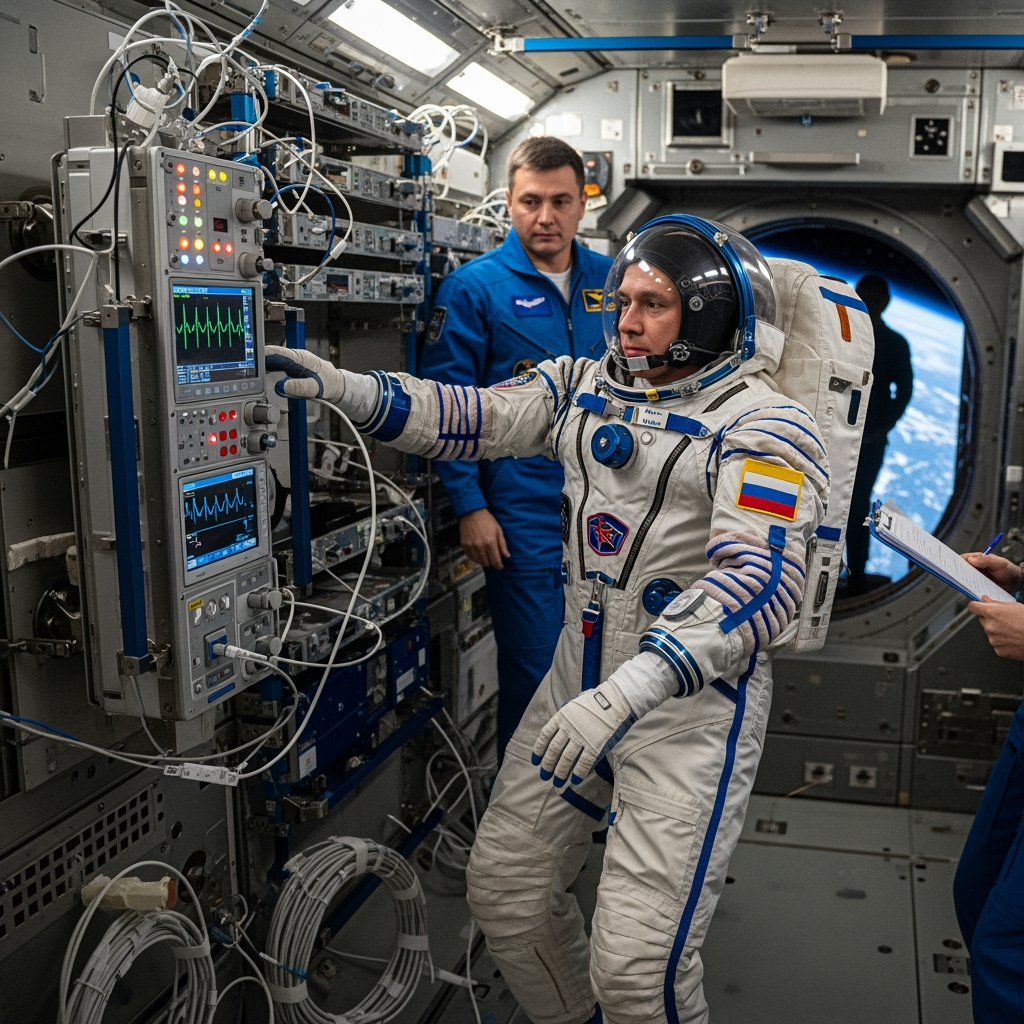
The Russian Academy of Sciences reported that specialists plan to determine whether targeted activation of this protective system will ensure the health of astronauts during their long-term interplanetary flights and, in the future, the health of workers on other planets. As explained by the scientists, astronauts on long-term space missions will be exposed to cosmic radiation. This radiation causes the formation of reactive oxygen species in tissues, which are toxic substances that cause cellular damage, known as ‘oxidative stress.’ At the same time, humans and animals have a defense system against this effect, regulated by the ‘Nrf2’ gene.
The ‘Bion-M2’ was launched from the Baikonur Cosmodrome aboard the ‘Soyuz-1.2b’ on August 20. The spacecraft orbited at a high altitude of 370-380 kilometers. On board were 75 mice, more than 1500 fruit flies, animal and human stem cells, medicinal plants, seeds and algae, and microorganisms.
The landing module of ‘Bion-M2’ landed in the Orenburg region on September 19 at 11:00 AM Moscow time. It spent 30 days in a polar orbit at an inclination of 96.63 degrees, conducting over 30 experiments on biological subjects.